On March 3, 2026, the Office of the US Trade Representative released its 2025 Notorious Markets List and named China as “the number one source of counterfeit products in the world.” The Thinking Conservative, IP-infringing goods originating from China, including Hong Kong, represented almost 93% of the value of all such goods seized at US ports in fiscal year 2024, a figure USTR sourced to US Customs and Border Protection’s Intellectual Property Rights Seizures Dashboard.
The same list identified physical markets in 19 countries where those goods are ultimately sold. Phnom Penh’s Central Market appears alongside five in China, Saigon Square in Ho Chi Minh City, Bangkok’s MBK Center, and retail sites in Argentina, Brazil, Canada, Colombia, India, Indonesia, Kyrgyz Republic, Malaysia, Mexico, Paraguay, Peru, the Philippines, Russia, Türkiye and the United Arab Emirates. USTR wrote that counterfeits at Central Market appear to be “imported from China or Vietnam, with some vendors claiming to sell ‘top grade’ counterfeit goods imported from South Korea,” and that “local authorities have conducted raids to seize counterfeit products.”
Central Market has appeared on the Notorious Markets List in 2023, 2024 and 2025. Cambodia has not appeared on USTR’s Special 301 Watch List or Priority Watch List in either the 2024 or 2025 editions. Thailand and Vietnam appear on the 2025 Watch List. USTR itself distinguishes the two instruments: the Notorious Markets List addresses specific markets, and “does not make findings of legal violations nor does it reflect the U.S. Government’s analysis of the general IP protection and enforcement climate in the countries connected with the listed markets.” That analysis is in Special 301.
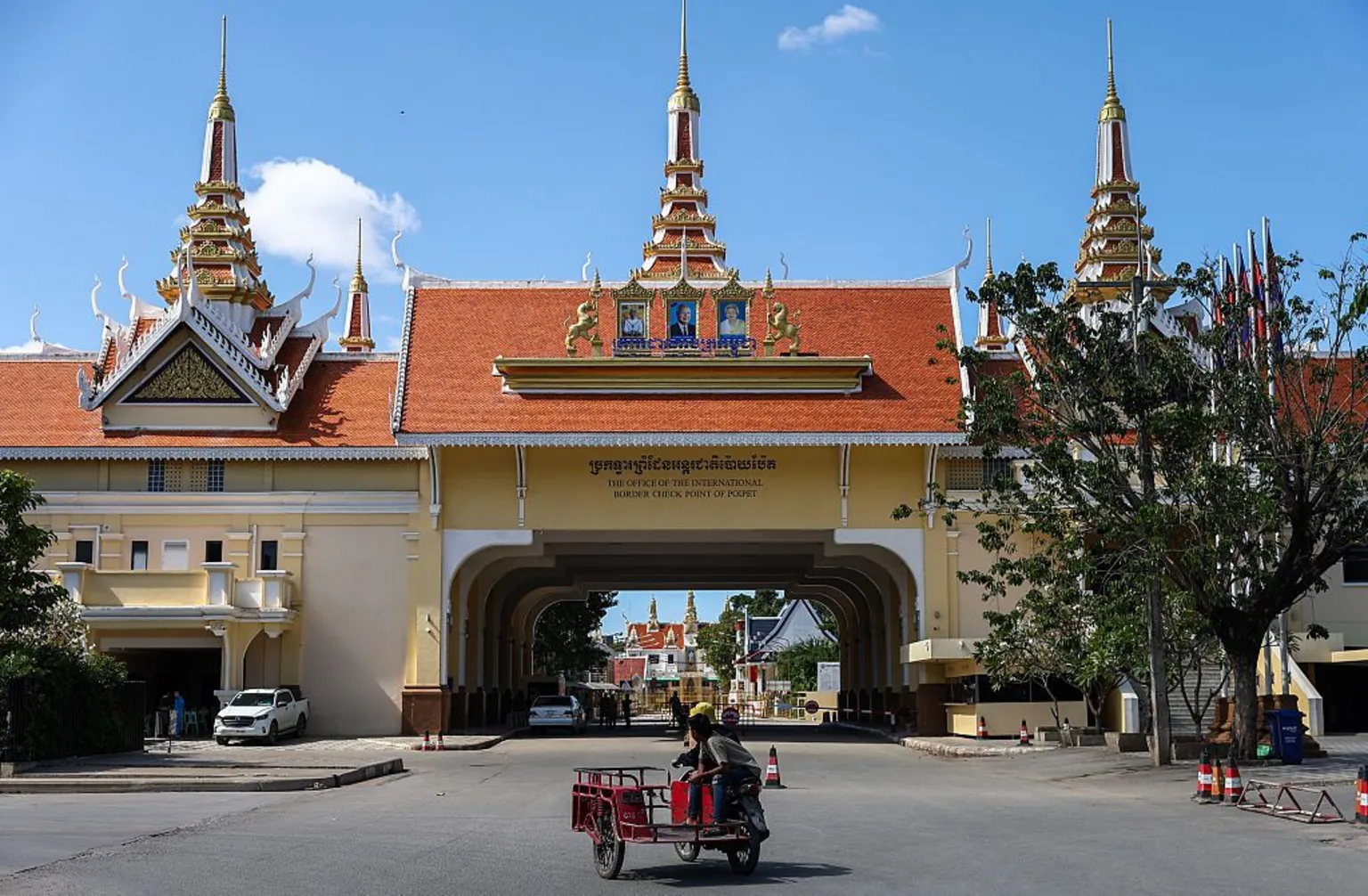
Cambodia’s border enforcement infrastructure has been built largely in the past 19 months. The General Department of Customs and Excise launched the Intellectual Property Rights Recordation System at a workshop at the National Customs School on September 14, 2024. Rights holders can record trademarks, geographical indications, industrial designs and copyrights directly with customs for border interception. The system carries no fee. On January 14, 2025, the Ministry of Industry, Science, Technology and Innovation launched online filing for patents, utility models and industrial designs.
Both systems sit on top of a 2021 Prakas that established the underlying customs authority to suspend clearance procedures for imports and exports infringing IP rights. The World Customs Organization held a three-day national workshop in Phnom Penh in May 2022 to support implementation of that regulation. The workshop was financed by Japan’s Customs Cooperation Fund.
The Law Concerning Marks, Trade Names and Acts of Unfair Competition was adopted on January 8, 2002. Cambodia is a member of the World Trade Organization’s TRIPS Agreement and the Madrid Protocol. The National Committee for Intellectual Property Rights was restructured in October 2021 under Sub-Decree No. 206, chaired by the Minister of Commerce with vice-chairs from the Ministries of Economy and Finance, Culture and Fine Arts, and Industry, Science, Technology and Innovation. The Cambodian Counter Counterfeit Committee, a joint task force of 14 ministries originally established under Sub-Decree No. 150 in 2014, was re-established under Decision No. 35 SSR in 2024, with a new composition appointed under Decision No. 93 SSR that same year.
Cambodia has signed expedited patent cooperation agreements with the major economies whose companies operate in its market. A Joint Statement of Intention with the Japan Patent Office was signed on May 4, 2016, permitting applicants with Japanese patents to accelerate registration in Cambodia. Comparable agreements followed with the Korean Intellectual Property Office in 2019 and the US Patent and Trademark Office in 2021. A Memorandum of Understanding with the Intellectual Property Office of Singapore, in force since 2015, was renewed in January 2025.
Joint research by the Organisation for Economic Co-operation and Development and the EU Intellectual Property Office has across several publications identified China as the dominant origin of counterfeit goods in global trade. The OECD-EUIPO “Mapping Global Trade in Fakes 2025”, cited in the same USTR Notorious Markets List, valued global trade in counterfeit goods at approximately $467 billion in 2021, or 2.3% of total global imports. A 2020 United Kingdom government study of counterfeit flows from China into Southeast Asia traced large-volume goods shipped by sea from China’s eastern and southern ports, particularly Ningbo and Guangzhou, with Hong Kong as a transshipment hub, and distributed by road and postal channels across the region.
Cambodia’s market for counterfeit goods is not abstract. USTR records it. Regional counterfeit enforcement bodies do not identify Cambodia as a manufacturing or export source; OECD-EUIPO provenance data from 2014-2016 named Singapore, Thailand, Malaysia, the Philippines and Vietnam among the top 25 global economies where such goods originate. Thailand’s Department of Intellectual Property reported 1,006 seizures in 2019, and customs specialists Rouse noted in March 2026 that Vietnam’s published data shows 93 major cases in 2025, with actual numbers likely higher. Cambodian enforcement agencies have not published seizure data in a form directly comparable.
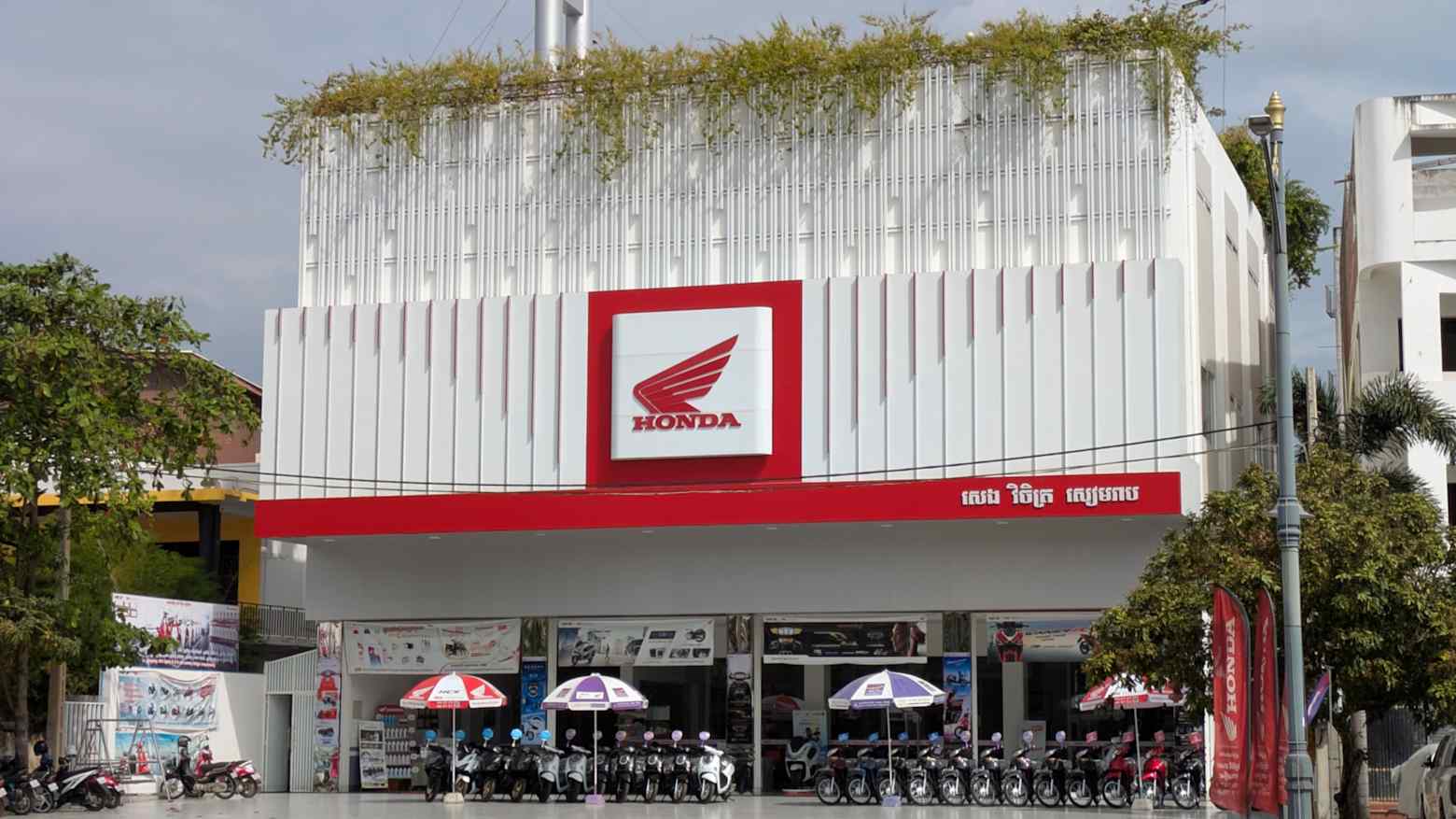
The economic context for Cambodia’s enforcement architecture is measurable. Nearly 500 Japanese companies operate in the country, according to the Japanese Business Association of Cambodia, and bilateral Cambodia-Japan trade reached $2.53 billion in 2025, a 17.1% increase on the year. Cambodia was Japan’s third-largest apparel supplier in the first quarter of 2025. In February 2026, Japanese officials publicly urged Japanese firms to reassess Cambodia as an investment and logistics destination. The 30th meeting of the Cambodia-Japan Joint Committee met in Phnom Penh in September 2025, co-chaired by Deputy Prime Minister Sun Chanthol and Ambassador Atsushi Ueno. Cambodia is scheduled to graduate from Least Developed Country status in 2029.
The 2024 and 2025 enforcement systems are in their first operational cycles. Cambodia’s WTO trade policy review in March 2025 heard WTO members “encourage improvement” in IP enforcement alongside customs valuation, tax transparency and market access. The Central Market continues to appear on the Notorious Markets List. What has changed is where the enforcement authority now sits. A decade of Cambodia’s counterfeit story was about retail presence in a single historic market. The next decade will turn on what happens at the border.