The ASEAN Petroleum Security Agreement has existed in some form since 1986. Its coordinated emergency response measures have never been activated.
Designed to trigger when a member state faces a petroleum supply deficit of at least 10 percent of its normal domestic requirement for 30 continuous days, APSA now confronts the scenario it was written for. The Iran war and the closure of the Strait of Hormuz have produced what the International Energy Agency has described as the largest disruption to the global oil market in its history. The Philippines, which had 50 to 60 days of fuel reserves, declared a national energy emergency on 24 March. US-Iran ceasefire talks in Islamabad collapsed on 12 April without agreement. The strait remains functionally closed. At the March 2026 ASEAN Economic Ministers’ Retreat, ministers agreed to hasten APSA’s finalization ahead of the May summit, four decades after the original framework was signed.
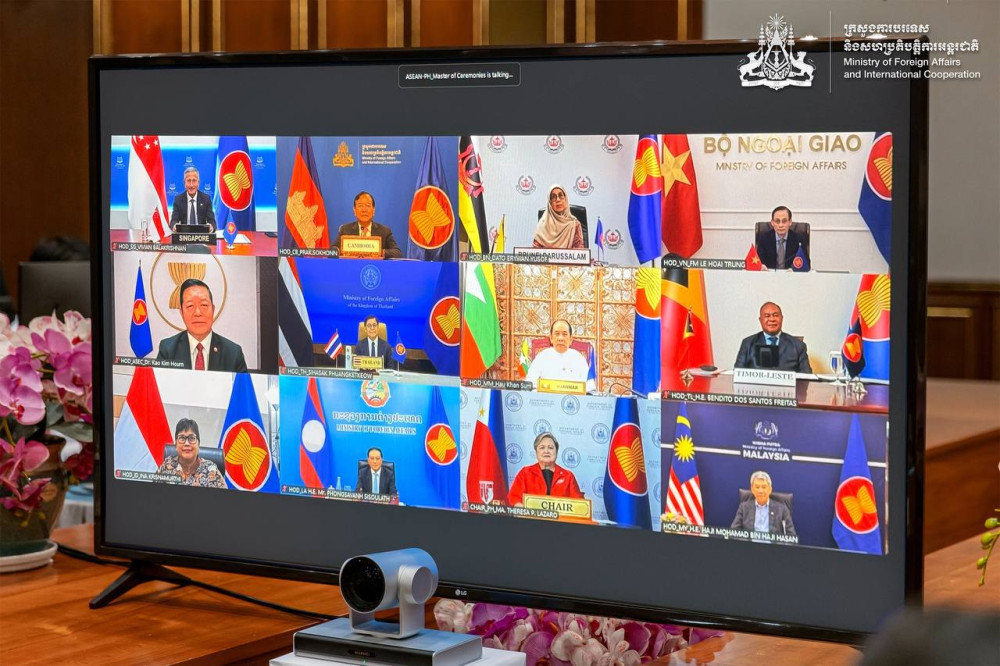
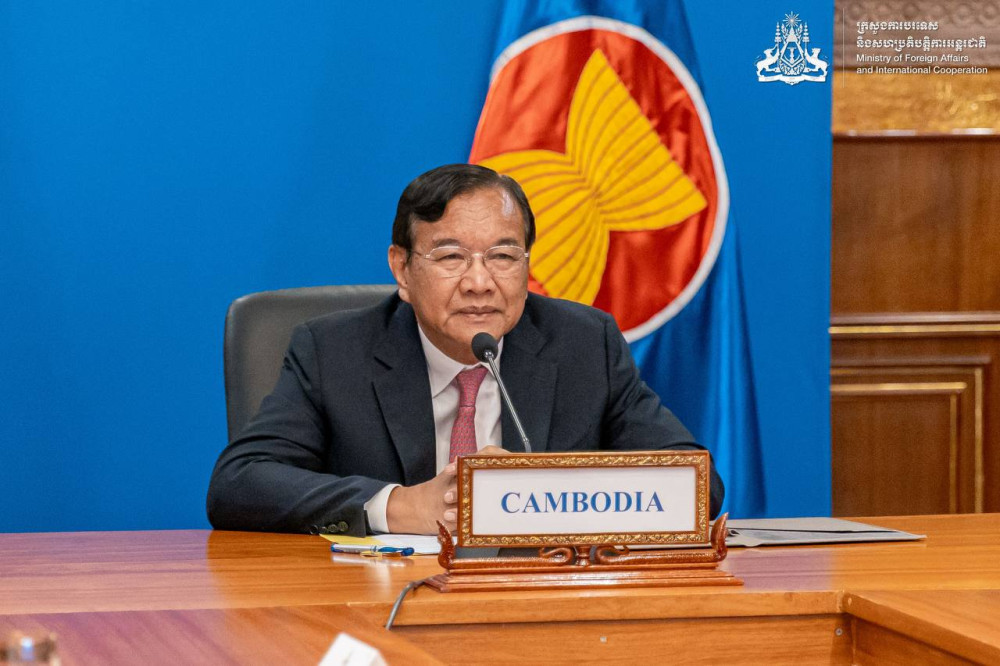
On 13 April, Cambodia’s Deputy Prime Minister and Minister of Foreign Affairs and International Cooperation Prak Sokhonn participated via videoconference in the Second Special ASEAN Foreign Ministers’ Meeting on the Middle East. He called for strengthening APSA, accelerating the Trans-ASEAN Gas Pipeline, advancing the ASEAN Power Grid, improving fuel reserves and real-time data sharing, promoting energy diversification including renewable sources, and activating the ASEAN Plus Three Emergency Rice Reserve. Every item he named exists within ASEAN’s institutional architecture. Cambodia, which imports 3 million tons of fuel annually through the port of Sihanoukville with no domestic refineries and no domestic oil production, has a specific and documented stake in each one functioning.
The Trans-ASEAN Gas Pipeline, under discussion since the 1997 Hanoi Plan of Action and formalized by memorandum of understanding in 2002, has produced thirteen bilateral connections across six countries totaling 3,631 kilometres of pipeline. The six are Indonesia, Malaysia, Myanmar, Singapore, Thailand, and Vietnam. Cambodia is not connected. It has zero pipeline infrastructure, zero regasification capacity, and zero liquefaction capacity. The ASEAN Power Grid, which Prak Sokhonn also cited, consists of bilateral interconnections rather than a multilateral grid; Cambodia imports roughly 25 percent of its total electricity supply from neighbours, with Thailand a major contributor, and losing any single bilateral link means losing that share with no built-in alternative.
APSA’s sharing provisions, if the mechanism functioned, are voluntary and commercial. A member state in distress pays prevailing market rates. Cambodia’s diesel prices have risen 84 percent and regular gasoline 41.5 percent since the conflict began. The mechanism was designed to secure supply access. It does not address price.
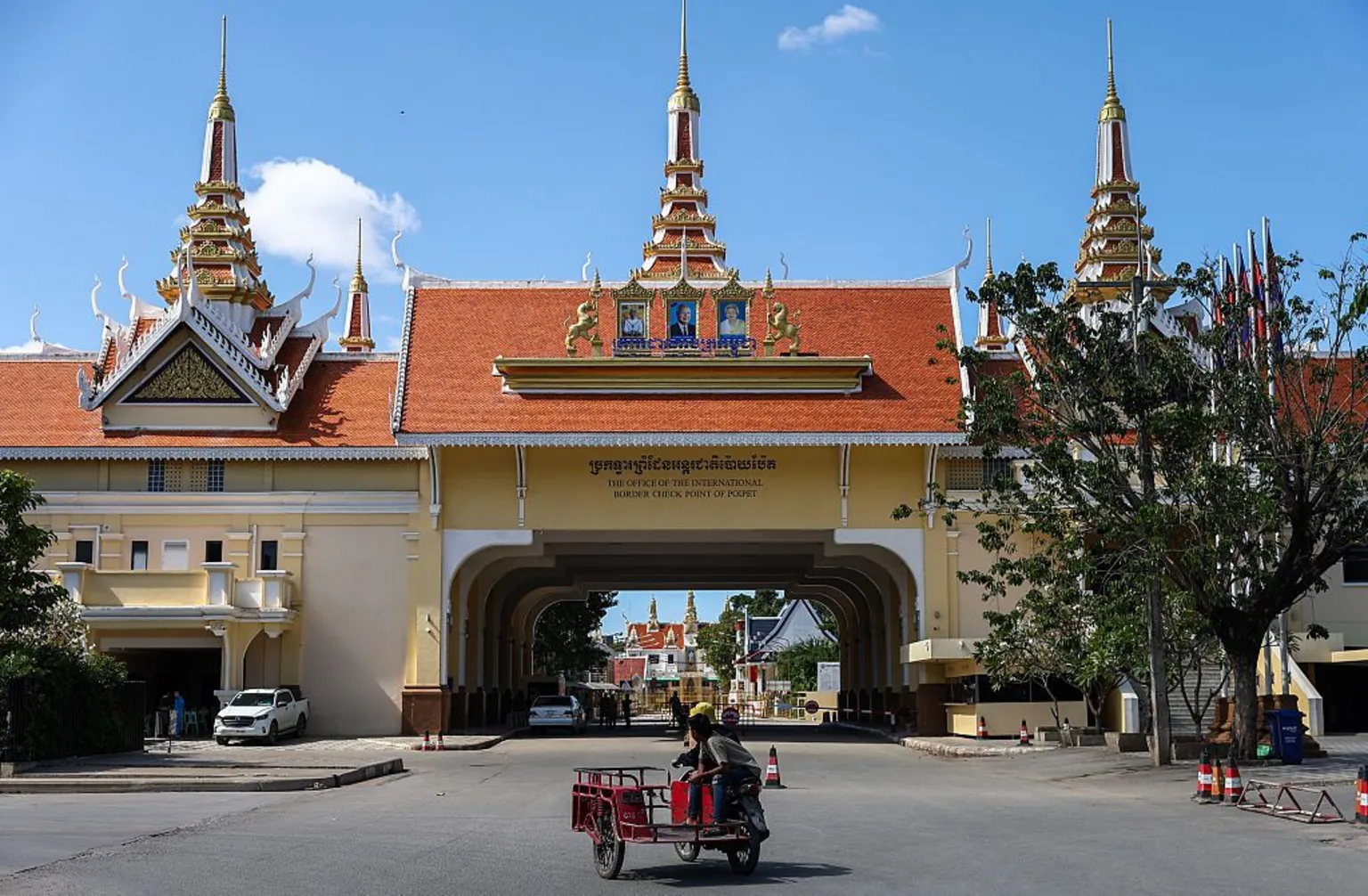
Before the Hormuz closure, the border conflict with Thailand that began in May 2025 had already cut Cambodia’s primary fuel supply route; more than 30 percent of Cambodia’s petroleum imports came from Thailand, and industry estimates put pre-crisis dependence at 90 percent of diesel and 80 percent of gasoline. Cambodia shifted to suppliers in Singapore and Malaysia. Then the strait closed, disrupting crude inputs to Singapore’s refineries. Thailand banned oil exports but exempted Cambodia and Laos. China ordered state-owned companies to suspend fuel exports entirely. Every supply corridor came under pressure within the same weeks.
In early March, roughly 2,000 of Cambodia’s 6,300 fuel stations and depots ceased operations. Over 400 remained closed as of 13 March. Cambodia’s fuel reserves stand at approximately three weeks under normal conditions.
Thailand’s decision to exempt Cambodia from its export ban, even during an active bilateral military conflict, registers the interdependency between the two economies. The structural condition it exposes is specific: Cambodia’s fuel supply currently runs on a bilateral exemption from a country it is in a territorial dispute with, with no multilateral mechanism providing an alternative route.
The energy disruption is also a food security problem, and here Cambodia’s position in the regional system is different. Cambodia produced 13.9 million metric tons of paddy rice in 2024, an 11 percent increase, and milled rice exports rose 20.8 percent in the first quarter of 2025 (World Bank Cambodia Economic Update). Cambodia is a net rice exporter. When Prak Sokhonn called for activating the ASEAN Plus Three Emergency Rice Reserve, he was speaking as a representative of a surplus producer whose capacity to harvest, mill, and transport that surplus depends on fuel that is not arriving at stable prices or reliable volumes. Fuel shortages are already disrupting harvest operations and rice sector logistics across the region, including in Thailand, where diesel scarcity has left machinery idle during the harvest window. If the energy crisis deepens, it does not only reduce Cambodia’s fuel supply. It threatens to remove a major rice contributor from the regional food security system.
Laos, Myanmar, and Cambodia each lack or have severely limited refining capacity, depend on fuel products exported from neighbours, and carry reserves measured in weeks. The mechanisms that would convert bilateral dependencies into multilateral obligations, APSA, TAGP, the Power Grid, remain either incomplete, never activated, or bilateral in practice despite multilateral branding. A research assessment published by ERIA and the Institute of Energy Economics of Japan concluded that APSA’s emergency measures would likely not run smoothly even if triggered, citing unresolved procedural issues, inadequate storage capacity, and insufficient data infrastructure across the region. APSA’s 10 percent threshold was designed for a supply disruption of exactly this kind. The TAGP has been discussed for nearly three decades without connecting the members most exposed. These gaps predate the crisis.
Cambodia is also pursuing investments in renewable energy, including large-scale solar and wind projects, and smart-grid infrastructure (IMF Article IV 2025), a structural bid to reduce the bilateral energy dependency rather than only insure against it. But those investments operate on a timeline of years. The crisis operates on a timeline of weeks.
At the 13 April meeting, participants welcomed Vietnam’s initiative to develop a common ASEAN response strategy to extra-regional crises, with a leaders’ statement to be submitted to the 48th ASEAN Summit in May. Cambodia sent its Foreign Minister to the April session after the March meeting was attended at senior official level. The ASEAN Centre for Energy, which serves as APSA Secretariat and is mandated to carry out coordinated emergency response procedures, has reported no activation.