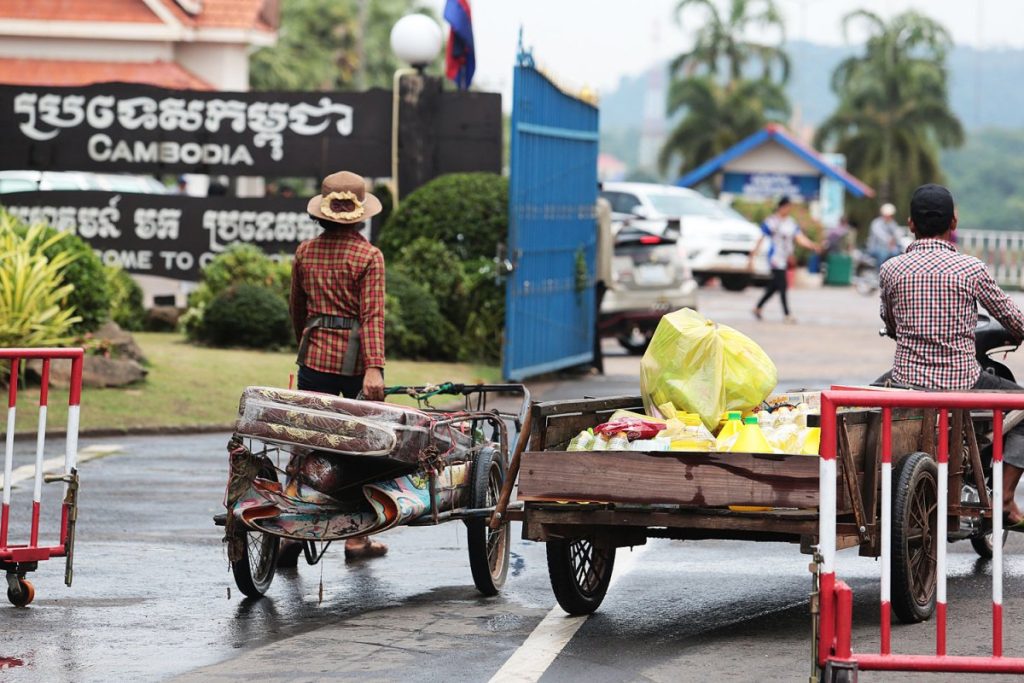
Cambodia’s prime minister stated repeatedly in June 2025 that his government would not request the reopening of border checkpoints with Thailand. Senate President Hun Sen said in November that Thailand could keep the border closed for 500 years. On April 14, 2026, the Royal Thai Navy told Nation Thailand that Cambodia had made no formal request to reopen checkpoints in Chanthaburi and Trat provinces, and that Cambodia would need to present a “concrete plan” before any reopening could proceed.
The position Cambodia has held since the closures began is that no such plan will be submitted.
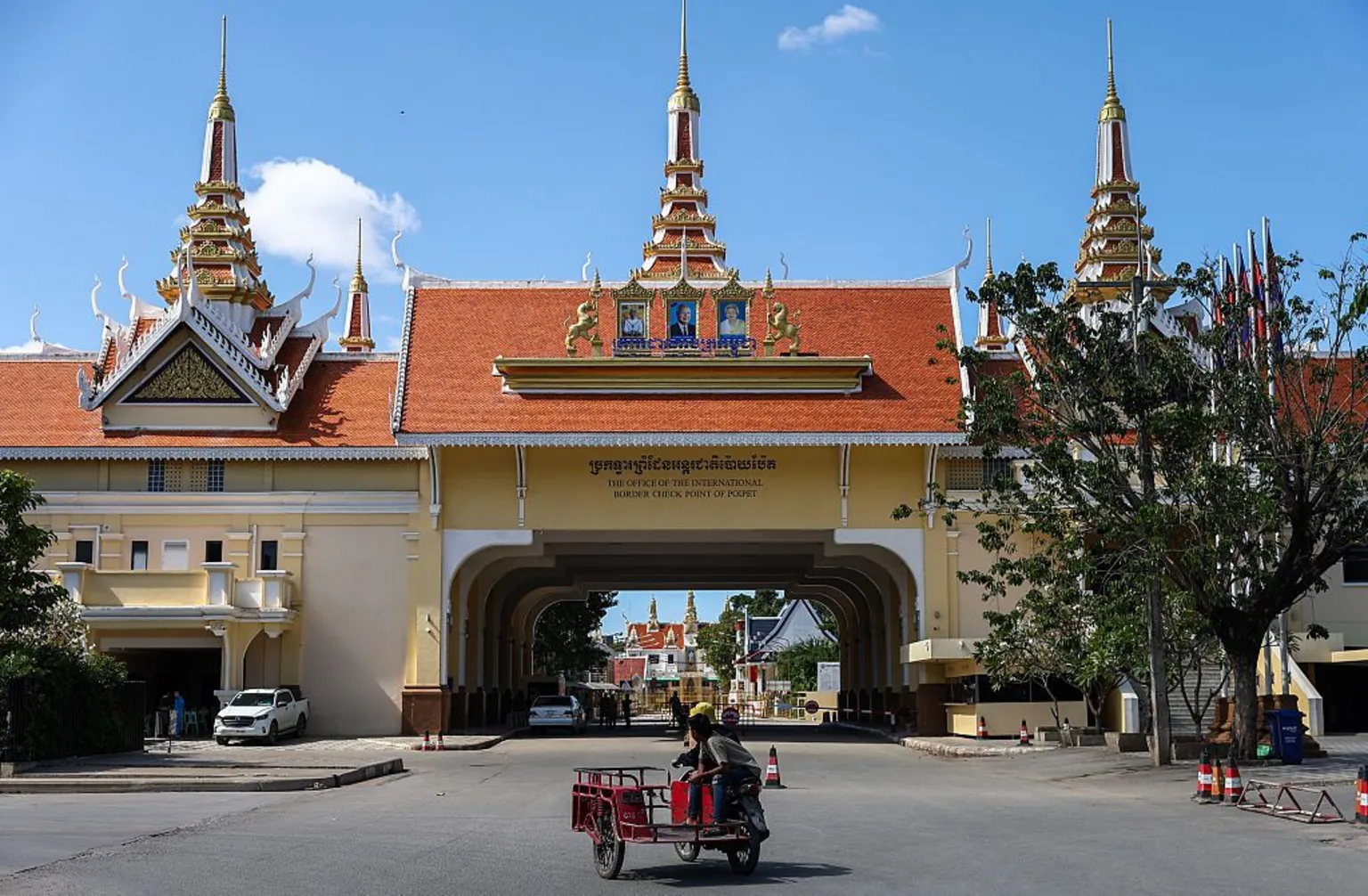
Thailand imposed restrictions on all border checkpoints with Cambodia on June 7, 2025, under Royal Thai Army Order 806/2568, issued after a National Security Council meeting the day before. The order authorised commanders of the Burapha Task Force and the Suranaree Task Force to set hours, conditions, and closures across all 15 crossings. No bilateral consultation with Cambodia was documented. By late June, the Chanthaburi and Trat Border Defence Command had ordered the suspension of all cross-border movement of people, vehicles, and trade through every checkpoint in the two provinces.
Prime Minister Hun Manet responded on June 22: “The Thai army, who unilaterally began to close border checkpoints on 7 June 2025, just needs to reopen it unilaterally first. Cambodia will reopen all checkpoints on our sides the latest 5 hours after that.” The following day in Siem Reap, he said the closure was permanent unless Thailand reopened all crossings simultaneously, as they were before June 7. Cambodia would not negotiate on checkpoints. Thailand closed them unilaterally; the reopening must also be unilateral.
On November 5, Senate President Hun Sen reinforced the position: “Cambodia has never requested Thailand to reopen the border. Thailand can keep it closed for 100 years or 500 years, it’s entirely up to Thailand. The key is in Thailand’s hands.”
The unnamed Navy source said the situation was not regarded as urgent.
Federation of Thai Industries chairman Kriengkrai Thiennukul calculated in June 2025 that the closures cost approximately 500 million baht per day in border trade, based on annual bilateral flows of roughly 170 billion baht. He repeated the figure in July after fighting broke out. Chanthaburi Chamber of Commerce chairman Ukrit Wongthongsalee warned in the same period that one week of closure could push losses above one billion baht for that province alone. In late September, Khaosod English reported that the permanent checkpoint at Ban Hat Lek in Trat resembled a ghost town, with hotels, shops, and cafés shuttered and local vendors weaving fishing nets to survive.
Thai Department of Foreign Trade data for 2024 put border trade through Khlong Yai in Trat at 29.29 billion baht and through Chanthaburi at 26.62 billion baht, a combined 55.91 billion baht representing approximately 32 percent of all Thai-Cambodian border trade. Ukrit told Nation Thailand that Cambodian workers comprised more than 80 percent of Chanthaburi’s agricultural labour force, handling fruit collection, sorting, and packaging for the province’s export economy.
In September 2025, caretaker deputy defence minister General Nattaphon Narkphanit and his Cambodian counterpart General Tea Seiha agreed at a General Border Committee meeting that the two countries should consider reopening border crossings at specific locations, with Chanthaburi and Trat identified as lower-risk candidates, Bangkok Post reported. Prime Minister Anutin Charnvirakul said the same month that there would be no border opening “until Cambodia no longer poses a threat to Thailand.”
The Navy’s April 14 statement acknowledged that “some information had circulated informally” about reopening but said discussions “appeared to remain at the local level.” On March 9, five weeks earlier, Labour Minister Trinuch Thienthong met with the Federation of Thai Industries, the Thai Chamber of Commerce, and the Thai Bankers’ Association. The three organisations called for “urgent solutions to the shortage of foreign workers, particularly Cambodian workers in the industrial, construction, and agricultural sectors.” Trinuch stated on the Ministry of Labour website that the government had “no policy to reopen the country or border crossings with Cambodia under any circumstances.”
At the same meeting, the Ministry confirmed it was extending permits for 53,809 Cambodian workers expiring March 31 and managing 85,117 additional permits under the bilateral MOU framework, along with 6,072 seasonal fruit workers in eastern provinces. The extensions followed lobbying by employers who told the government that Cambodian labour shortages were damaging competitiveness.
On June 29, 2025, Hun Manet published an image of a Burapha Task Force document addressed to the Sa Kaeo Immigration Police Superintendent, requesting a temporary easing of restrictions for Thai cargo trucks. The following day, Defence Minister Phumtham Wechayachai told Nation Thailand that Thailand had never requested Cambodia to reopen any border checkpoints. The Army confirmed the communication but described it as a temporary relief measure for pre-registered vehicles.
The border demarcation dispute between the two countries follows a separate track, managed through the Joint Boundary Commission. Cambodia proposed a special JBC meeting for April 17 to 22 in a Note Verbale dated April 7, along with Joint Survey Team deployment from April 20 to 24. Foreign Minister Sihasak Phuangketkeow said on April 11 that Thailand was not yet ready, citing incomplete internal procedures.
Both countries signed a Joint Statement at the Third Special General Border Committee meeting on December 27, 2025. Paragraph 4 committed both sides to allowing civilians in affected border areas to return “at the earliest, without obstruction and in safety and dignity, to their homes and normal livelihoods in areas within their own side.” Two days later, at a trilateral meeting with China, both countries agreed that “the next key step is to work towards resuming normal exchanges.”
Ten months after Thailand imposed its border closures, every checkpoint in Chanthaburi and Trat remains shut. Cambodia has said it will not ask for what Thailand must decide for itself. No formal request has been made. None is coming.