On January 19, Thailand told the United Nations Security Council it intended to resume the Joint Boundary Commission with Cambodia “at the earliest practical opportunity” after forming a new Cabinet following the general election scheduled for February 8. Thailand’s new Cabinet was sworn in on April 6. Five days later, Cambodia’s invitation to convene the JBC on April 17 received a single answer: Thailand is not ready.
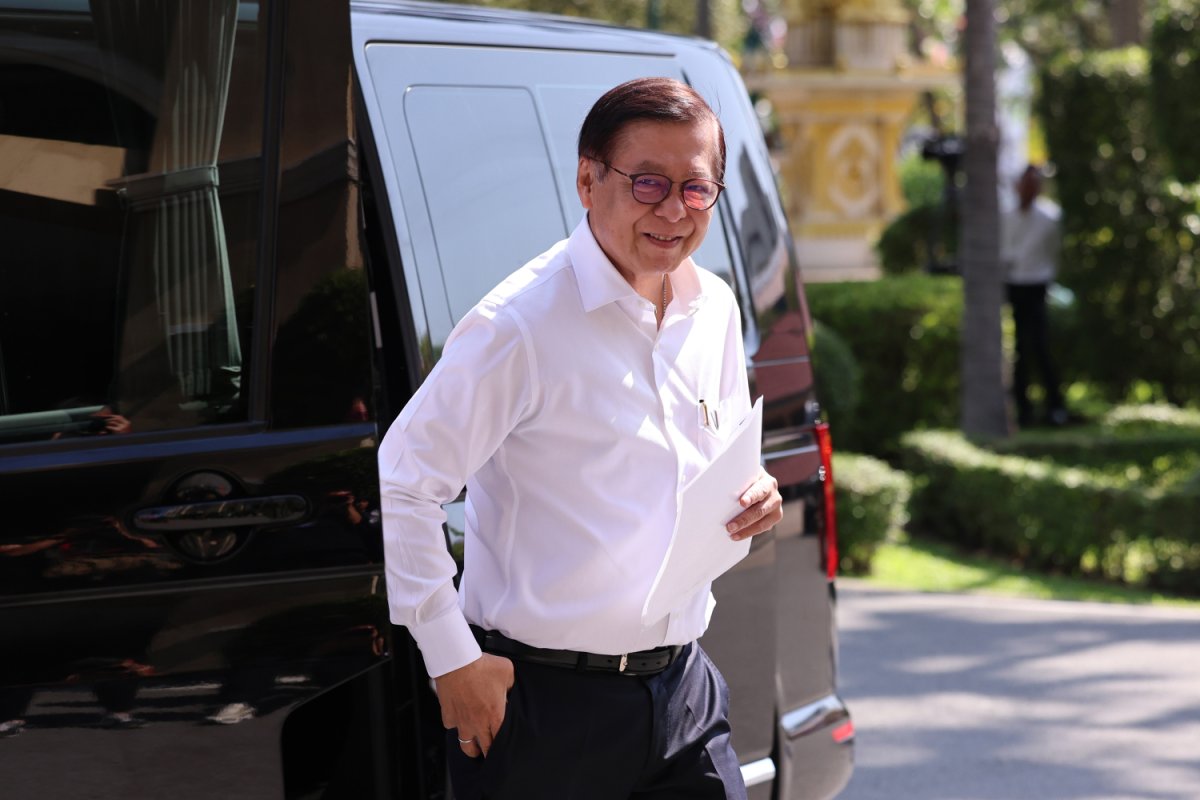
Foreign Minister Sihasak Phuangketkeow told reporters on Saturday that Thailand could not attend the meeting Cambodia had formally proposed through a Note Verbale dated April 7. Changes to the JBC delegation’s composition must first be completed, he said. Commissioners from state agencies must be appointed. A chair with “real expertise in international law and boundary issues” must be found, a role Sihasak said he would not fill himself.
Even if the meeting were held, he said, demarcation would not begin. The first task would be to discuss procedures and methods.
Cambodia’s Prime Minister Hun Manet responded the same day. He said he “strongly hopes” the two countries will work together “quickly and with sincerity” to build lasting peace along the border. “Cambodia is fully ready,” he said in a statement posted on social media.
The January UN filing, circulated as a document of both the General Assembly and the Security Council, contained Thailand’s clearest public commitment to JBC resumption since the December 27 ceasefire. Thailand stated that its JBC delegation was “currently finalizing internal procedures, including the formal mandate, to be issued following the formation of the new Cabinet.” The filing named one condition: Cabinet formation after the election.
That condition was met on April 6. Cambodia responded within 24 hours. The Note Verbale proposed a JBC special meeting in Siem Reap from April 17 to 22, Joint Survey Team deployment from April 20 to 24, a 12th Operational Group meeting and 5th Joint Technical Sub-Commission meeting in early May. Cambodia also proposed resuming fieldwork at boundary segments between Pillars 42-47 and 52-59, where the JBC had previously agreed on survey procedures.
Thailand’s April 12 response introduced requirements that appear nowhere in the January UN filing: a restructured delegation, new commissioner appointments, a technically qualified chair, and procedural discussions before any substantive work. None carries a disclosed timeline.
The JBC has been the primary mechanism for demarcation since 2000. It has produced results when convened. Over 26 years of operation, the two sides have agreed on 45 of 74 boundary pillar coordinates and placed 166 temporary markers along the segment between Pillars 52-59. But the commission has met only twice since 2012. The 5th session was held that year. The 6th convened in June 2025 after a thirteen-year gap. A 7th session, scheduled for January 2026, was postponed twice at Thailand’s request, on January 8 and again around January 14. Thailand’s stated reason in January was the same as its stated reason in April: internal procedures and the need to appoint a new JBC composition after government formation.
Cambodia has now submitted at least five formal proposals to convene or resume JBC work since the December 27 ceasefire. December 28: Cambodia proposed a JBC meeting in the first week of January. Thailand postponed. January 5: Cambodia re-proposed for mid-January. Thailand postponed again. January 13: Cambodia requested Joint Survey Team deployment. No meeting resulted. February 23: Cambodia proposed an operational group meeting, a technical sub-commission meeting, and a special JBC session. No meeting resulted. April 7: Cambodia proposed JBC April 17-22, JST deployment April 20-24, and two additional meetings in early May. Thailand said it was not ready.
Zero of these proposals has led to a meeting.
On March 10, Sihasak said Thailand’s JBC talks “must wait until a new government assumes office.” The new government has formed. Thailand’s stated reason for delay has shifted to internal restructuring with no fixed endpoint. Sihasak said he might discuss the matter with Cambodia’s foreign minister on the sidelines of the ASEAN leaders’ summit in early May. An informal sideline conversation carries no legal standing and produces no agreed minutes, unlike a formal JBC session operating under the 2000 Memorandum of Understanding on Survey and Demarcation of Land Boundary that Thailand’s own MFA described on March 11 as “the sole framework” for border demarcation.
That framework faces simultaneous pressure from Thailand’s own government. The Anutin administration’s policy statement, delivered to parliament on April 9, includes a directive to “expedite studying how to terminate” MoU 44, the 2001 maritime overlapping claims agreement. The Thai Senate’s special committee voted unanimously on March 24 to recommend cancelling MoU 43, the land boundary instrument that governs the JBC. Sihasak confirmed the MoU 44 revocation pathway: the Foreign Ministry would prepare a proposal, submit it to the National Security Council, then send it to the Cabinet for approval. He described this as an entirely domestic process. No reference to international legal procedure accompanied the description.
Thailand’s own foreign ministry assessed MoU 44 differently sixteen months ago. In November 2024, a Thai MFA briefing described the agreement as “Thailand’s most effective tool” for managing overlapping maritime claims. Cancellation, the briefing concluded, would not eliminate Cambodia’s territorial claims. The ministry was at that point actively proposing a Joint Technical Committee to expand negotiations under MoU 44. The same framework Thailand’s political apparatus now seeks to dismantle is the framework Thailand’s diplomatic corps was building on a year and a half earlier.
Cambodia’s SSBA called publicly in March for “a shift from diplomatic expressions to substantive and concrete implementation.” The April 9 MFAIC statement affirmed that MoU 44 “remains in force until its objectives are fully achieved.” Thailand has not responded to either.
Sihasak urged against expectations of rapid progress on the border. Thailand’s procedures, he said, must be completed first. The JBC last met in June 2025. Since then, Cambodia has proposed five meetings. Thailand has attended none. The bilateral mechanism both states agreed is the sole legitimate framework for demarcation remains unconvened while Thai forces occupy positions Cambodia identifies as sovereign territory, physical barriers stand along contested segments of the border, and the policy statement ordering MoU 44’s termination has been read into Thailand’s parliamentary record.