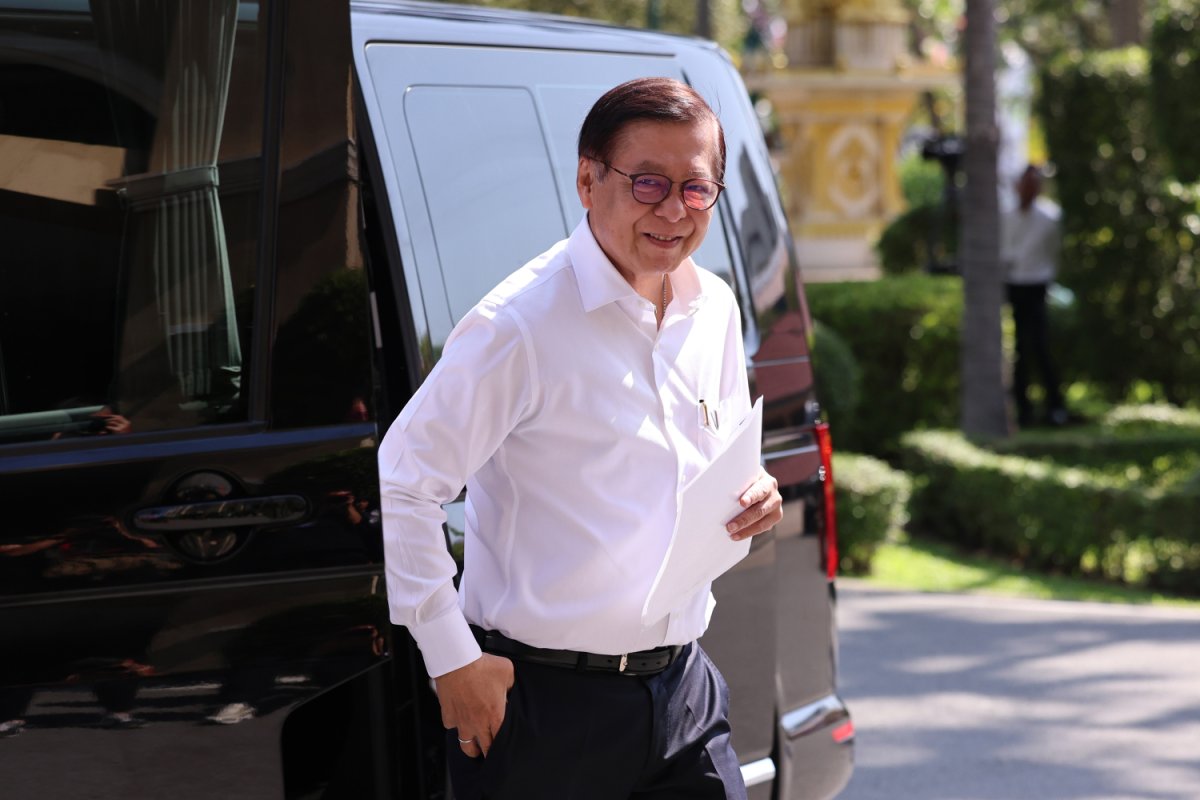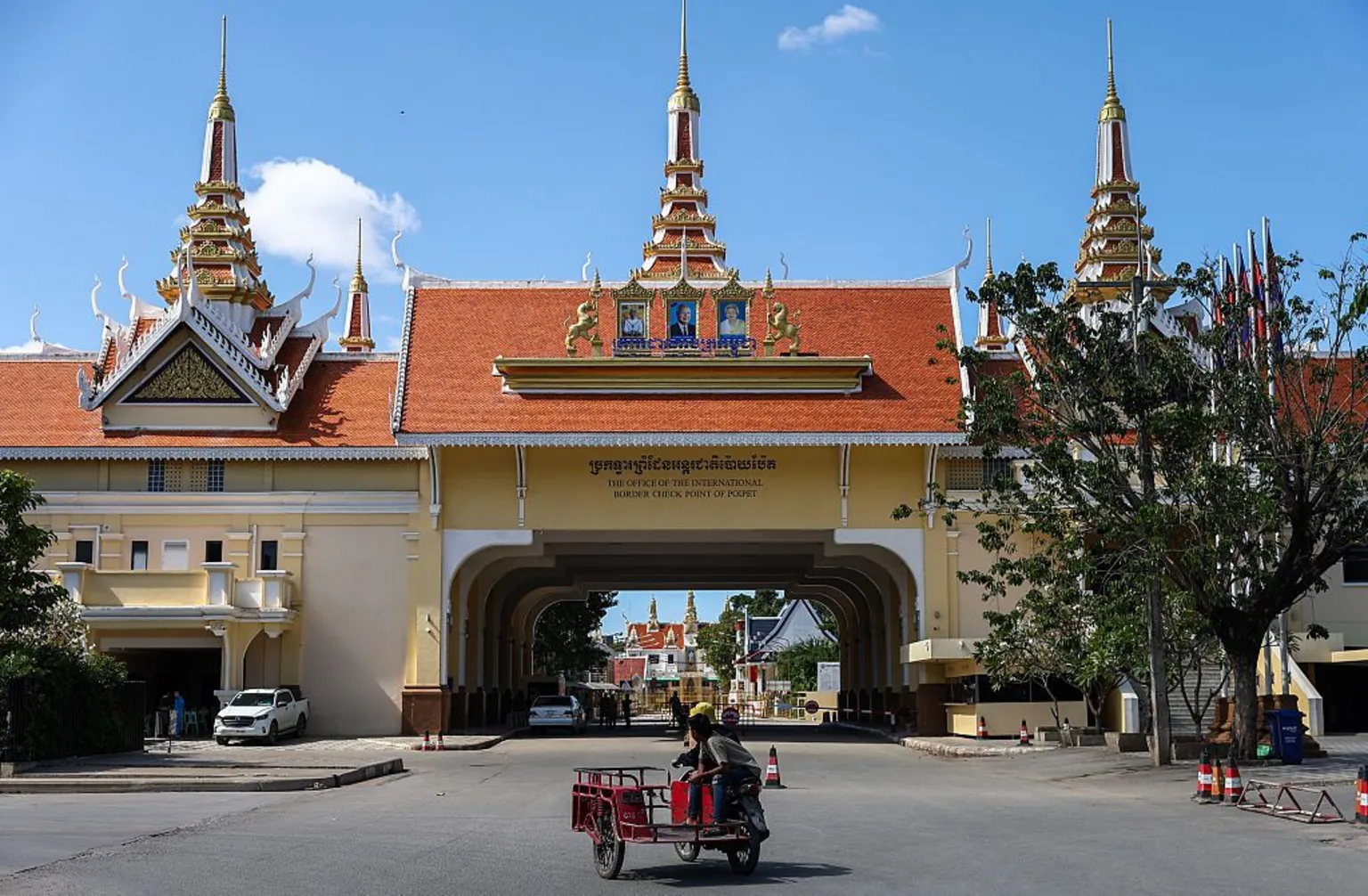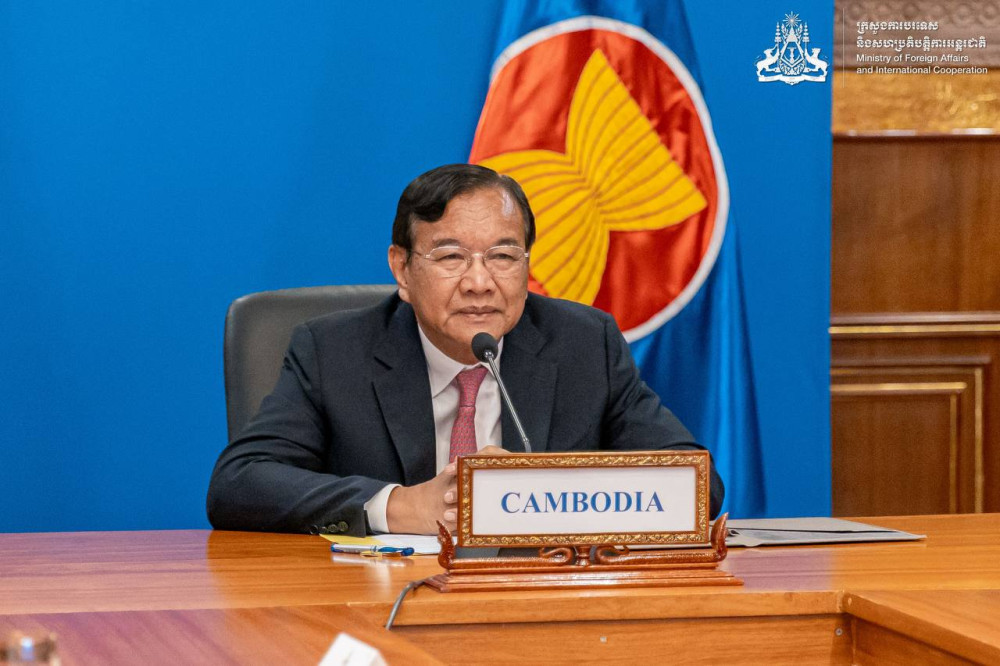
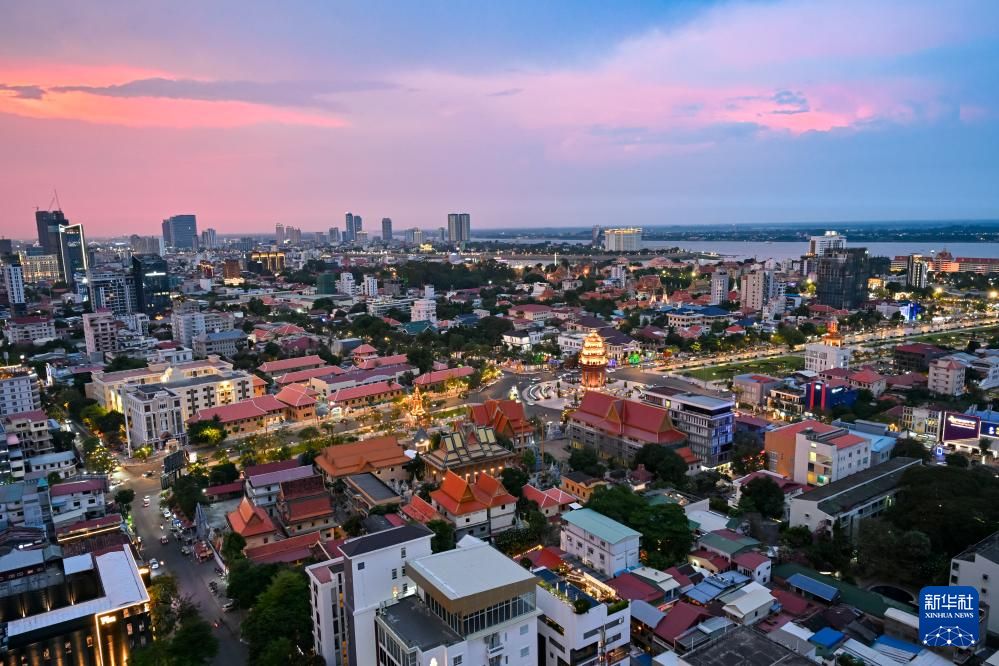
PHNOM PENH – On 7 April 2026, Moody’s revised Cambodia’s credit outlook from negative to stable, affirming the Kingdom’s B2 sovereign rating. The same day, Chinese Ambassador Wang Wenbin took to Facebook to congratulate Cambodia on the upgrade.
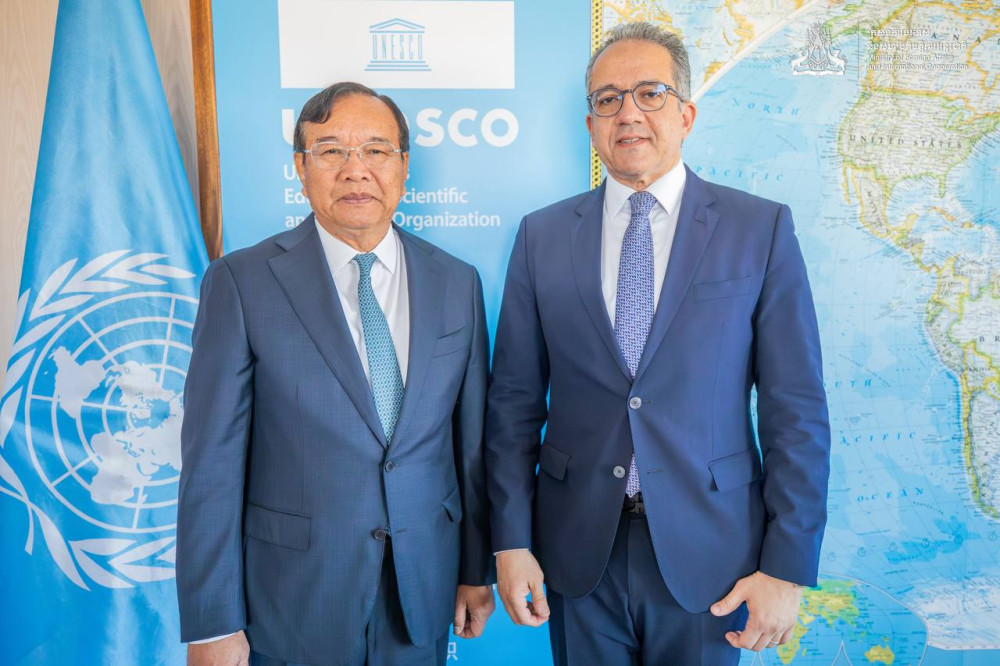
Ten days earlier, Senior Minister Sok Siphana had been in Yaoundé, Cameroon, meeting the United Kingdom’s Minister of State for Trade Policy Sir Chris Bryant, Costa Rica’s Minister of Foreign Trade Manuel Tovar Rivera, Peru’s Vice Minister of Foreign Trade César Llona, and Mexico’s Permanent Representative to the WTO Victor Manuel Aguilar Pérez. According to an official press release from the Trade Policy Advisory Board dated 28 March 2026, the meetings were held to solicit support for Cambodia’s accession to the Comprehensive and Progressive Agreement for Trans-Pacific Partnership, a high-standard trade bloc requiring members to meet binding commitments on labor rights, environmental protection, intellectual property enforcement, and digital trade governance.
Chinese investors contributed 73 percent of Cambodia’s total foreign direct investment inflows in 2025, according to National Bank of Cambodia data, with Singapore a distant second at 7 percent. The US State Department’s 2025 Investment Climate Statement put the 2024 figure at 75 percent, describing the investment as coming “largely from state-run or associated firms which are not subject to anti-bribery laws.”
The rating action
Moody’s had shifted Cambodia’s outlook to negative in April 2025, citing the Kingdom’s exposure to US tariffs. The United States had imposed a 49 percent reciprocal tariff on Cambodian exports, one of the highest rates applied to any country. Exports to the United States accounted for roughly 40 percent of total exports and approximately 20 percent of GDP.
The rate was negotiated to 19 percent by August 2025. In February 2026, the US Supreme Court struck down the original IEEPA tariff authority. A replacement 10 percent global tariff took effect under a different statute. In his 9 April remarks in Phnom Penh, Sok Siphana described the replacement tariff as “itself already facing legal challenge from several states.”
In affirming B2 with a stable outlook, Moody’s cited Cambodia’s capacity to absorb the external shock without material weakening of fiscal metrics, foreign direct investment inflows, or external buffers. Foreign exchange reserves stood at approximately $19 billion in early 2026, equivalent to roughly seven months of imports. Moody’s attributed the external position to “strong inflows of foreign direct investment” and “sizeable foreign-exchange reserves.”
The trade deal
The agreement that locked in the 19 percent tariff rate contains provisions extending beyond tariff schedules. The US-Cambodia Agreement on Reciprocal Trade, signed in October 2025, committed Cambodia to eliminate tariffs on 100 percent of US industrial goods and agricultural products. Cambodia also committed to adopt US tariffs applicable to third countries, to implement measures addressing “unfair practices of companies owned or controlled by third countries operating in Cambodia that undermine US competitiveness,” and to align with relevant US export controls on a case-by-case basis, based on requests from the United States.
Cambodia further agreed to enter a duty evasion cooperation agreement with the United States and to adopt a prohibition on goods produced by forced labor.
The law firm Cassidy Levy Kent, in its analysis of the agreement, observed that the Cambodia and Malaysia texts were structurally parallel, with provisions targeting supply chain enforcement and trade alignment. The Brownstein law firm said that both countries agreed to adopt US tariffs on other countries, coordinate on tariff evasion, export controls, and other trade enforcement measures.
The financial architecture
The People’s Bank of China maintains bilateral currency swap agreements with 32 countries and regions. Under these agreements, partner central banks can access renminbi in times of financial stress. Thailand holds a line of 70 billion renminbi, renewed in August 2025. Indonesia enlarged its line in February 2025 to 400 billion renminbi. Malaysia’s five-year renewal from November 2021 stands at 180 billion renminbi. Laos, rated seven notches below Cambodia at Caa2, has drawn on a formal PBOC swap facility.
Cambodia does not appear on the PBOC roster. What the PBOC and the National Bank of Cambodia signed in December 2023 was a memorandum of understanding on renminbi clearing arrangements, with Bank of China Phnom Penh designated as the RMB clearing bank.
The National Bank of Cambodia reported international reserves of $27.5 billion for 2025. The NBC attributed the 22.3 percent increase partly to higher global gold prices, income from foreign investments, exchange rate fluctuations, and increased deposits from banking and financial institutions and mandatory reserves. The Moody’s figure of $19 billion reflects the narrower foreign exchange reserve measure. Under the NBC’s reserve requirement framework, commercial banks hold mandatory reserve deposits at the central bank, with the ratio set at 7 percent for riel-denominated deposits and planned at 12.5 percent for foreign currency deposits as of 2024. Approximately 80 to 85 percent of Cambodia’s banking deposits are held in US dollars.
The congratulation
It is routine for ambassadors to congratulate host countries on positive economic assessments. The US ambassador to Malawi publicly congratulated Lilongwe on its IMF Extended Credit Facility approval in 2023.
Since his posting to Phnom Penh in July 2024, Wang Wenbin has publicly congratulated Cambodia on its GDP growth trajectory, on the Cambodia-Thailand ceasefire, and now on the Moody’s upgrade.
The forum
Two days after the Moody’s action and the ambassador’s post, Sok Siphana opened the Multilateral Trade Forum 2026 at the Hyatt Regency in Phnom Penh. The forum was co-organized by the Trade Policy Advisory Board, the Economic Society of Cambodia, and the Konrad-Adenauer-Stiftung, the German political foundation. Deputy Prime Minister Sok Chenda Sophea attended, alongside World Bank Country Director for Cambodia Tanya Meyer and Asian Development Bank Country Director Yasmin Siddiqui. The forum’s title was “Recalibrating Small State’s Strategy amidst Global Trade Disorder.”
In his opening remarks, Sok Siphana described a WTO that is “not capable of delivering multilateral outcomes for the foreseeable future.” He mapped China’s trade position: its priorities are “to preserve existing WTO structure and push back against unilateral tariffs and other decoupling measures,” its logic is “structural as it wants to preserve policy autonomy, i.e. in industrial upgrading, tech development and economic security,” and it seeks “flexibility or more room for industrial subsidies and its state-owned enterprises.”
Cambodia’s position, he said, is system preservation. “Reform must mean updating the system, not gutting its foundational principles.”
He named the CP-TPP directly. “For Cambodia, it will be the big markets of CP-TPP countries,” he said. He called for domestic industrial capability to be “strengthened with heavy investment in local production and technology capacity,” citing a recent World Bank report that concluded industrial policy “should be considered in the national policy toolkit of all countries.”
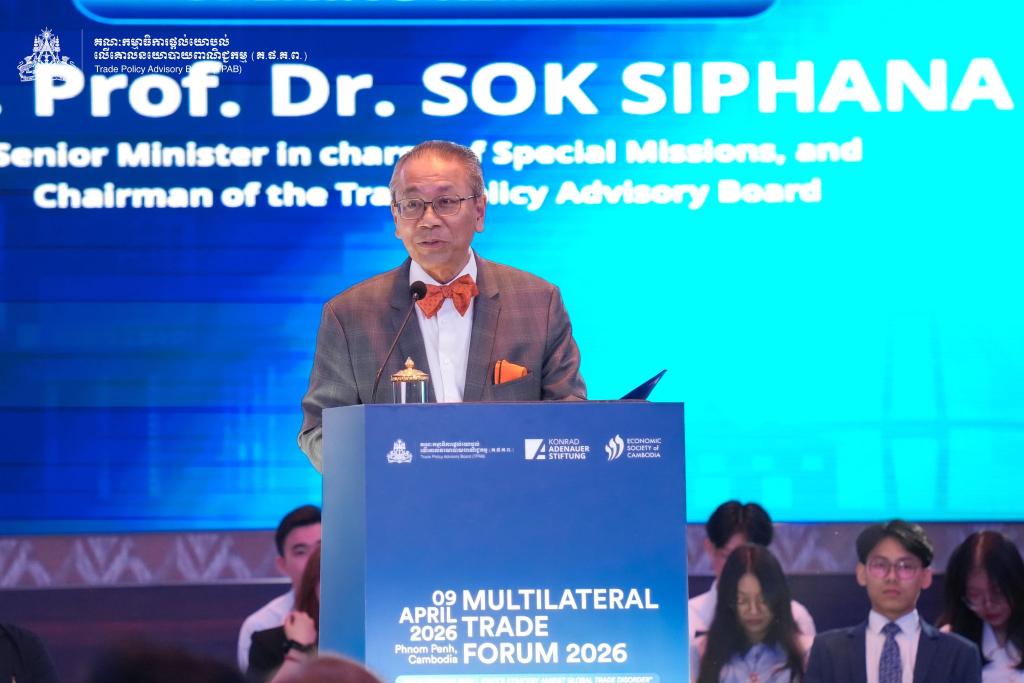
He framed 2029, the year Cambodia is scheduled to graduate from least developed country status, as the threshold that will end preferential market access under the EU’s Everything But Arms initiative and similar schemes. “Graduation should mark progress, not vulnerability,” he said.
An East Asia Forum analysis published in November 2025 concluded that Cambodia’s FDI “continues to be low-quality, highly concentrated in specific regions and reliant on China,” with less than one percent of approved FDI from the United States, United Kingdom, and Malaysia combined.
Moody’s rated Cambodia’s capacity to absorb an external shock. Wang Wenbin congratulated the Kingdom. Sok Siphana, with DPM-level attendance and German institutional co-hosting, told a room that included the World Bank and the ADB that for Cambodia, “it will be the big markets of CP-TPP countries.”