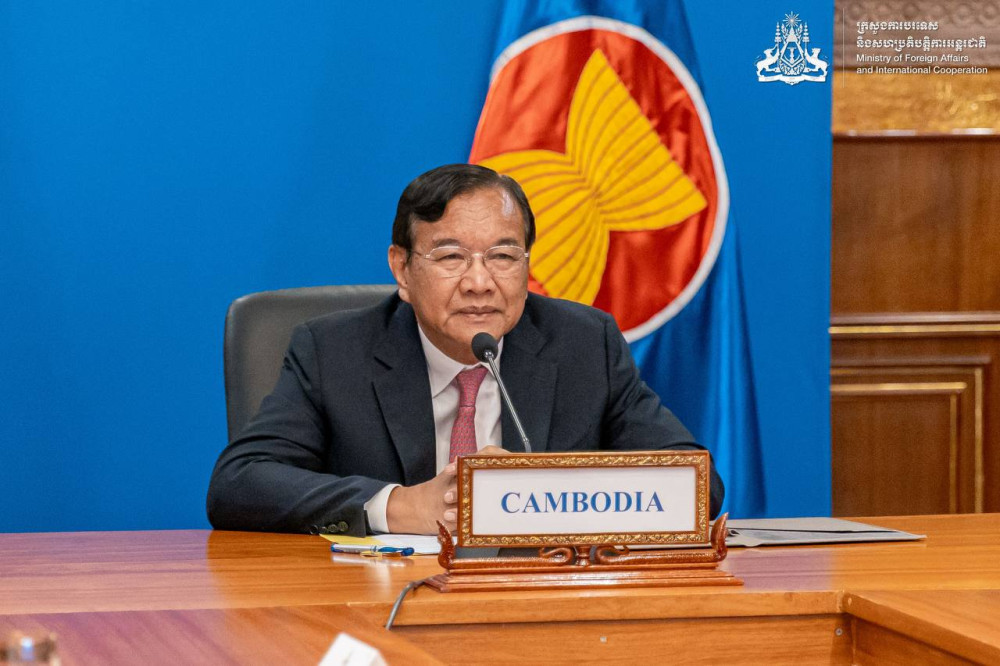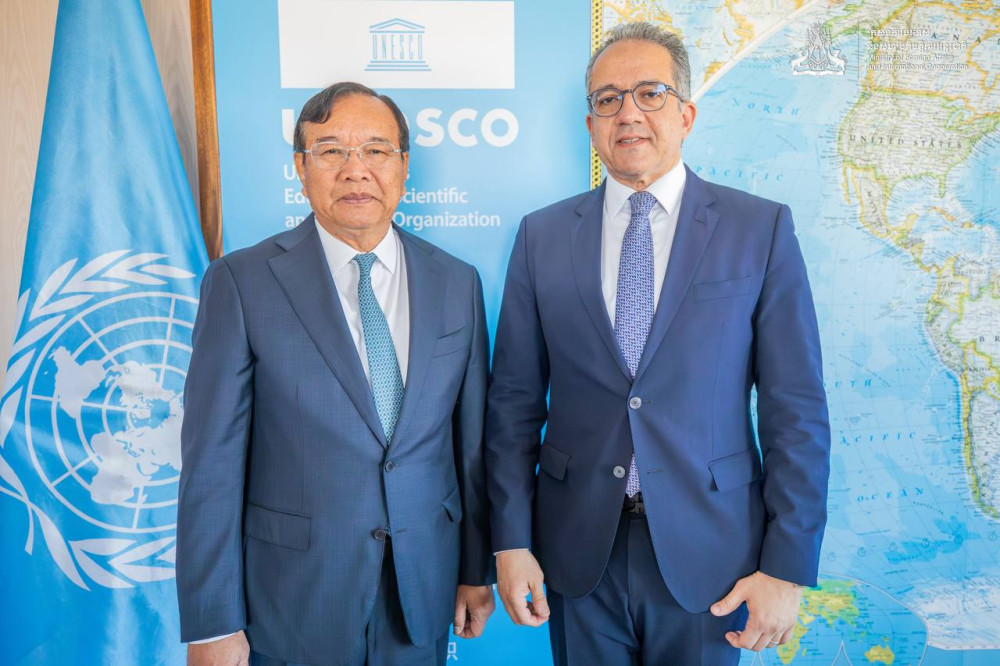
Cambodia signed institutional agreements with two competing great powers and issued a multilateral participation record at the United Nations within a single week in April 2026, offering a compressed view of the diplomatic architecture the country has built during its border dispute with Thailand.
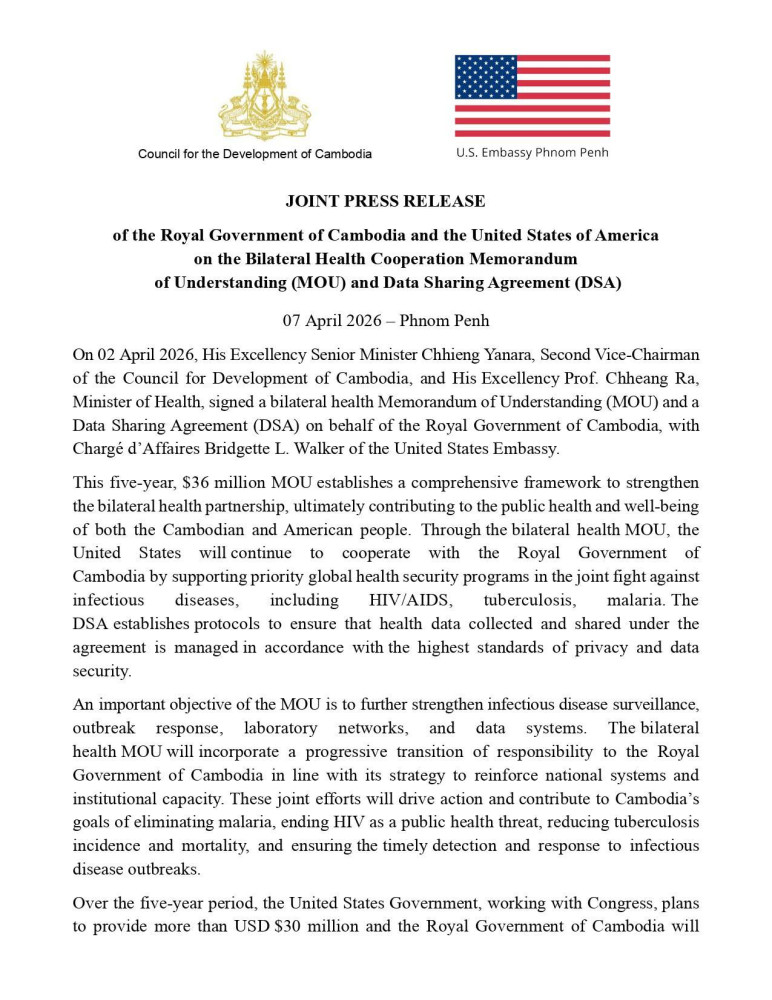
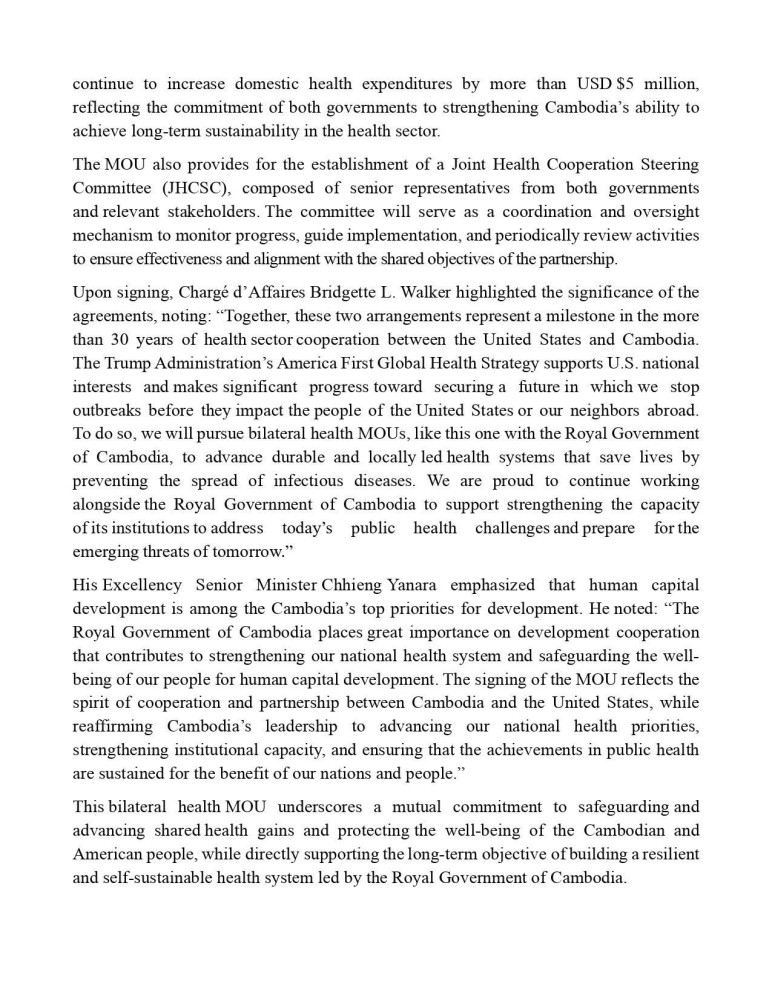
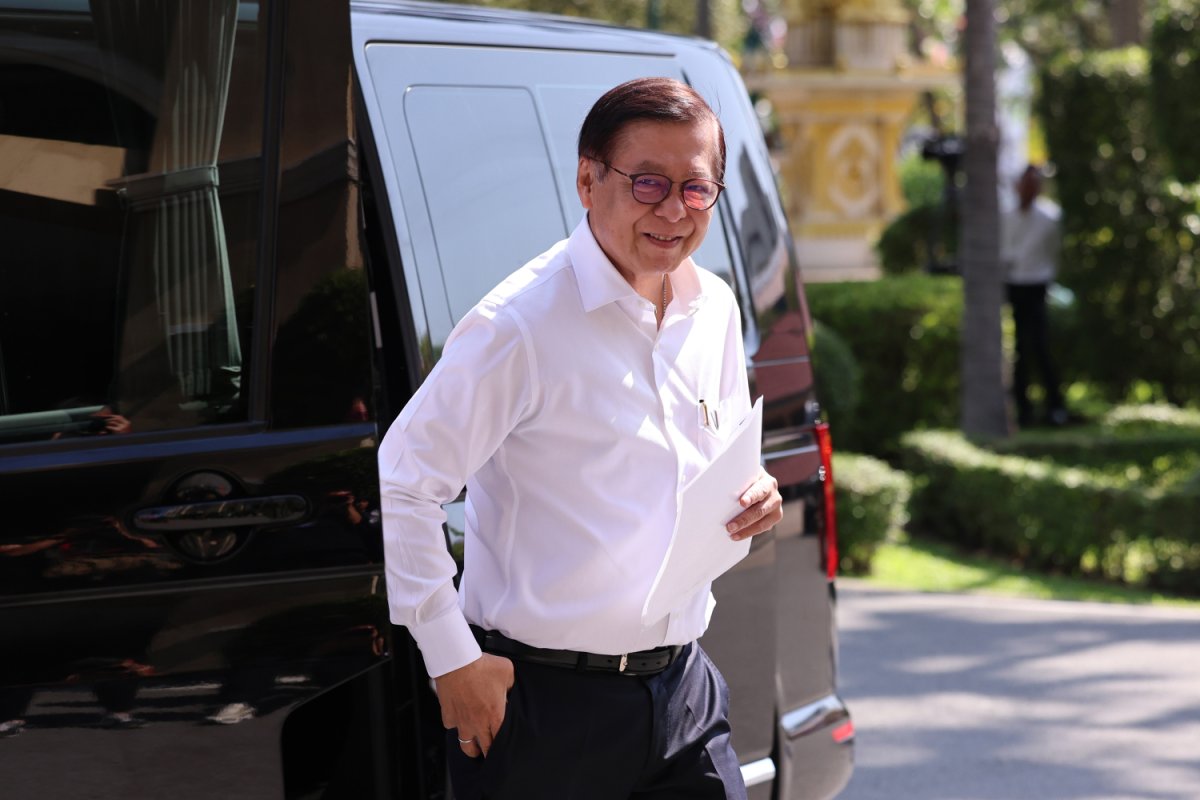
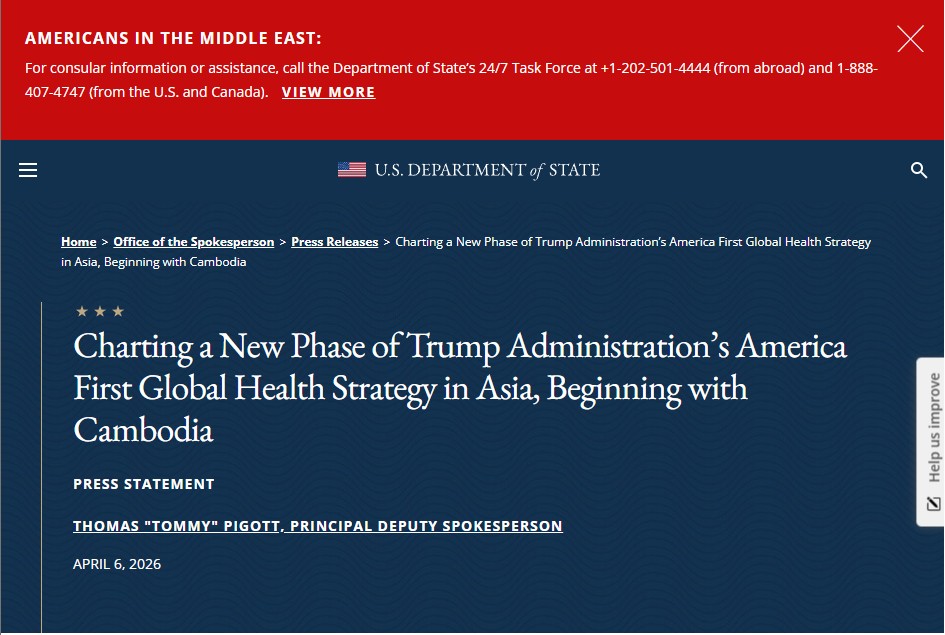
On April 2 in Phnom Penh, Senior Minister Chhieng Yanara and Health Minister Chheang Ra signed a five-year, $36.1 million bilateral health cooperation MOU and a Data Sharing Agreement with US Chargé d’Affaires Bridgette Walker. The State Department characterized the agreement as “the first to be signed through the Trump Administration’s America First Global Health Strategy in Asia.” Twenty-seven countries in Africa and Latin America had signed before Cambodia. None in Asia. The US committed $30.8 million for infectious disease surveillance, laboratory networks, and malaria elimination. Cambodia committed $5.3 million in domestic health expenditure. A separate $5 million allocation targets global health security, including pathogen identification capacity designed, in the State Department’s framing, to “accurately identify pathogens of epidemic and pandemic potential before they spread internationally.”
Walker’s statement at the signing made the strategic logic explicit: the Trump Administration’s health strategy “supports U.S. national interests” and aims to “stop outbreaks before they impact the people of the United States or our neighbours abroad.” The MOU creates a Joint Health Cooperation Steering Committee with senior representatives from both governments. The Data Sharing Agreement establishes protocols for health data collected under the partnership.
Four days later, on April 6, Prime Minister Hun Manet arrived in France for the One Health Summit in Lyon, where three Cambodian ministers had co-chaired a satellite event on April 1-2 alongside the French ambassador. France’s health engagement with Cambodia operates through a separate architecture: the Agence Française de Développement, which channels 70 percent of its health projects through a One Health framework covering zoonotic disease, antimicrobial resistance, and environmental health. The visit sat inside a broader bilateral diplomatic chain that includes a January 2024 Élysée joint declaration committing EUR 215 million in development conventions and a February 2026 meeting between Foreign Minister Sokhonn and French Foreign Minister Barrot.
On April 7, Cambodia’s Permanent Mission in Geneva issued a press release documenting its participation in the 61st session of the Human Rights Council, reporting 17 statements delivered, three Cuban-tabled resolutions co-sponsored, and ten joint statements supported.
Three instruments. Three partners. One week. The United States gets a forward-deployed disease surveillance node and its first Asian foothold in a $20.5 billion global health architecture. France deepens a development relationship that includes access to colonial-era border archives relevant to Cambodia’s territorial dispute with Thailand. The Human Rights Council receives Cambodia’s curated record of multilateral participation.
Cambodia, meanwhile, compounds its institutional position. Since October 2025, Phnom Penh has built engagement across the ICJ, the UN Security Council, the ASEAN Observer Team, France, the United States, UNESCO, and the HRC. The health MOU adds a second bilateral framework with Washington, following the $45 million security and stabilization package announced in January 2026 under the Kuala Lumpur Peace Accord. Combined US commitments during the border crisis period now exceed $81 million across security and health tracks.
The week of April 2-7 does not resolve any of Cambodia’s territorial, economic, or diplomatic challenges. What it documents is the tempo at which a country of seventeen million is accumulating institutional commitments from competing international partners while its border dispute with Thailand remains unresolved.