Thailand’s new cabinet takes office April 6. Its policy statement to parliament, confirmed by Prime Minister Anutin Charnvirakul on March 31, includes the formal cancellation of two bilateral agreements with Cambodia. No international treaty termination procedure has been initiated for either.
The 1969 Vienna Convention on the Law of Treaties, which Thailand treats as customary international law despite not being a signatory, requires a state to formally notify the other party before terminating a treaty and to engage any counter-claim before the termination takes effect. No such notification has been issued for MOU 44, the 2001 framework governing maritime boundary negotiation and joint petroleum development in the Gulf of Thailand, or for MOU 43, the 2000 land boundary agreement whose cancellation the Thai Senate’s ad hoc committee voted unanimously to recommend on March 24. Cambodia’s State Secretariat of Border Affairs stated on March 26 that under any circumstances Thailand cannot invoke domestic laws or internal procedures as grounds to revoke bilateral border treaties registered with the United Nations, citing VCLT Article 62(2)(a), which bars invoking changed circumstances to terminate boundary treaties. Thailand has not responded to that legal argument in its public communications.
Under MOU 43, Cambodia and Thailand identified the precise locations of all 74 French-era boundary pillars, established a joint geodetic network, and placed temporary markers to support demarcation. The Joint Boundary Commission that administers this work has not met since before the July 2025 fighting. Canceling the framework removes the mechanism through which the demarcation work becomes binding, without the notification procedure that would require Cambodia’s counter-position to be formally engaged before the termination proceeds.
Thailand has conditioned JBC resumption on a new government being in place, sufficient de-escalation, and completed demining. A meeting scheduled for January 2026 in Siem Reap was postponed by Thailand citing government formation procedures. Cambodia submitted a note verbale on January 5 requesting rescheduling. No date was set. Hun Manet said in February that Thailand had cited its election as a reason not to begin demarcation and stated: “Now the election is done, we hope that Thailand can start.” The new cabinet forms April 6. No JBC date has been announced.
Following the December 27, 2025 ceasefire, Thai forces erected barbed wire and placed shipping containers near four villages in Kork Romiet commune, covering 292 hectares and more than 1,300 houses, in areas that Cambodian district officials have identified as Cambodian territory and Thailand has characterized as existing defensive positions consistent with agreed de-escalation measures. International journalists documented the infrastructure in January 2026. Analysts including Cambodianess have noted that when formal demarcation eventually resumes, it will take place against ground conditions that have changed since the ceasefire in ways that favor Thailand’s current footprint, and that each month the JBC remains inactive extends that advantage without adjudication.
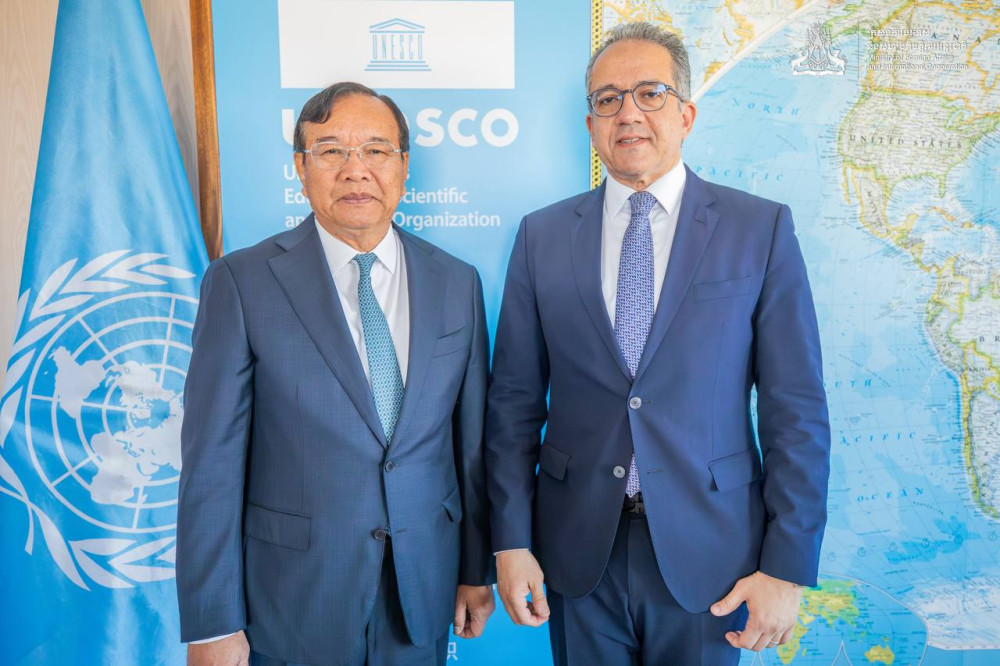
Thai Foreign Minister Sihasak Phuangketkeow is traveling to Paris and Geneva to present what Thailand characterizes as factual information to UNESCO and the UN Human Rights Council, framing Cambodia’s use of those forums as the circulation of distorted allegations. The visit arrives eight weeks after France offered Cambodia access to colonial-era demarcation archives from 1904 and 1907. Hun Manet wrote formally to President Macron in February accepting the offer. On February 23, Sihasak met French Foreign Minister Jean-Noël Barrot in Paris and, according to Thailand’s own MFA readout, commended France’s “neutral and constructive role” on the border situation. Two days later, France publicly offered the archives. Thailand’s readout of the February 23 meeting contains no mention of archives. Whether the archive question is on the agenda of Sihasak’s current visit has not been confirmed in any Thai government communication.
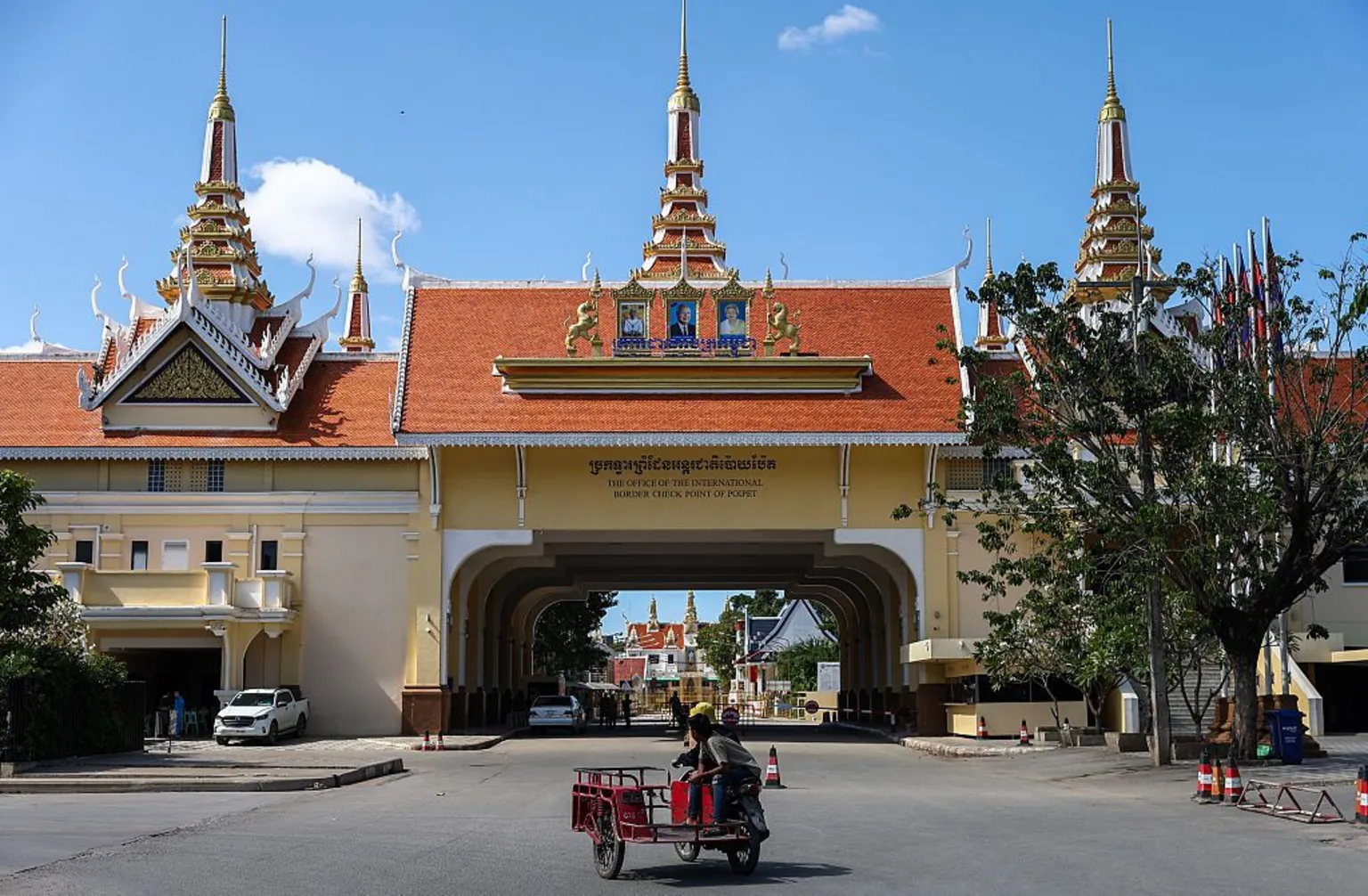
Nation Thailand reported on April 2 that Anutin called Thai traders shipping fuel to Cambodia “evil” and “national traitors” and announced a specialized enforcement unit to pursue them. AKP, Cambodia’s state wire, reported on April 3 that Hun Manet said Cambodia had suspended Thai fuel and gas imports since June 2025 and maintained no dependency on Thai supply. Thailand exported approximately 47.99 billion baht in refined fuel to Cambodia in 2024, according to the Thai Ministry of Energy, accounting for roughly 29 percent of Cambodia’s supply. The International Trade Centre places Thailand and Vietnam combined at over 60 percent of Cambodia’s petroleum imports that year. Cambodia has since expanded procurement from Singapore and Malaysia. Thailand’s Ministry of Labour confirmed on March 22 that approximately 53,809 Cambodian workers held permits valid until March 31. Those permits have expired. The border has been closed since mid-2025. Cambodia’s National Bank recorded a 27 percent drop in Thailand-sourced remittances in 2025, a $700 million contraction in total inflows, and a non-performing loan ratio of 8.9 percent, a ten-year high.
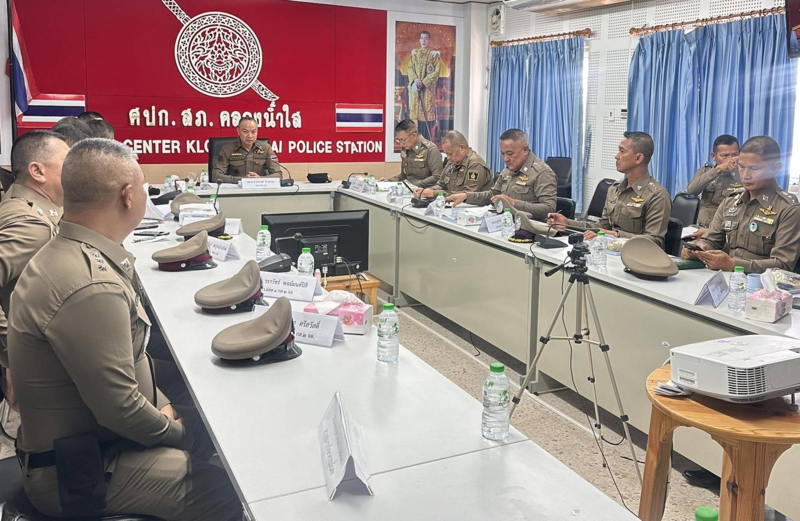
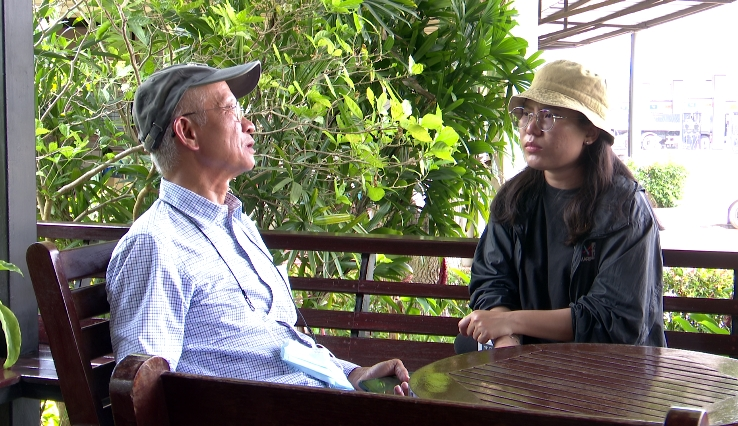
On April 4, two days before the cabinet oath, Veera Somkwamkid, chairman of the People’s Network Against Corruption, filed a formal complaint with a senior police official and aired a claim on Amarin TV’s Khao Arun program that soldiers from Cambodia’s Bodyguard Headquarters had entered Bangkok through a Sa Kaeo border canal to conduct intelligence gathering, sabotage, and assassination of Thai officials. Defence Minister Lt. Gen. Adul Boonthamcharoen said the information was preliminary, told the public to rely on official channels rather than social media, and confirmed the matter had been sent for field verification. As of April 5, no Thai security agency had confirmed any BHQ personnel in Bangkok. No arrest had been made. No target had been named. Cambodia’s Ministry of National Defence spokesperson Lt. Gen. Maly Socheata dismissed the claim as baseless fabrication intended to slander Cambodia.
One documented case of BHQ-affiliated personnel in Thailand during the conflict period ended without espionage charges. On August 6, 2025, police in Buri Ram arrested a Cambodian man, Win Da, found with BHQ-insignia uniforms, a firearm, and documents carrying four different names. Win Da said he had left military service in 2021 and denied being a spy. Police filed charges of illegal firearm possession and unlawful entry. Maly Socheata rejected that story as baseless Thai media fabrication the day after the arrest. In a parallel case from July 2025, a Cambodian fruit picker in Chanthaburi found with military uniforms was cleared after phone forensics found no evidence of intelligence activity. He had bought the uniforms via Facebook. A Bangkok-based page selling BHQ-branded apparel has over 15,000 followers.
A Phnom Penh court convicted Veera in February 2011 of espionage, illegal entry, and trespassing in a military zone, following his arrest near the Thai-Cambodian border in December 2010. Cambodia released him under royal pardon in July 2014. His advocacy for revocation of MOU 2000 and MOU 2001 is documented from 2010 through 2025.
Thailand’s stated position is that the MOU framework no longer serves its national interests after 25 years of stalled negotiations, that Cambodia failed to honour bilateral agreements, and that post-ceasefire positions are consistent with agreed de-escalation rather than territorial consolidation. The Thai Senate committee cited six reasons for recommending MOU cancellation, including Cambodia’s alleged provocation and failure to cooperate. Thai MFA statements have characterized Cambodia’s use of international forums as escalation rather than legal remedy. Sihasak said in March that JBC resumption requires mine clearance so that the area is safe for survey teams to operate. These positions are in the institutional record. They do not address why the political cancellation proceeds without the legal termination procedure, or why the JBC deferral carries no stated endpoint as the new government forms.
The policy statement arrives in five days. The JBC will not convene before it is delivered. Cambodian workers’ permits have expired at a closed border. France’s archive offer stands. A civic activist convicted in Cambodia of espionage in 2011 claimed Cambodia was running an assassination program in Bangkok two days before the oath. The Defence Minister sent the claim for verification.