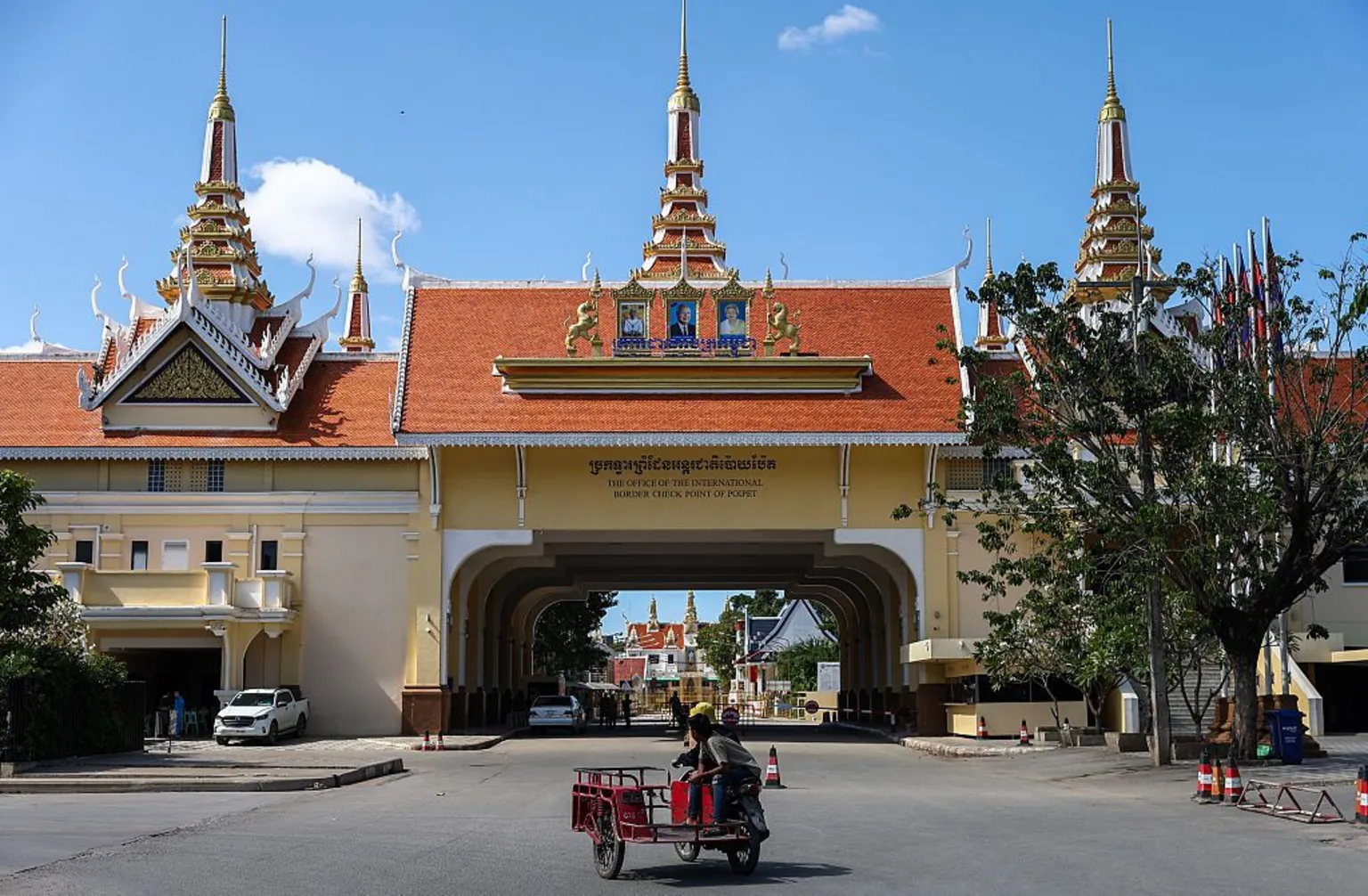

Thailand’s new government has announced it will cancel the 2001 maritime boundary agreement with Cambodia and is reviewing the 2000 land boundary pact. The Thai Senate has unanimously recommended revoking both. Neither move has followed the treaty termination procedure required by the Vienna Convention on the Law of Treaties, the legal framework Thailand’s own Senate committee cited as its basis.
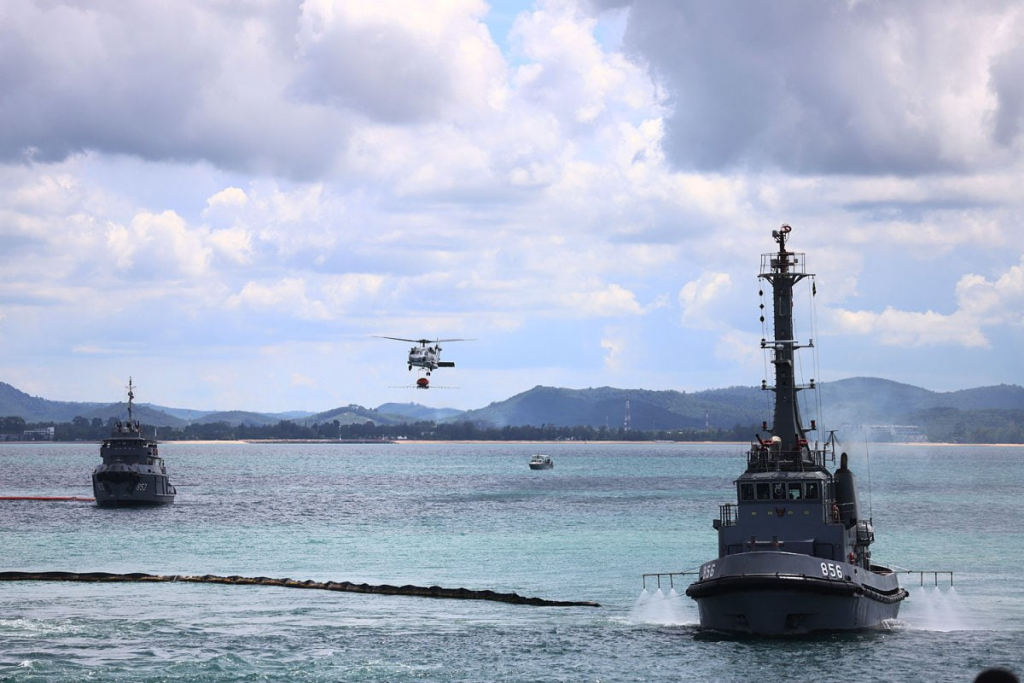
The two memoranda of understanding, signed in Phnom Penh in 2000 and 2001, govern the survey and demarcation of the 817-kilometer land boundary and the joint development of overlapping maritime claims. They are the only bilateral legal instruments governing how the two countries resolve their border, which produced armed conflict in 2025 that killed dozens of soldiers on both sides and displaced hundreds of thousands of civilians.
On March 24, the Thai Senate ad hoc committee chaired by Nophadol In-na publicly announced its unanimous recommendation to revoke both agreements, citing six grounds including what it described as Cambodian violations of the land boundary MoU and a fundamental change of circumstances. The committee explicitly invoked Article 60 of the Vienna Convention, which permits a party to terminate a bilateral treaty on grounds of material breach. Prime Minister Anutin Charnvirakul, appointed on March 20, confirmed on April 1 that the cancellation of the maritime agreement would be included in his government’s policy statement to parliament, according to the Bangkok Post. The land boundary agreement was described as under review.
Cambodia’s State Secretariat of Border Affairs rejected any unilateral revocation. Spokesperson Phay Siphan stated on March 26 that the land boundary MoU is a legally binding bilateral treaty that entered into force on signature and is registered with the United Nations. He cited Article 62(2) of the Vienna Convention, which prohibits invoking a fundamental change of circumstances to terminate a treaty that establishes a boundary.
Both sides are citing the Vienna Convention. They are citing different articles. And neither has initiated the procedures the Convention requires before a treaty can be terminated.
The land boundary MoU contains no termination clause, no withdrawal provision, and no expiry date. Under the Vienna Convention, a treaty without a termination provision is governed by Article 56, which provides that such a treaty is not subject to denunciation or withdrawal unless the parties intended to admit that possibility or the right is implied by the nature of the treaty. A boundary demarcation agreement is designed to fix a border, not to create a temporary arrangement. Even if withdrawal were permitted, Article 56 requires not less than twelve months’ notice. No such notice has been given.
Thailand’s Senate committee invoked Article 60 rather than Article 56. Article 60 permits termination where a party has committed a material breach, defined as repudiation of the treaty or violation of a provision essential to its object and purpose. Thailand’s Ministry of Foreign Affairs has documented specific allegations to support this claim: that Cambodia constructed a community market and equestrian monument in the An Mah-An Ses area and an administrative building in Ta Phraya District, which Thailand characterizes as violations of Article V of the MoU, with formal protests lodged since 2010. Cambodia has not publicly addressed these specific allegations in sources located for this article.
But Article 60 does not self-execute. Article 65 of the Convention sets out mandatory procedure: the party seeking termination must provide written notification specifying the proposed measure and the reasons for it. A minimum three-month waiting period follows. If the other party objects, the dispute must be resolved through the means indicated in Article 33 of the United Nations Charter, including negotiation, mediation, arbitration, and judicial settlement. No written notification under Article 65 has been located in publicly accessible records. No waiting period has started. No formal specification of material breach has been communicated to Cambodia through treaty channels.
Cambodia’s response cited Article 62(2), which correctly blocks the changed-circumstances path for boundary treaties. It did not address the material breach argument under Article 60 or the procedural requirements of Article 65.
Thailand has neither signed nor ratified the Vienna Convention. The relevant provisions are widely treated as reflecting customary international law, and both governments have invoked its articles in this dispute. But Thailand cited the Convention selectively, invoking the article that authorizes termination while the Convention’s procedural requirements remain unfollowed.
Thailand’s own governmental record compounds the problem. On March 11, thirteen days before the Senate committee’s recommendation, the Ministry of Foreign Affairs described the land boundary MoU as “the sole framework for the survey and demarcation of the land boundary between the two countries.” On January 19, Thailand’s Permanent Representative to the United Nations told the Security Council that boundary matters “must be addressed within the bilateral framework” of the MoU and that Thailand intended to resume the Joint Boundary Commission “at the earliest practical opportunity” following the formation of a new Cabinet after the February general election. The new Cabinet was formed on March 20. Its first substantive action on the border was not resuming the commission. It was announcing the cancellation of the maritime agreement.
The Joint Boundary Commission created by the land boundary MoU has produced measurable results. Cambodia’s SSBA stated that the commission identified the locations of all 74 French-era boundary pillars along the border. The two sides mutually agreed on 45 boundary pillar coordinates. In November 2025, joint survey teams placed 166 temporary markers between Boundary Pillars 52 and 59. A 13-year gap elapsed between the fifth and sixth commission sessions because Thailand did not convene a meeting between 2012 and 2025. A seventh session, scheduled for January 2026, was postponed twice.
Even under the Vienna Convention’s own terms, the progress already achieved would survive termination. Article 70 provides that ending a treaty does not affect any right, obligation, or legal situation created through the treaty’s execution prior to its termination. The agreed coordinates and placed markers are established facts of bilateral practice. Cancellation of the agreement would eliminate the mechanism. It would not erase what the mechanism produced.
As of April 2, 2026, neither memorandum of understanding has been formally terminated under international law. The political announcements from Thailand’s Senate and prime minister are domestic actions. Under the legal framework both governments have invoked in this dispute, the agreements remain in force until the procedural requirements for termination are met. No such procedure has begun.