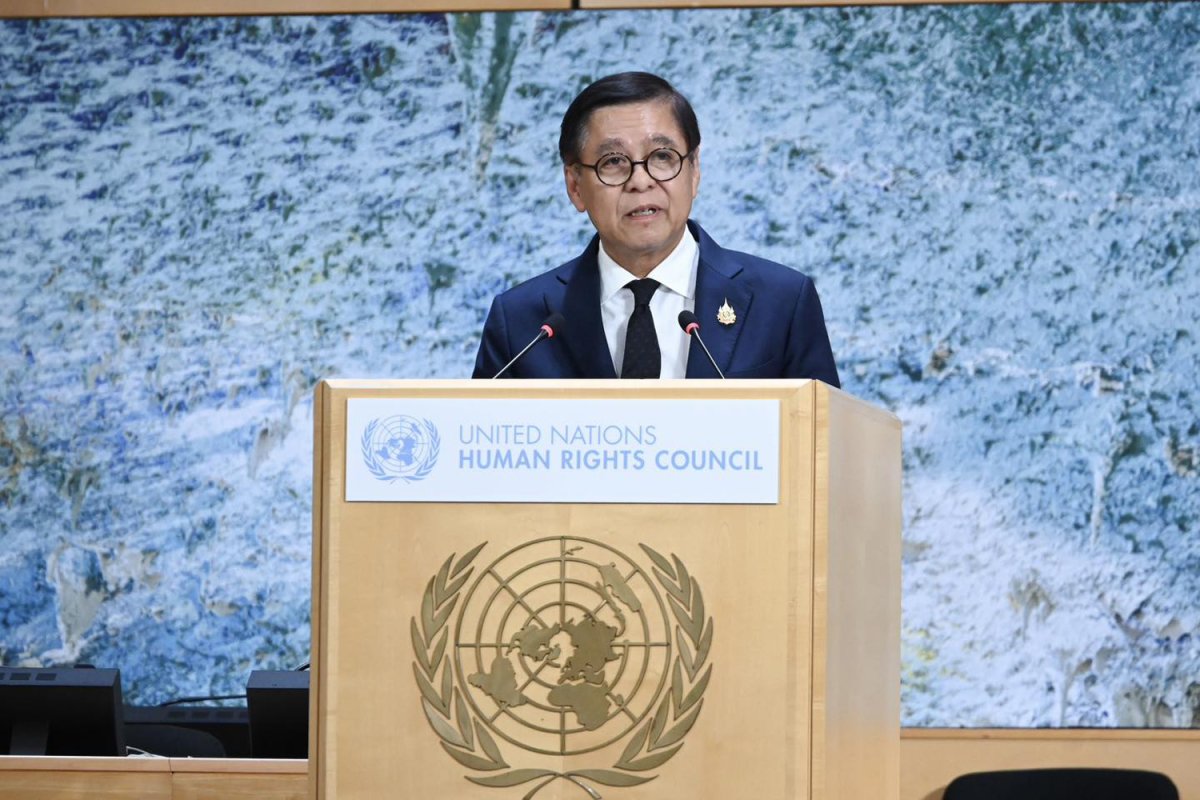
Thailand’s Foreign Affairs Minister Sihasak Phuangketkeow said this week that border negotiations with Cambodia cannot proceed until the Joint Boundary Commission is reconstituted. The same government ordered an expedited study of how to terminate the commission’s companion maritime treaty in its policy statement to parliament on April 9. The Thai Senate voted on March 24 to recommend cancellation of the commission’s parent treaty.
Cambodia’s State Secretariat of Border Affairs transmitted a Note Verbale on April 7 proposing engagement across four institutional levels. The note called for a special Joint Boundary Commission session in Siem Reap from April 17 to 22, a Joint Survey Team deployment from April 20 to 24, the 12th Operational Group meeting, and the 5th Joint Technical Sub-Commission session in the first week of May. Thailand declined.
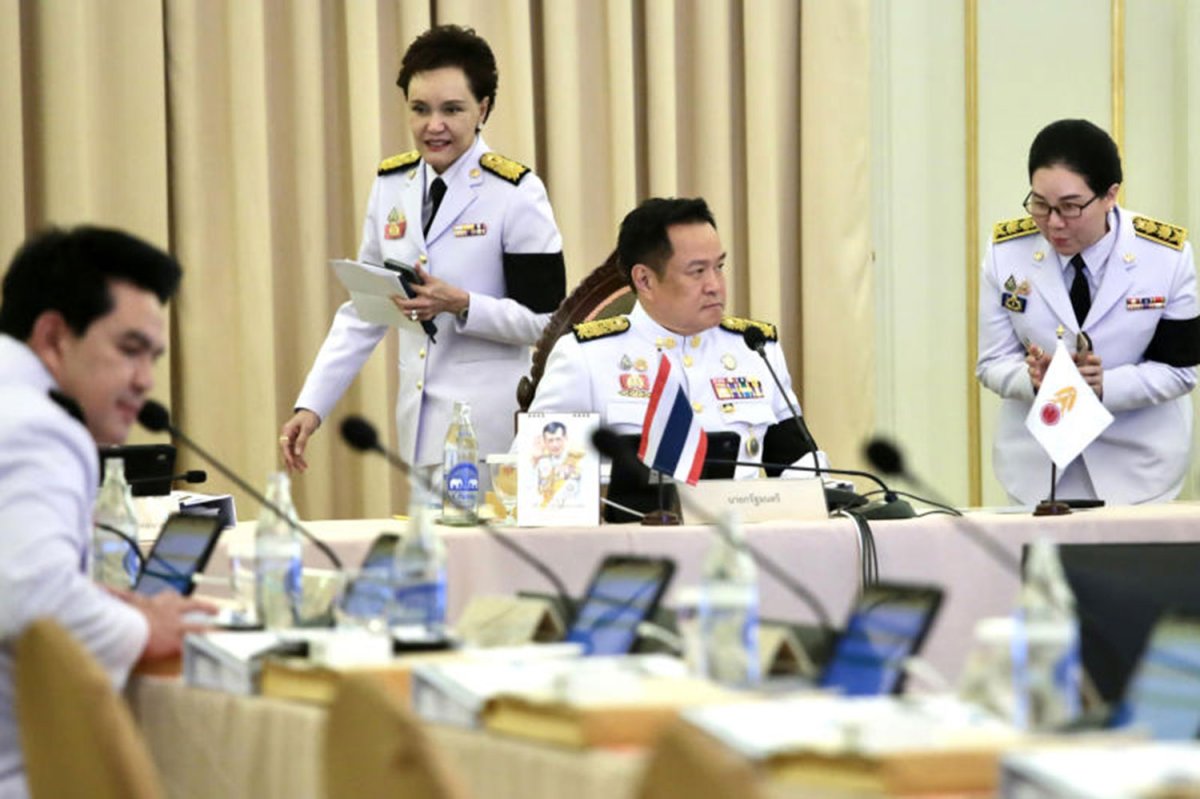
Sihasak said Thailand was not ready. He cited incomplete internal procedures: the Thai JBC team had not been reconstituted, no Thai chair had been appointed, and security agencies and the military had not aligned on a unified position.
The Joint Boundary Commission is established by Articles II and III of the Memorandum of Understanding on the Survey and Demarcation of Land Boundary, signed by Cambodia and Thailand on June 14, 2000. Article II creates the commission’s co-chairmanship and requires annual meetings. Article III assigns its mandate for joint survey, boundary pillar demarcation, and supervision of technical sub-commissions. Article VII directs that any dispute arising from the treaty “shall be settled peacefully by consultation and negotiation.” The precondition Sihasak set for talks rests on a treaty the Thai government is working to dissolve, under a mechanism the treaty itself requires Thailand to convene.
On December 27, 2025, Cambodia and Thailand co-signed the Joint Statement of the 3rd Special General Border Committee, registered with the United Nations as A/80/593-S/2026/37. Both governments committed to the Joint Boundary Commission as the operative mechanism. The Thai Senate vote on cancellation followed three months later.
Cambodia’s State Secretariat of Border Affairs, in a statement dated March 26, invoked Article 62(2)(a) of the Vienna Convention on the Law of Treaties. The provision bars any state from invoking changed circumstances to terminate a treaty that establishes a boundary. It admits no exceptions. The State Secretariat also invoked uti possidetis juris, the post-colonial principle that anchors Cambodia’s border to the 1904 and 1907 Franco-Siamese Treaties. The International Court of Justice has applied the same principle on treaty termination in Somalia v. Kenya, holding that agreements registered with the United Nations cannot be unilaterally dissolved outside their own established procedures. Both MoU 2000 and MoU 2001 are registered under Article 102 of the UN Charter. On April 9, Cambodia’s Ministry of Foreign Affairs and International Cooperation issued a statement on the maritime instrument. MoU 2001, the ministry said, “remains in force until its objectives are fully achieved.”
Cambodia’s sovereignty over the Khmer heritage sites along the Phnom Dangrek escarpment rests on the Franco-Siamese Treaty of 1907, the 1962 International Court of Justice judgment in the Preah Vihear case, and the 2013 ICJ interpretation of that judgment. Cambodia filed UN Security Council document A/80/587-S/2026/7 on January 5. Thailand filed A/80/593-S/2026/37 on January 19.
“Negotiations must depend on readiness,” Sihasak told reporters. “It is unclear whether the pressure is aimed at achieving genuine dialogue.”
The April 7 Note Verbale was not Cambodia’s first attempt to convene the commission. The 7th session was postponed twice in January, first on January 8 and again on January 14. The 6th session, held in June 2025, was the first in thirteen years. Thailand’s January 19 UN filing said the Thai side of the commission was “currently finalizing internal procedures, including the formal mandate, to be issued following the formation of the new Cabinet after the General Election in Thailand scheduled for 8 February 2026.”
The new Thai cabinet was sworn in on April 6. The Foreign Affairs Minister cited the same internal procedures twelve days later.
On March 11, the Thai Foreign Ministry described MoU 2000 as “the sole framework” for the bilateral demarcation process. Thailand’s record on that mechanism since includes a thirteen-year gap between the 5th and 6th sessions, the double postponement in January, the declined April proposal, and the pending study of the parent treaty’s termination.
Sihasak added a further condition this week. “We must reassess the situation and ensure all sides, particularly security and military agencies, are in agreement before proceeding,” he said. The requirement places Thailand’s most conservative institutional actors in a formal gatekeeping position. No mechanism for resolving military disagreement on a defined timeline was described.
Thailand’s stated position rests on internal procedural logic. Sihasak said on April 11 that he would not chair the Thai JBC side himself, citing the need for expertise in international law and boundary issues. He said multi-agency alignment, including security and military actors, must precede any engagement. He said MoU 2001 remains legally in force, because no VCLT Article 65 notification has been filed, no three-month objection period has been triggered, and no instrument of termination has been communicated to Cambodia. In the same statement, Sihasak said MoU 2000 “should be handled more carefully,” because “there has already been some degree of progress under that framework.” The Thai Senate had voted eighteen days earlier to cancel that same treaty.
The record beside those arguments is this. The commission has no confirmed chair, no reconstitution timeline, and no internal approval. Its parent treaty is under active termination study. The UN-filed timeline tying JBC restart to the new cabinet has been overtaken by the cabinet’s formation. Cambodia’s legal position under VCLT Article 62(2)(a), uti possidetis juris, ICJ precedent in Somalia v. Kenya, and the Preah Vihear rulings of 1962 and 2013 is filed and does not depend on reconstitution.
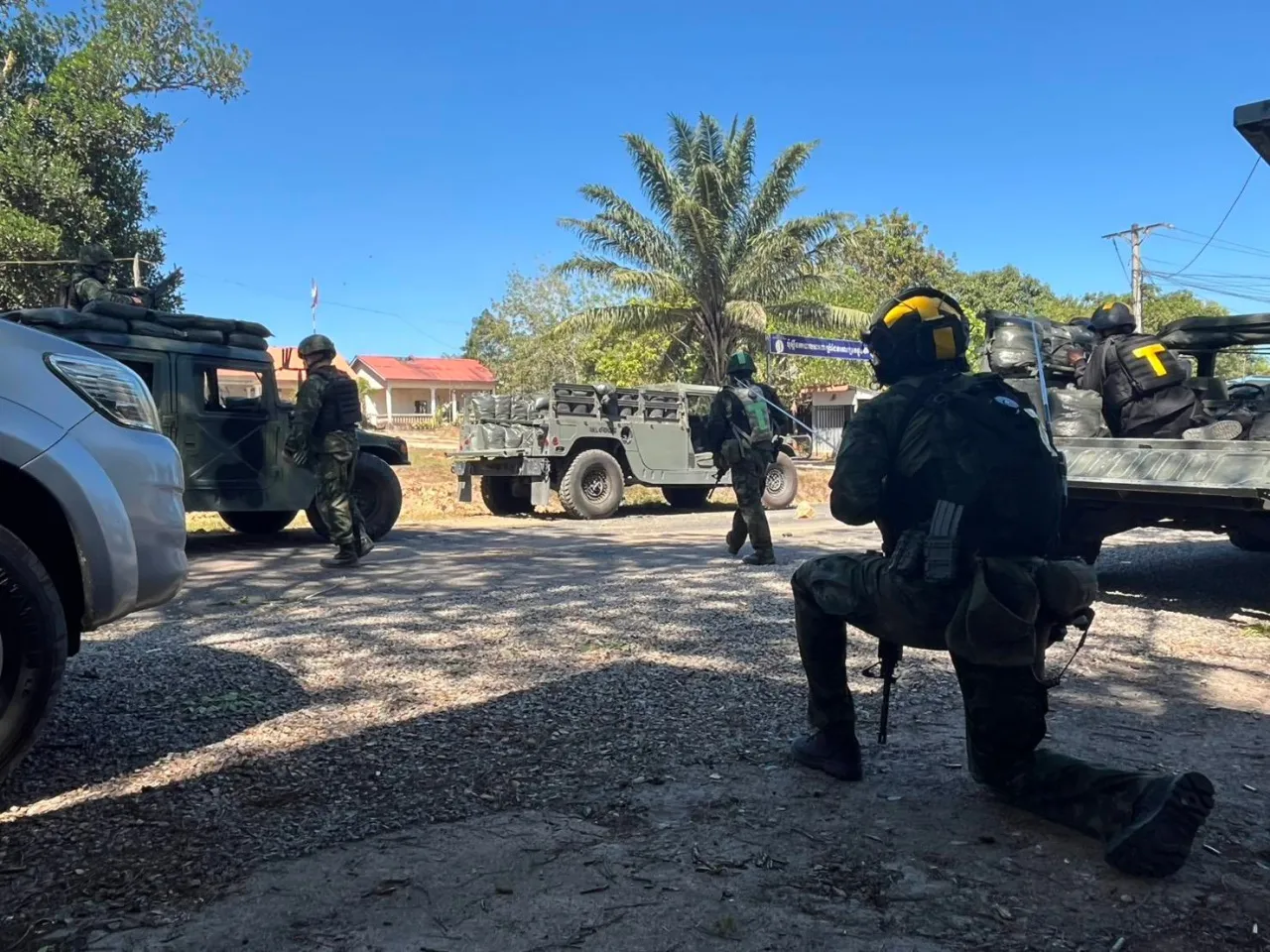
At Prasat Ta Krabey, the 11th-century Khmer temple in Banteay Ampil District, Oddar Meanchey Province, there is no timeline for the withdrawal of the Thai military forces that took the site on December 15, 2025. Thai authorities control access from the northern side. They administer a neighbouring position, designated in Thai military nomenclature as Hill 350, under the same regime. More than 14,000 visitors reached the sites from the Thai side during the April 13 to 16 Songkran holiday. Thailand’s Fine Arts Department has conducted preliminary surveys of the temples, with restoration pending budget allocation.
Cambodia has filed two Note Verbales, a UN Security Council document, a formal legal rebuttal, a ministerial statement, and formal proposals of specific meeting dates since December 2025. Thailand has declined the April proposals. The commission Thailand requires before talks begin has not been reconstituted. The treaty that would give it authority is under study for termination. Sihasak did not state when either condition would be resolved.