On April 18, 2026, a Thai-origin English and Chinese-language publication described three Cambodia-side border sites as having “effectively fallen under Thai control since clashes ended,” embedding the claim in a background paragraph with no source, no date, no legal framework, and no attribution.
Thailand’s own government had already answered the question those missing elements were designed to foreclose.
“The area came under Thai control,” Thailand’s Government Public Relations Department wrote on April 10, addressing the Surin frontier sector. The same statement added that this “does not represent an exercise of sovereignty over another country’s territory.”
That sentence is the legal architecture separating a ceasefire position-holding arrangement from a territorial transfer. Thai press has omitted it across four months of print cycles at three separate sites.
At Chong An Ma, a temporary border trade checkpoint in Ubon Ratchathani that Cambodia closed in June 2025 as conditions along the frontier deteriorated, Thailand’s own reporting shifted register across six months. In August 2025, Thairath quoted Thai Army spokesman Winthai Suvaree acknowledging Thai troops controlled the monument area there, but within a “claimed area” governed by a joint practice arrangement between both sides. The qualifier was explicit: contested, not settled.
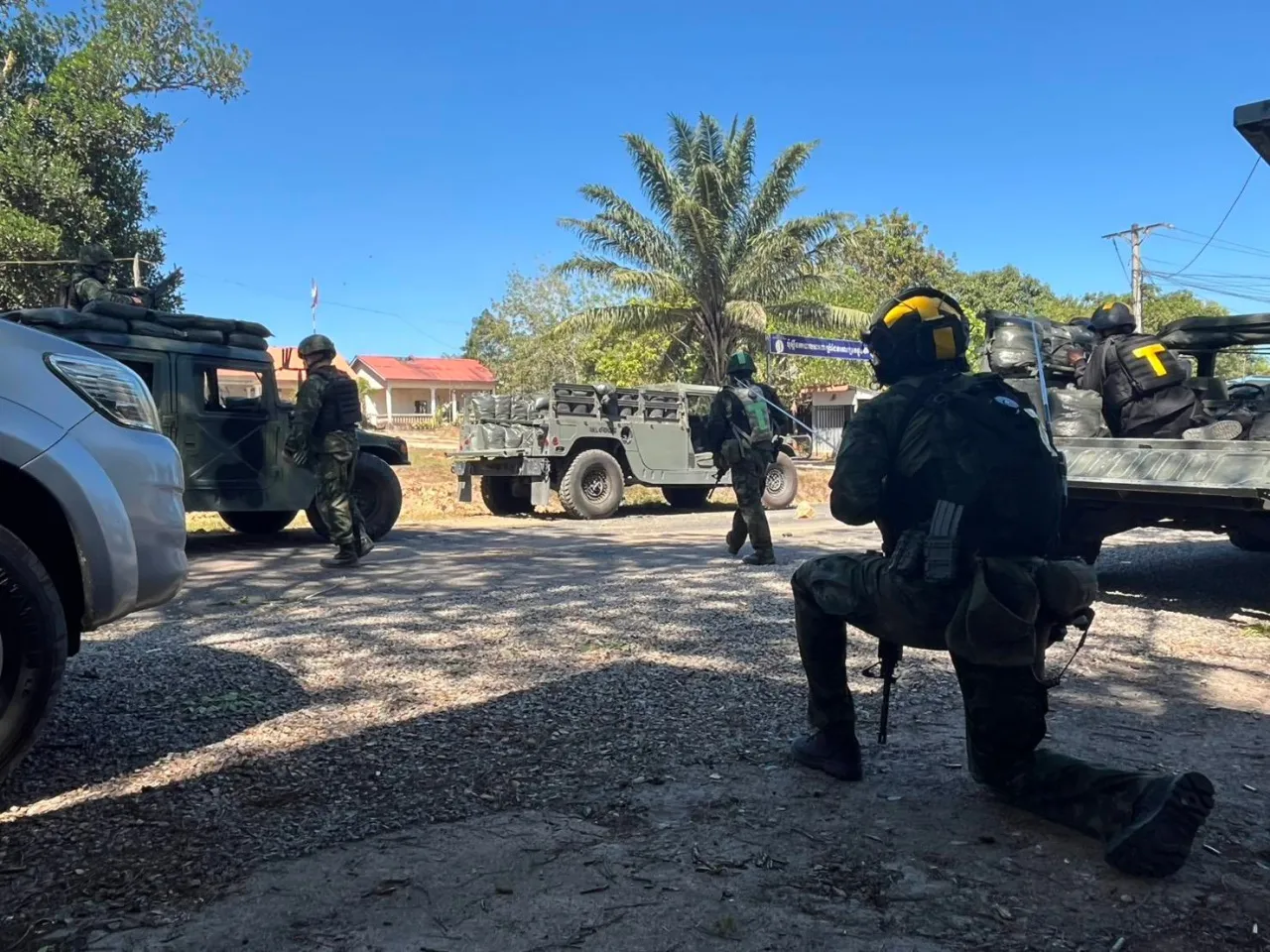
By December 12, as fighting intensified, Nation Thailand’s headline read “Chong An Ma now 100% under control” and quoted Defence Ministry spokesman Rear Adm. Surasan Kongsiri: “Thailand now has full control of this area.” The same framing appeared December 17, December 25, and March 30, 2026, across Nation Thailand and Thairath. The “claimed area” qualifier had disappeared entirely.
Thomoda Casino in Trat followed the same arc. Bangkok Post placed the site in November 2025 inside a live territorial dispute, describing it as a “former casino building in Cambodia’s Thmor Da” that “encroaches on” Thai-claimed land. On December 20, Nation Thailand and Thairath both reported Thai naval forces had retook or entered control and retaken the Thomoda Casino area. By March 26, 2026, Nation Thailand quoted a named Thai naval officer that the “Thmor Da casino building… is now under Thai control.” The territorial dispute framing from November had been replaced with the administrative-fact framing of March.
The December 27, 2025 General Border Committee Joint Statement, which Thailand’s military has cited in justifying its border positions, states in Clause 3: “All arrangements under this Joint Statement are without prejudice to the border demarcation and international boundary between Thailand and Cambodia.” Clause 2, which Thailand invoked to justify position-holding at O’Smach, requires both sides to “maintain current troop deployments without further movement” and explicitly prohibits “construction of military fortifications or structural modifications that alter the territorial status quo.”
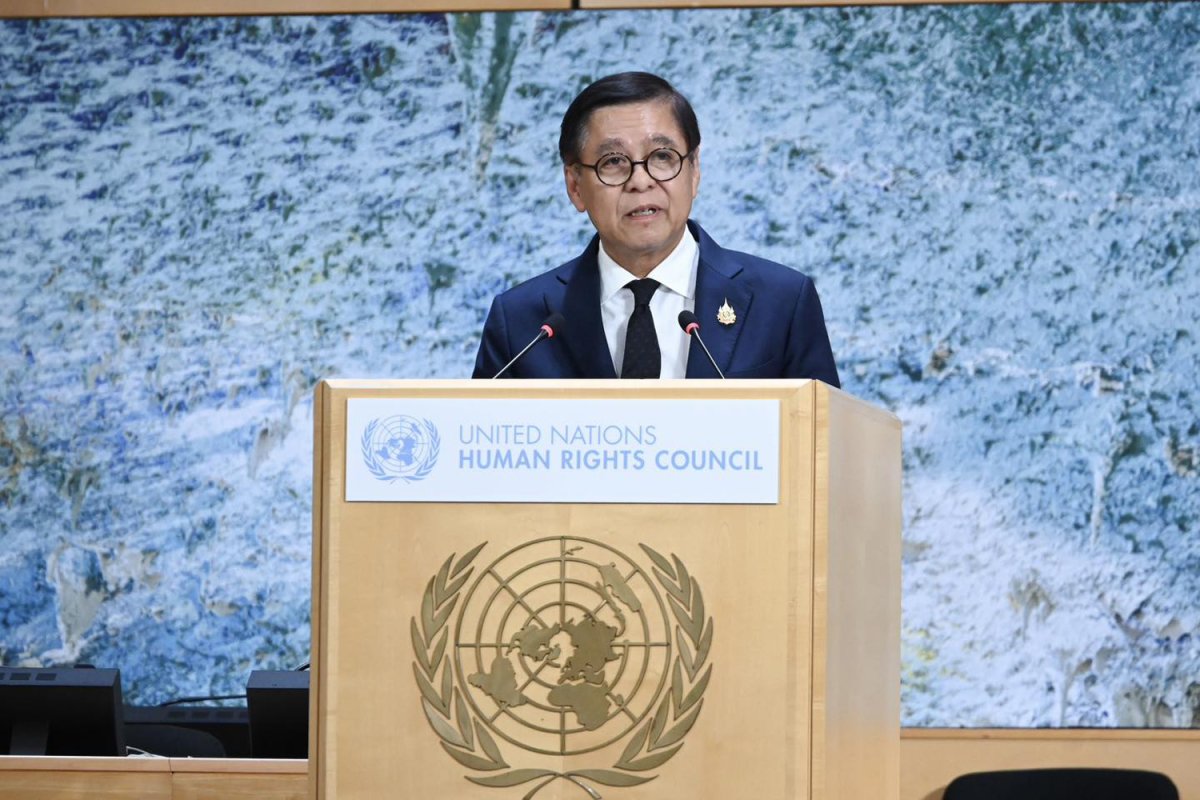
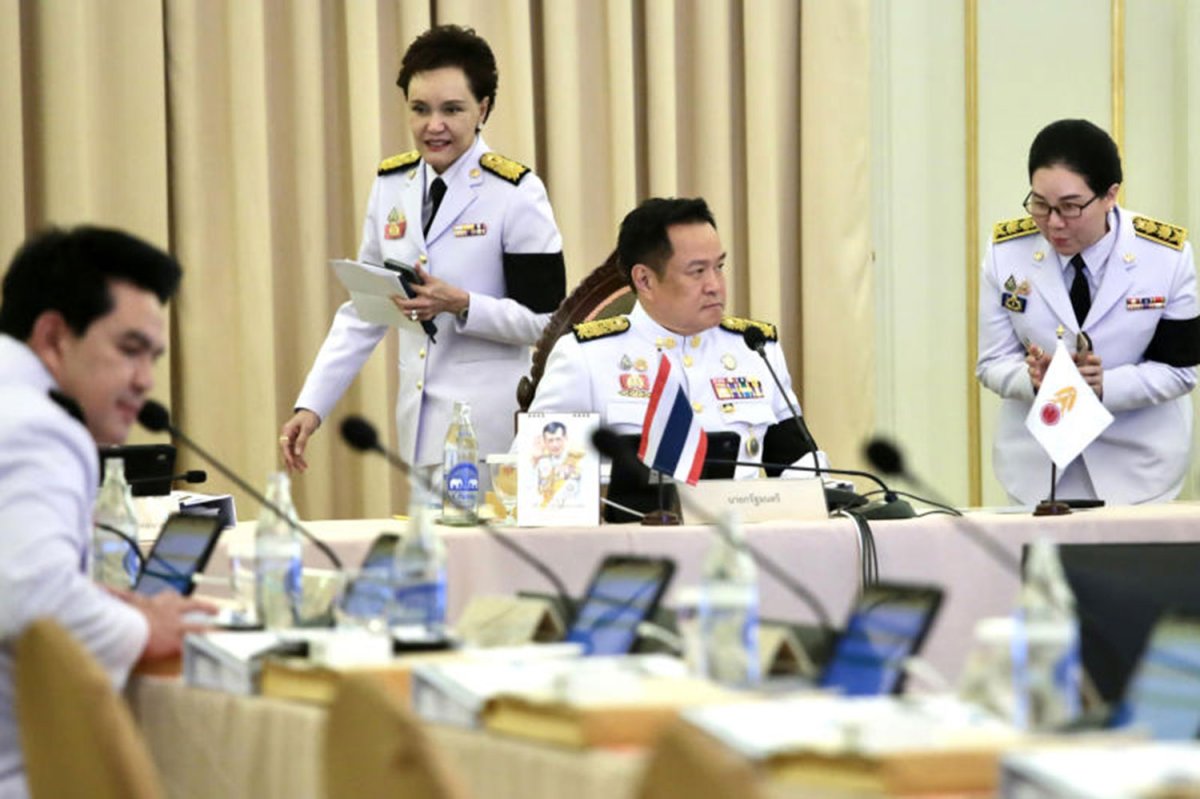
Thailand’s MFA stated January 12, 2026 that maintaining positions under Paragraph 2 “cannot be misconstrued as territorial occupation.” Thailand’s PRD stated January 2 that troop deployments in areas under its control did not constitute “a border change.” Thailand’s PRD stated April 10, eight days before the article embedding the three sites as settled Thai territory, that control in the relevant sector “does not represent an exercise of sovereignty over another country’s territory.”
Cambodia’s legal position rests on instruments both governments already signed. Memorandum of Understanding 2000, the land boundary agreement that created the Joint Boundary Commission mechanism, requires demarcation “to be jointly conducted in accordance with” the 1904 Franco-Siamese Convention, the 1907 Franco-Siamese Treaty, and the maps produced by the 1904 Commission. Cambodia’s Supreme Council on State Border Affairs has additionally invoked Vienna Convention on the Law of Treaties Article 62(2)(a), which prohibits changed-circumstances withdrawal from boundary treaties, and the principle of uti possidetis juris, the post-colonial doctrine treating inherited frontiers as inviolable.
Neither MOU 2000 nor the Joint Statement grants either party unilateral territorial authority at a contested site. The ASEAN Foreign Ministers’ Retreat statement of January 29 describes the ASEAN Observation Team’s role as “verifying and ensuring the effective implementation of all measures based on its mandate,” process language rather than territorial adjudication. On the retrievable record, no bilateral agreement, ASEAN document, or finding from the AOT assigns lawful administrative status to Thomoda Casino, Chong An Ma, or O’Smach.
A Cambodian Ministry of National Defence press release, published by the Agence Kampuchea Presse on April 3, described O’Smach as “Cambodian territory currently under illegal occupation by Thai forces.” The same release noted the AOT had verified conditions at the O’Smach International Border Checkpoint on March 29 and that Thai forces subsequently deployed two armoured vehicles and approximately 70 personnel to the site after the monitoring visit. Cambodian Prime Minister Hun Manet told Reuters in February that Thai forces were “occupying deep into Cambodian territory in many areas, further beyond even Thailand’s own unilateral claim.”
Cambodia has simultaneously pursued the bilateral legal channel its officials say the dispute requires. Since December 2025, the Cambodian government has sent six documented Note Verbales to Thailand proposing dates for the Joint Boundary Commission meetings provided for under MOU 2000. Hun Manet reiterated the call for JBC revival after returning from France in April 2026. On the retrievable record, Thailand has not responded with agreed dates for any of the proposed sessions.
The mechanism visible in the April 18 publication is progressive normalization by omission. When a claim appears in print as wartime seizure language, “retook” or “gained full control,” it carries the register of a military operation whose legal consequences remain open. When the same claim appears months later in a background clause without source, date, or contestation, the international reader absorbs it as history rather than examining it as argument. The April 18 publication targets English and Chinese-language audiences simultaneously, the two readerships most consequential for how the dispute’s territorial dimension will be understood internationally.
Thailand’s sovereign disclaimer is not incidental to this analysis. It is the evidence that Thailand’s government understands the legal line between position-holding and sovereignty transfer. The press framing runs ahead of the legal position. The distance between them is the mechanism.
The December 27 ceasefire established a line. No instrument since has converted that line into a border. That includes Thailand’s own record.