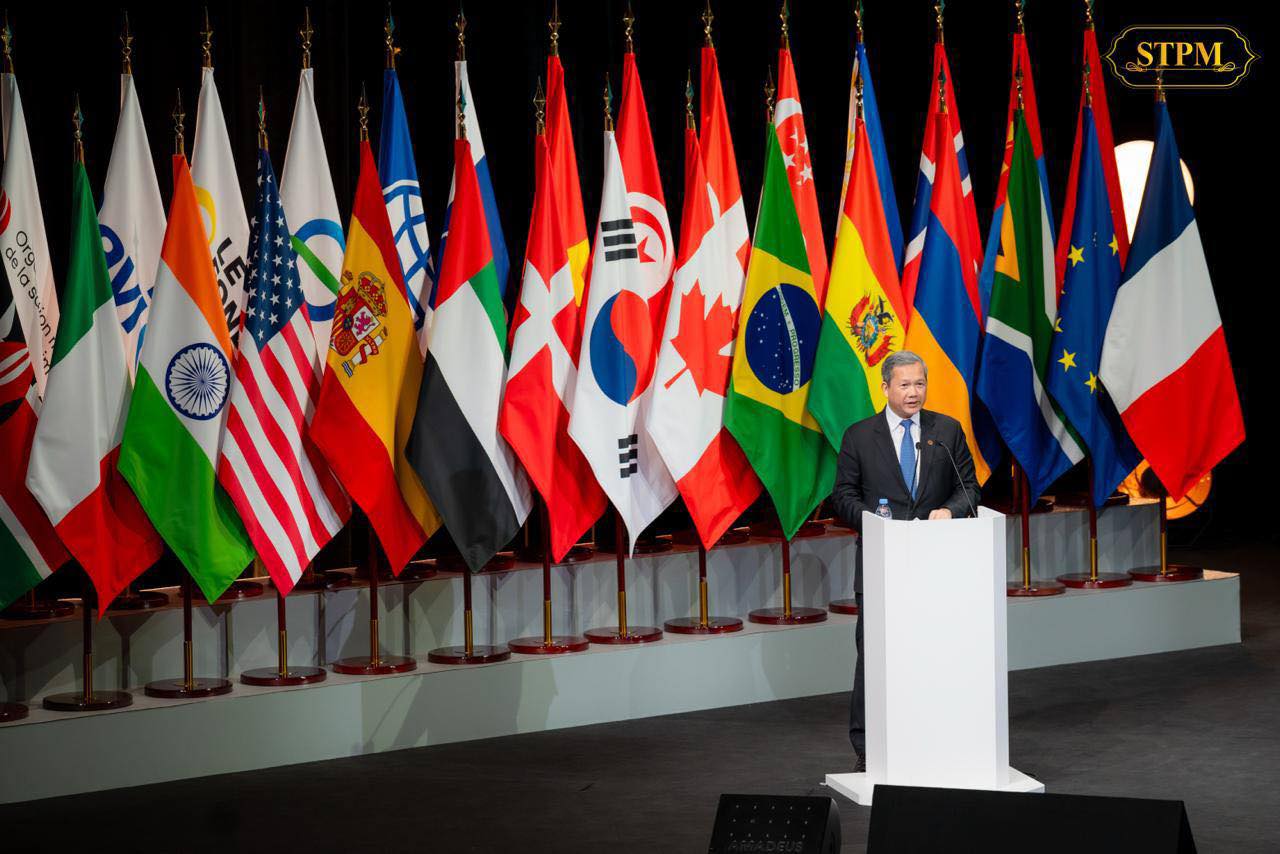
The Norodom Sihanouk Garden was inaugurated on January 8 in Fère-en-Tardenois, the French town where Cambodia’s late king and Hun Sen held their first meeting in 1987, beginning the process that produced the Paris Peace Accords. Princess Norodom Arunrasmy represented the royal family. The prefect of Aisne attended. France’s role in brokering Cambodia’s peace settlement was planted into French municipal ground three months before Prime Minister Hun Manet arrived at the Élysée to secure a different kind of French commitment.
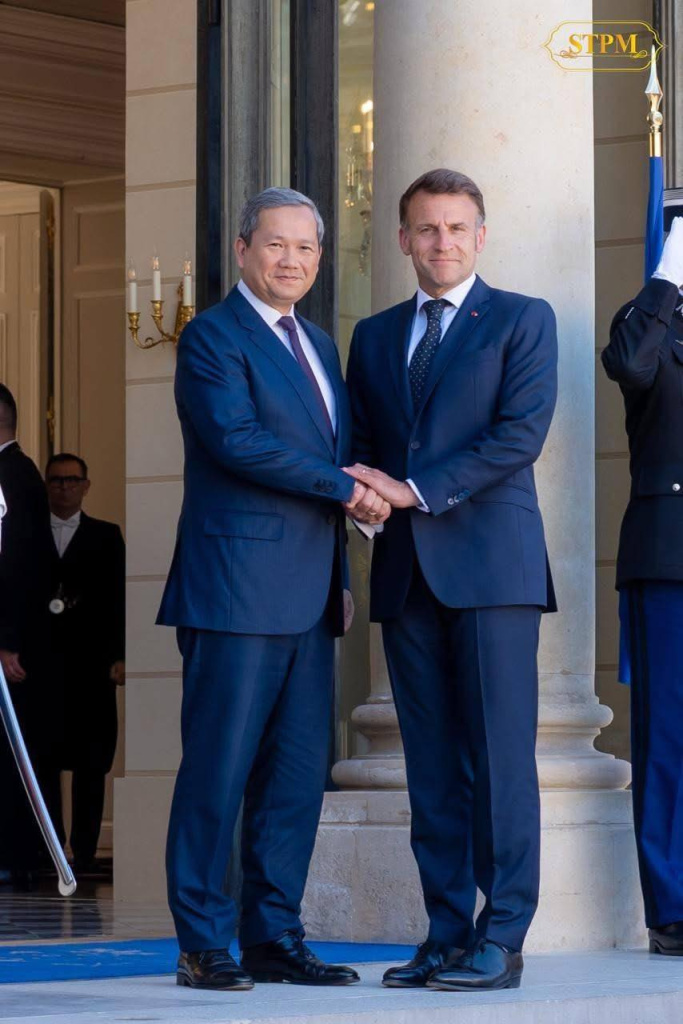
On April 8, Hun Manet met President Emmanuel Macron in Paris on the margins of the One Health Summit. Cambodia’s Ministry of Foreign Affairs released a detailed account the following day. The Élysée listed the meeting on its agenda and published nothing else. When the two leaders met at the same venue in January 2024, the Élysée produced a six-paragraph joint declaration.
In the Cambodian readout, placed between paragraphs on defense cooperation and the Francophonie Summit: Macron reaffirmed France’s readiness to facilitate access to historical and technical archives related to the Cambodia-Thailand boundary.
The commitment is not new. And it is not only Cambodia’s account of France’s position.
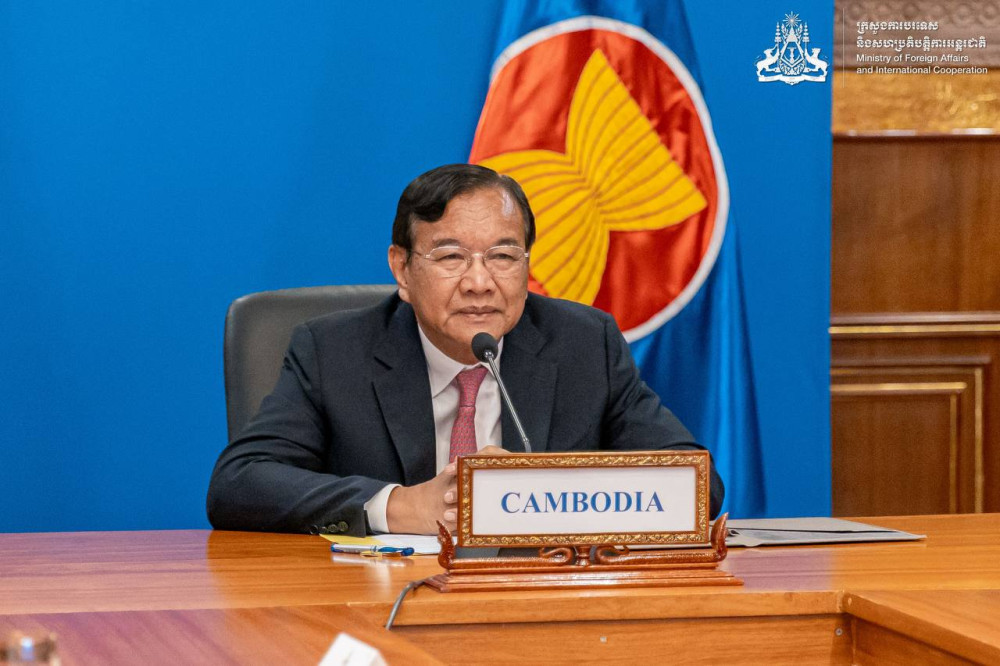
On February 25, French Foreign Minister Jean-Noël Barrot met his Cambodian counterpart Prak Sokhonn at the Quai d’Orsay. The French foreign ministry issued its own communiqué, stating that France stands ready to facilitate access to historical archives in its possession related to border demarcation, to contribute to a solution in accordance with international law. The French Embassy in Phnom Penh published the same text. The readout referenced a December 23 phone call between the two foreign ministers, placed during clashes that killed at least 101 people and displaced over 500,000.
The April 8 reaffirmation is the fifth iteration of a commitment that has compounded over ten months. In June 2025, at the UN Ocean Conference in Nice, Macron pledged to provide documents concerning four disputed areas: Mom Bei, Ta Moan Thom, Ta Moan Tauch, and Ta Krabei, according to Jean-François Tain, Minister Delegate attached to the Prime Minister. In January 2026, officials confirmed France was prepared to deliver documents and maps. On February 5, Hun Manet wrote directly to Macron, requesting colonial-era cartographic and technical records and welcoming French advisory expertise. Reuters carried the letter. The Barrot-Sokhonn meeting followed three weeks later. Then the Élysée bilateral.
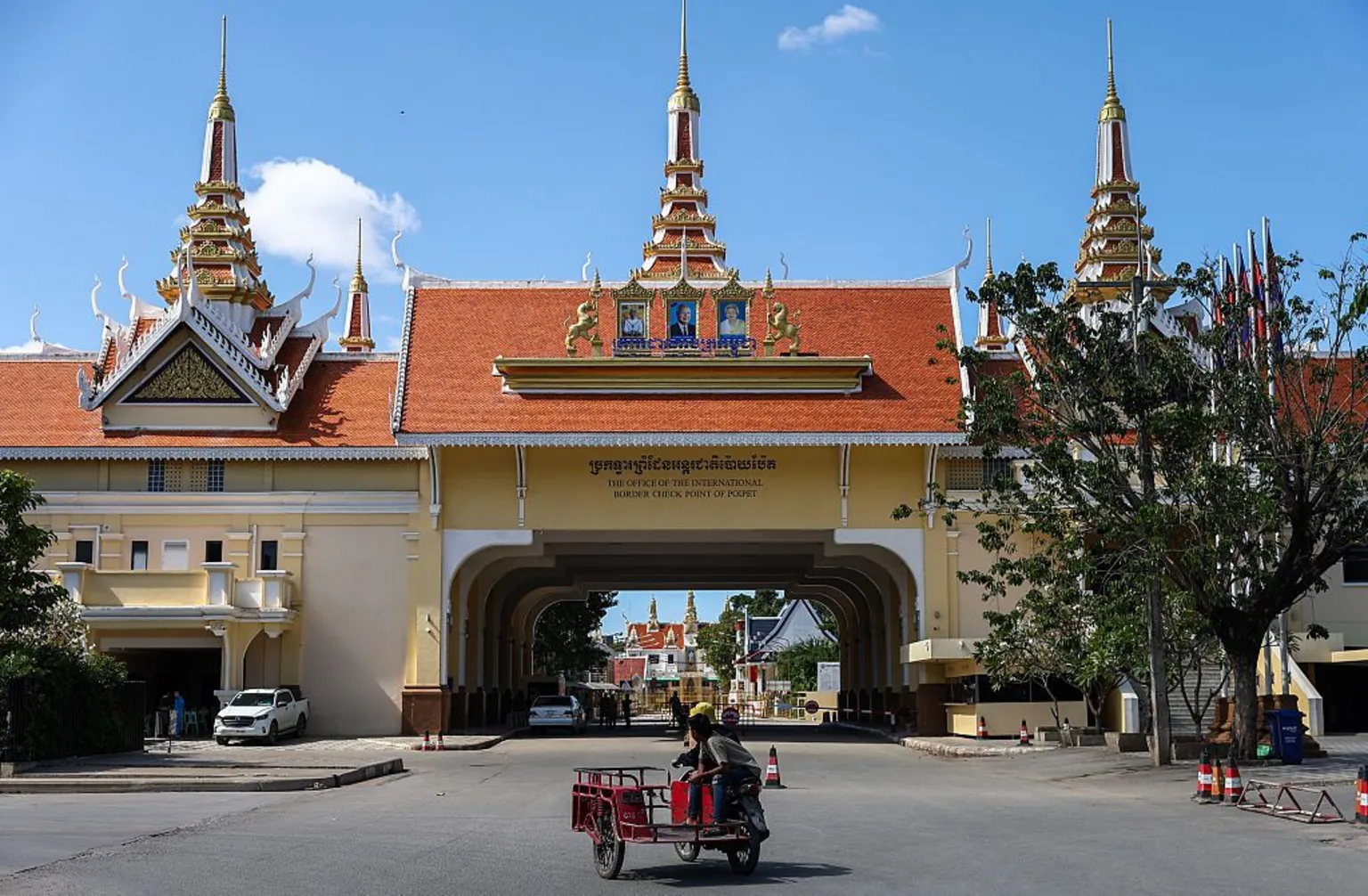
France drew the 817-kilometer Cambodia-Thailand boundary in 1907, when Cambodia was a French protectorate. Those maps and treaty instruments formed the evidentiary basis for Cambodia’s case before the International Court of Justice in 1962 and 2013. The Quai d’Orsay stated the archives would be available to both Cambodia and Thailand. Thailand has not publicly responded to the offer.
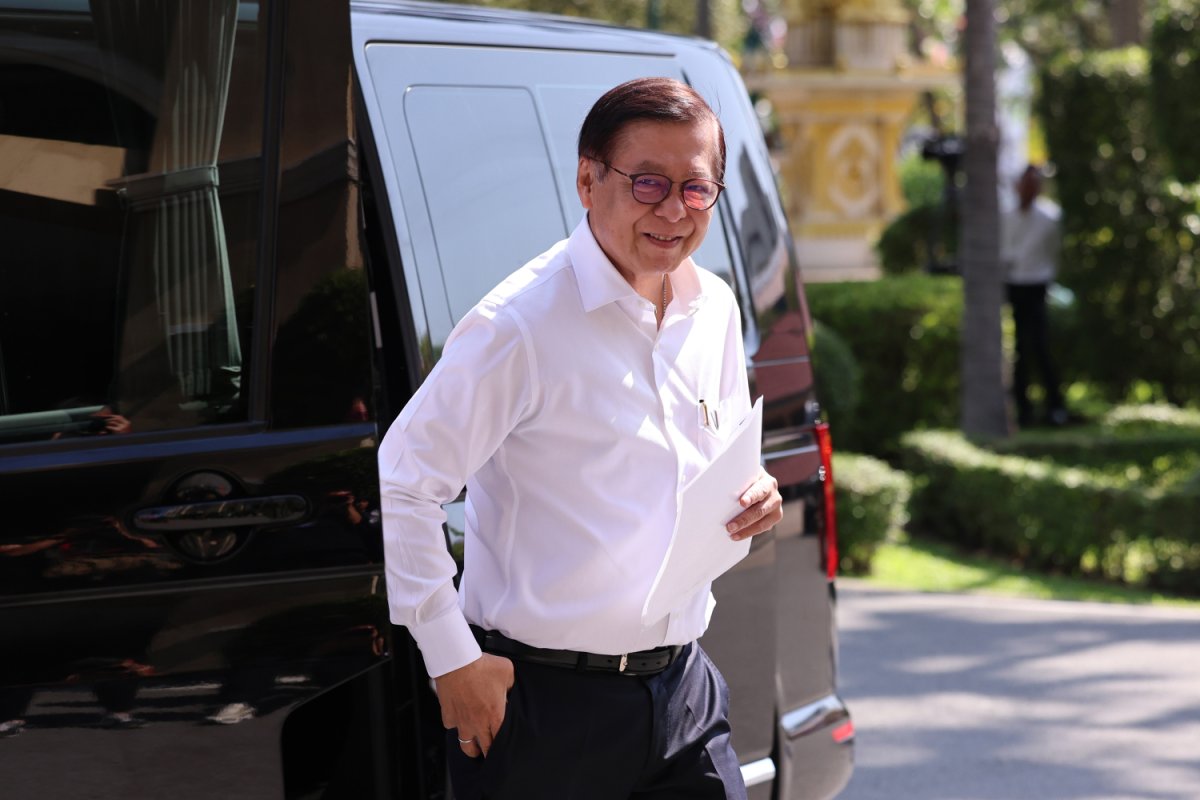
At a press conference at Techo International Airport on April 9, Tain stated that Hun Manet raised three points with Macron on the border, presenting facts “without exaggeration or distortion.” He said Thai troops currently occupy Cambodian territory, have destroyed homes, constructed permanent infrastructure, and are preventing tens of thousands of residents from returning. Hun Manet did not seek political support from France, Tain said. Cambodia asked that France continue to respect international law. “Cambodia will absolutely not accept a fait accompli,” he said. “How will we demand it? By all possible means.”
The bilateral produced a second commitment. Hun Manet briefed Macron on Cambodia’s preparations for the 20th Francophonie Summit in Phnom Penh in November 2026, under the theme “Reinvesting in Peace for Shared Prosperity and Lasting Stability.” Macron confirmed a state visit. “I will have the pleasure of going there in November,” he said, according to Agence Kampuchea Presse.
The Barrot-Sokhonn readout carried two lines absent from the April press release. Barrot expressed “a shared desire to combat online-scam centres”, five weeks before Cambodia’s National Assembly passed a domestic cyber-fraud law 112 to zero. Barrot also emphasized the importance of fully implementing the December 27 ceasefire.
One element present in the 2024 joint declaration is absent from the entire 2026 record. The January 2024 Élysée communiqué stated that both parties discussed “the importance of political pluralism and full protection of fundamental rights” and recognized “the crucial role of civil society.” Neither the MFAIC April release, the Quai d’Orsay February communiqué, nor any public account of the April 8 bilateral contains governance or human rights language.
The Élysée has not published its own account of the meeting. The MFAIC press release is the only detailed public record. France has not contradicted it.
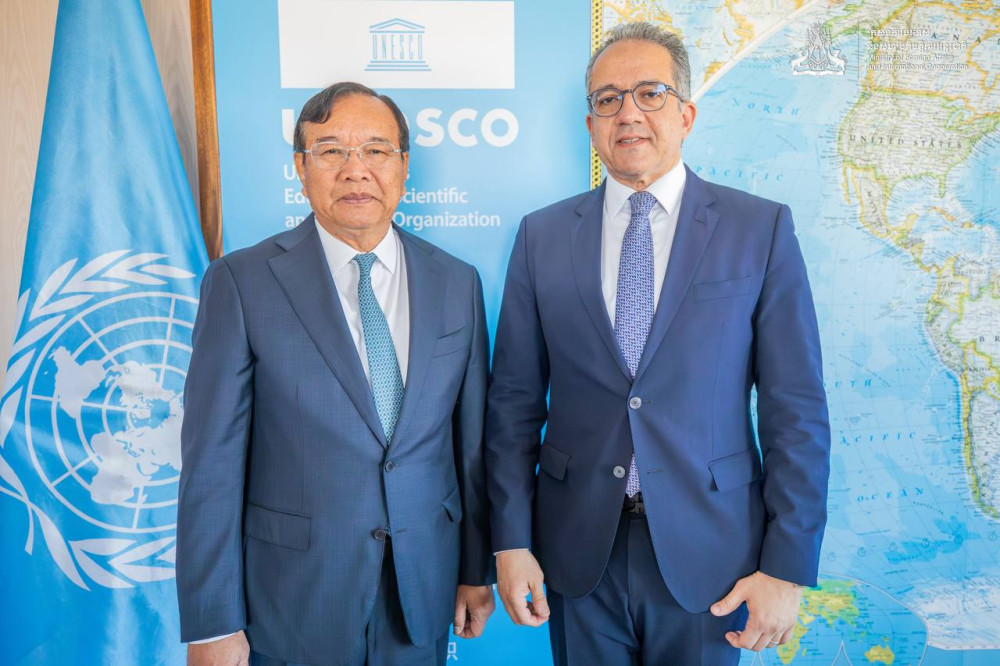
On the sidelines of the visit, Hun Manet met the presidents of Botswana and Ghana, UNESCO Director General Khaled El-Enany, and World Bank Vice President for Development Finance Akihito Nishio. The UNESCO meeting took place three days after the return of 20 Khmer artifacts from an Asian private collection on April 6.
The archive commitment from France now runs across two presidencies’ worth of bilateral meetings, a formal written request, and a French foreign ministry communiqué confirming it in France’s own language. The Francophonie Summit in November will bring Macron to Phnom Penh seven months into a border dispute where the colonial-era record France holds has not yet been delivered.