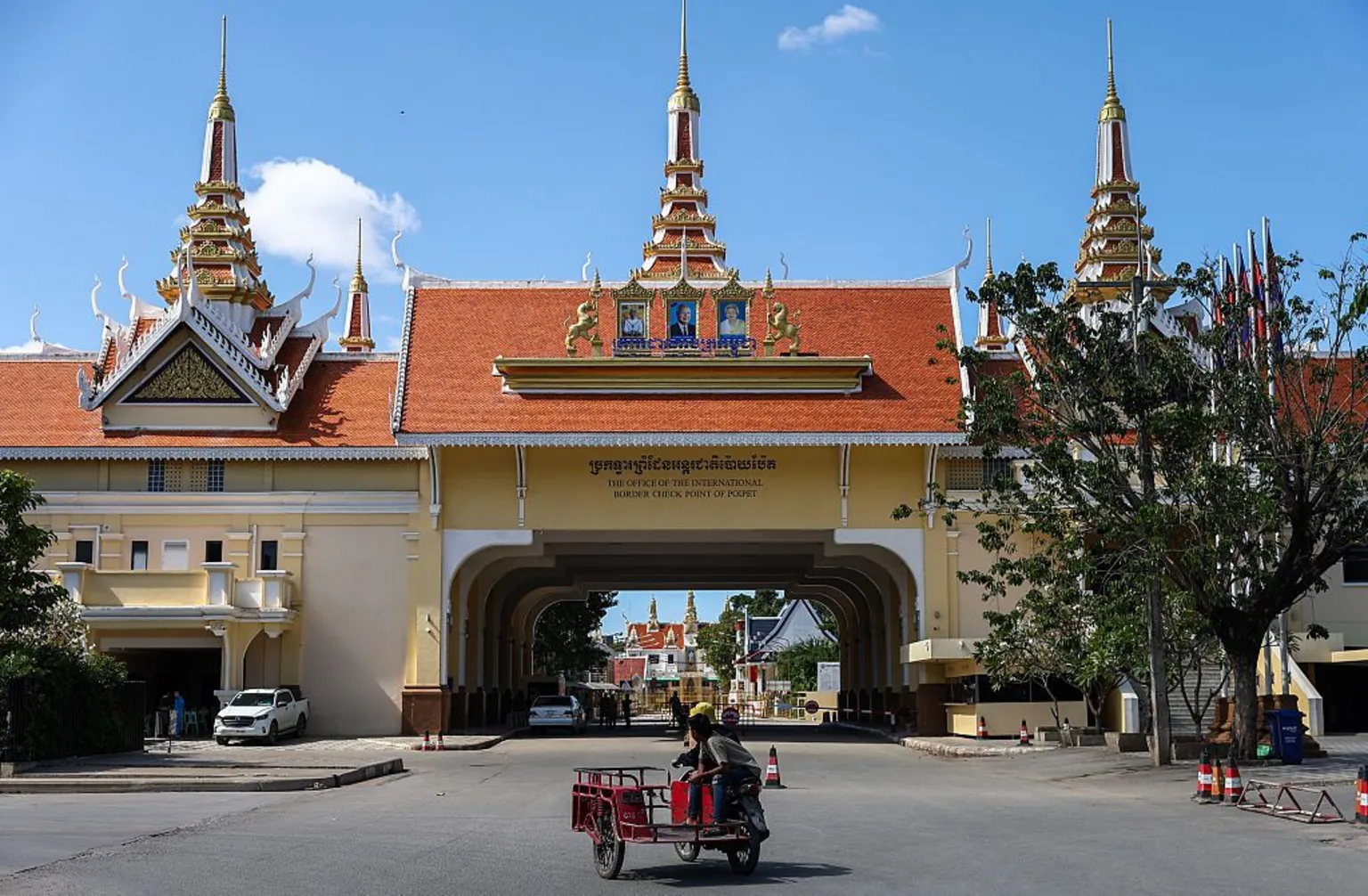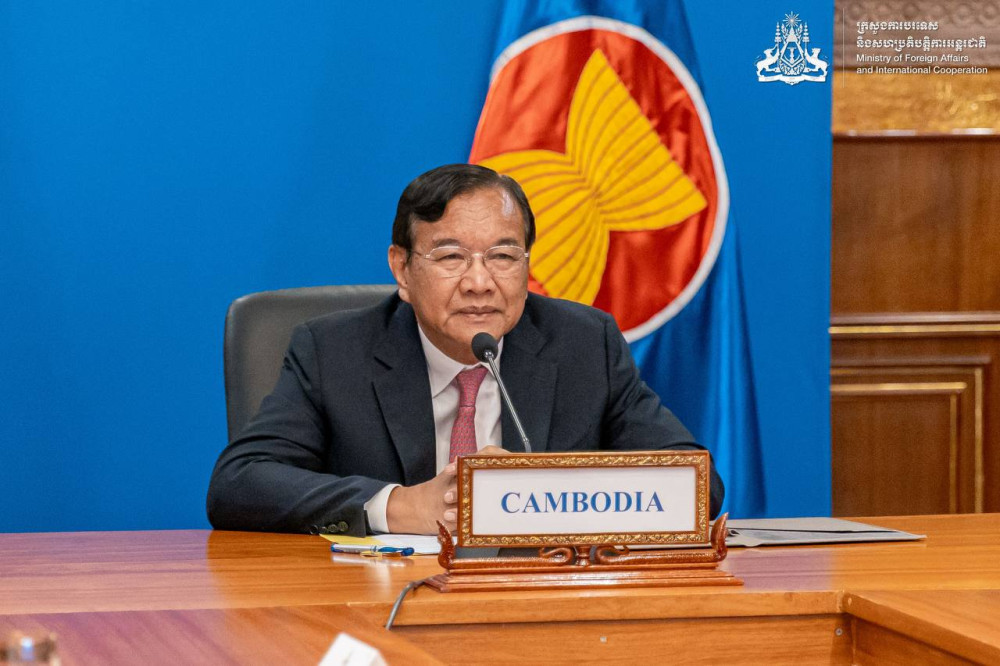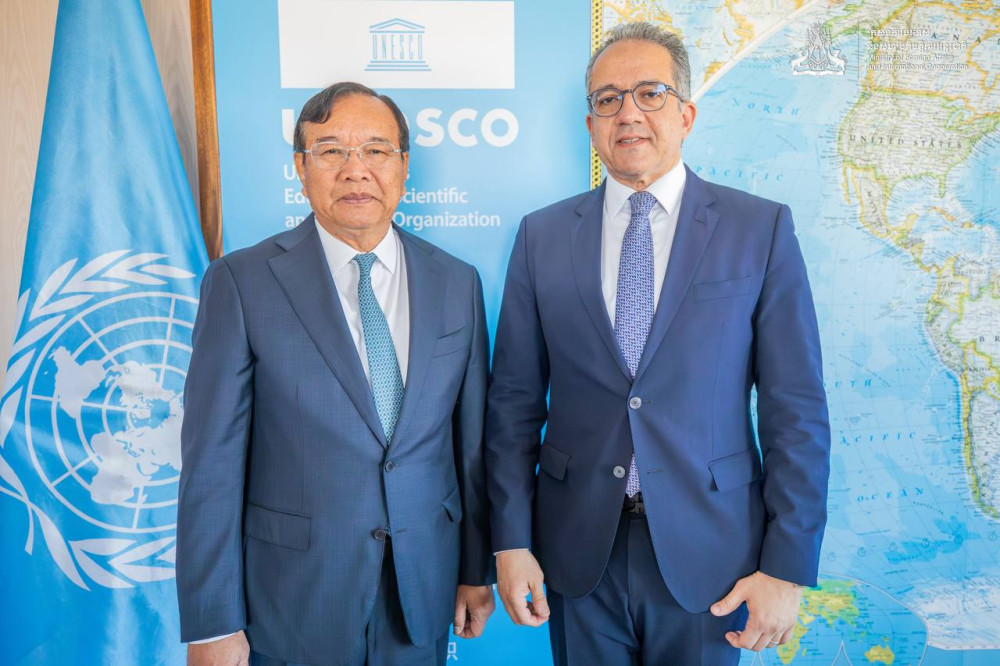
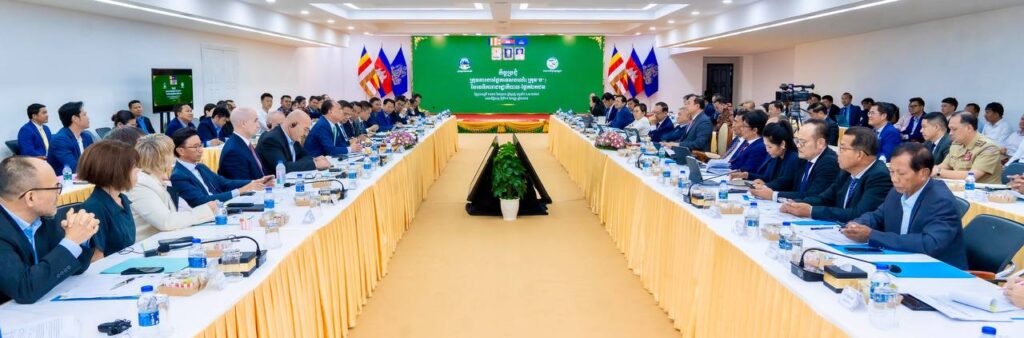
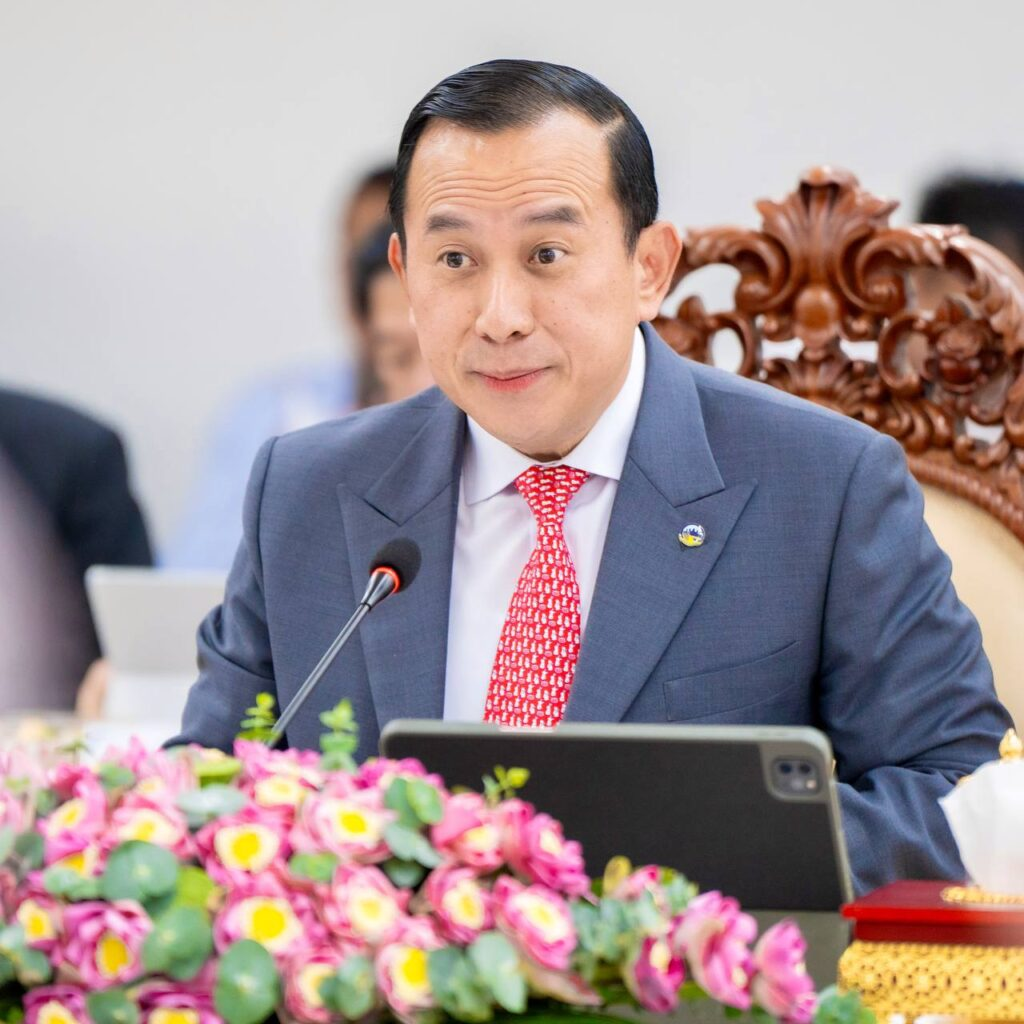
On April 1, 2026, Cambodia’s Ministry of Tourism convened 150 stakeholders in Phnom Penh for the Tourism Working Group of the Government-Private Sector Forum, the country’s primary public-private consultation mechanism, according to an official ministry post. Minister Huot Hak called for “necessary and urgent measures” to maintain international tourist arrivals and promote domestic travel. He cited tax incentives, electricity subsidies, and flexible tax policies as evidence of the Royal Government’s support for the sector.
In the first two months of 2026, Cambodia received roughly 700,000 international visitors, a decline of approximately 45 percent from the 1.26 million recorded in the same period of 2025, according to Khmer Times reporting on March 24 citing the minister himself. That followed a full-year 2025 total of 5.57 million arrivals, down 16.9 percent from 6.7 million in 2024, according to official Ministry of Tourism statistics. At the ASEAN Tourism Forum in Cebu in February, MoT Director of Overseas Marketing Vuthy Prak described it as the worst decline of any ASEAN country and attributed the drop primarily to border disruptions with Thailand, according to TravelMole. Official monthly data supports the timeline: year-on-year arrivals turned negative in June 2025 (down 21.3 percent) and worsened each subsequent month, reaching a 43.2 percent decline in December, according to the MoT’s 2025 annual statistics report. Arrivals from Thailand fell 52 percent and land and sea crossings dropped 37 percent over the full year, according to Tourism Review. Domestic tourism, by contrast, grew 11.7 percent in 2025, according to the same report, partly offsetting the international shortfall.
Cambodia is scheduled for Least Developed Country graduation in 2029, a transition that will narrow preferential trade access and make tourism forex earnings structurally more important to the national economy. Tourism contributed 9.4 percent of GDP in 2024, down from over 12 percent before the pandemic, according to Tourism Review. A review of publicly available Cambodian government records, regional competitor policies, and private sector statements reveals a gap between the intervention package described at the April 1 meeting and the instruments that exist in the public regulatory record. The gap matters because Cambodia’s regional competitors are deploying larger, more specific, and better-documented support at the same moment, and because the 2029 deadline leaves diminishing room for the sector to stabilize.
The tax incentives are real but narrow
The April 1 announcement described tax incentives without geographic qualification. The operative instrument, Prakas No. 122 issued by the Ministry of Economy and Finance on January 30, 2026, provides meaningful relief: exemption from monthly taxes (excluding VAT and accommodation tax) and from 2026 Tax on Income for registered tourism businesses, according to summaries published by Acclime Cambodia. But it applies only to Siem Reap province.
This represents a contraction. In 2024, the predecessor instrument, Prakas No. 119, extended similar relief to tourism businesses in five provinces: Phnom Penh, Siem Reap, Preah Sihanouk, Kep, and Kampot, according to the Phnom Penh Post and Sithisak Law Office. The 2026 measure dropped four of those provinces. No public explanation for the change has been identified in available government records.
In February 2026, the Phnom Penh Post reported private sector calls for the tax incentives to be extended beyond Siem Reap. Kiripost reported that 196 of Siem Reap’s 1,512 registered tourism businesses remained closed or suspended. The Siem Reap relief is substantive for the businesses it covers, but describing it as a sector-wide intervention overstates its reach.
Cambodia has made large-scale infrastructure investments in tourism connectivity, including the Techo International Airport in Kandal province, expected to begin full operations in 2026 according to multiple public reports. The gap is not in infrastructure capital but in the policy instruments that complement it.
The electricity subsidies have expired
The April 1 announcement cited electricity subsidies as part of the government’s support package. In the public regulatory record, the last tourism-specific electricity measure was a 15 percent tariff reduction for tourism businesses that ran from December 2023 to February 2024, according to the Phnom Penh Post. Energy Minister Keo Rattanak, announcing the measure in November 2023, said EDC had absorbed approximately $130 million in subsidies that year and warned that a permanent reduction “could lead to bankruptcy,” according to Fresh News.
No prakas, circular, or tariff instrument establishing a tourism-sector electricity subsidy for 2025 or 2026 was identified in publicly available records from the Ministry of Mines and Energy, Electricity Authority of Cambodia, or EDC. Public reporting in 2025 and 2026 described continued general electricity subsidies for households, farmers, and businesses, according to Khmer Times, but these are economy-wide tariff stabilization measures, not tourism-specific interventions.
The strongest alternative to this reading is that tourism operators receive administrative support through informal or sub-regulatory channels not visible in public databases. Cambodian governance does operate through such channels, and Keo Rattanak’s 2023 remarks show that EDC has the institutional capacity to deliver sector-specific discounts administratively. But undocumented support, even if real, cannot be assessed, compared, or held to account by the private sector that depends on it, and it cannot be presented to international investors or analysts as evidence of a functioning support framework.
By March 24, 2026, one week before the Group B meeting, EDC was publicly urging all sectors to conserve energy due to rising global fuel costs, according to Khmer Times. The general fuel price cap set by the Ministry of Commerce in March 2026, capping gasoline at 5,500 riels per litre and diesel at 6,550 riels, according to Khmer Times, is a consumer-facing inflation measure, not a sectoral subsidy for tourism operators.
The six pillars describe participation, not policy
The April 1 announcement said the meeting was aligned with six strategic pillars introduced by the minister. In an article authored by the Ministry of Tourism and published in The ASEAN Magazine in January 2026, the six areas are listed: national-level cooperation among ministries; collaboration with sub-national administrations; cooperation with the private sector; cooperation with foreign embassies and development partners; cooperation with media networks and content creators; and individual participation, under the slogan “Everyone is an ambassador for Cambodia’s tourism.”
These are stakeholder categories. They describe who participates in tourism coordination, not what policy instruments the government deploys. The ministry’s previous framework under former Minister Sok Soken, the “BUILD+3Ds” strategy announced in August 2023 as reported by Cambodianess, had operational content: reputation management, inbound promotion, destination leveraging, resource development, plus structural governance, digital transformation, and destination capability development. The current framework replaced that operational content with an organizational taxonomy.
The six pillars were not introduced on April 1. Ministry of Tourism records show them in public use since at least a February 2025 annual congress. What the April 1 meeting offered was continuity of a framework that does not contain actionable policy commitments.
What the private sector is asking for
The April 1 announcement referenced private sector requests but did not disclose what was requested. The public record fills part of that gap.
Chhay Sivlin, president of the Cambodia Association of Travel Agents, publicly called in January 2026 for wider visa exemptions, simpler visa processing, and reduced friction in the e-visa application system, as reported by Cambodianess. At the ASEAN Tourism Forum in Cebu in February, Vuthy Prak acknowledged the scale of the decline and said promotional budgets had been transferred to the newly established Cambodia Tourism Board, according to TravelMole. Questioned about the CTB’s allocated budget during the media briefing, he did not provide a figure. He also told TravelMole that Cambodia was “facing troubles to communicate efficiently and find the resources to counter back” against the scam-center narratives that have damaged the country’s reputation as a travel destination.
The reputational damage from scam-center narratives operates on different markets through a different mechanism than the border closure. The border disruptions reduced regional arrivals that traveled by land. The scam narrative suppresses long-haul arrivals from Europe, Northeast Asia, and North America, markets where Cambodia’s brand as a safe destination is the primary conversion factor. Tax incentives and electricity subsidies do not address brand damage. Disclosed, quantified promotional spending does. The government created the right institution for this purpose when it established the CTB. The missing step is resourcing it visibly.
The CTB is operational: Minister Huot Hak chaired its annual meeting on January 9, 2026, according to AKP, and its CEO Kim Minea has spoken publicly about promotional priorities, as reported by Cambodianess. But neither the CTB’s 2026 budget nor a public strategy document has been disclosed in available public records.
The CDC’s second-semester 2024 progress report, the most recent available, recorded 10 private-sector issues handled by the Tourism Working Group. Three were resolved. Seven remained in progress. The unresolved issues included insufficient tourist numbers to sustain certain direct flights, slow uptake of a tourism loan program, and tasks for which no budget had been allocated.
What regional competitors are providing
The Tourism Authority of Thailand entered 2026 with an approved budget of 4.5 billion baht (approximately $130 million) for 22 strategic tourism initiatives, targeting 36.7 million foreign visitors, according to TAT Newsroom. Thailand’s support includes tax deductions for domestic travel and hotel renovation, excise relief for entertainment venues, and an electricity price cap below 3 baht per unit for qualifying businesses.
Indonesia’s Ministry of Finance issued PMK 72/2025, expanding government-borne income tax relief directly to tourism-sector workers, with a reported 2026 budget of IDR 480 billion ($30 million) targeting 16 to 17.6 million foreign visitors, according to Indonesia Investments and Antara News. Vietnam launched a nationwide tourism stimulus offering discounts of up to 50 percent on accommodation, transport, and dining, with a 2026 target of 25 million international visitors, according to VietnamPlus.
Cambodia’s CTB budget is undisclosed. Its tax relief covers one province. Its electricity subsidy for tourism expired in February 2024. Its promotional spending relative to competitors cannot be computed from the public record because the denominator is missing.
The mechanism Cambodia has
The G-PSF is not a ceremonial exercise. The CDC progress reports show a mechanism with documented institutional force: forum decisions carry the same weight as Council of Ministers decisions, according to the CDC’s first-semester 2024 progress report. Across all 12 sectoral working groups after the 19th G-PSF in November 2023, 79 of 115 private-sector issues were resolved by the second semester of 2024, a rate of 69 percent, according to the CDC’s second-semester 2024 report. By the first semester of 2025, CDC reported 166 of 179 detailed reform measures successfully resolved.
This is a mechanism that works. The question is whether it is being used at the scale the crisis demands. Working Group B’s own resolution rate (3 of 10) trails the forum-wide average. The issues that remain open (direct flight economics, loan program uptake, unfunded tasks) are the structural constraints the sector faces. The April 1 meeting’s public output (a social media post describing cooperation pillars and citing expired subsidies) does not match what the mechanism is capable of producing.
Cambodia also has a China visa exemption pilot scheduled for June 15 to October 15, 2026, according to the AKP. In January through October 2025, Cambodia received one million Chinese tourists, a 44 percent increase from the previous year, according to AKP. Scaling that channel while Thailand’s border remains functionally closed to Cambodian land traffic is a strategic opportunity the current framework does not foreground.
The distance and the path
The distance between what was announced on April 1 and what the documentary record contains is not a failure of institutional capacity. Cambodia has a consultation mechanism with real legal force, a newly operational tourism board, visa tools, infrastructure investment at scale, and a private sector that has publicly articulated specific, actionable requests. What the record shows is a gap between that capacity and its deployment, at a moment when Thailand is spending $130 million on 22 initiatives, Indonesia is subsidizing individual tourism workers, and Vietnam is running nationwide discounts.
The April 1 meeting told 150 stakeholders that the government had introduced tax incentives, electricity subsidies, and flexible tax policies. The documentary record shows tax incentives covering one province where the predecessor covered five, an electricity subsidy that expired in February 2024, and a cooperation framework that describes categories of participation rather than instruments of recovery. The private sector’s specific requests remain undisclosed. The CTB’s budget remains undisclosed. The rapid response mechanism the minister committed to strengthening does not appear in any publicly available regulatory instrument.
Cambodia received 1.13 million fewer international visitors in 2025 than in 2024, according to official MoT statistics. In the first two months of 2026, the decline accelerated to 45 percent. The institutional tools exist. A disclosed CTB budget, a Prakas 122 extended beyond Siem Reap, a formalized rapid response mechanism with published membership and mandate, and a scam-narrative counter-messaging campaign with quantified resources would use tools the government has already built. The evidence that they are being deployed at the scale the numbers require does not yet exist in the public record.