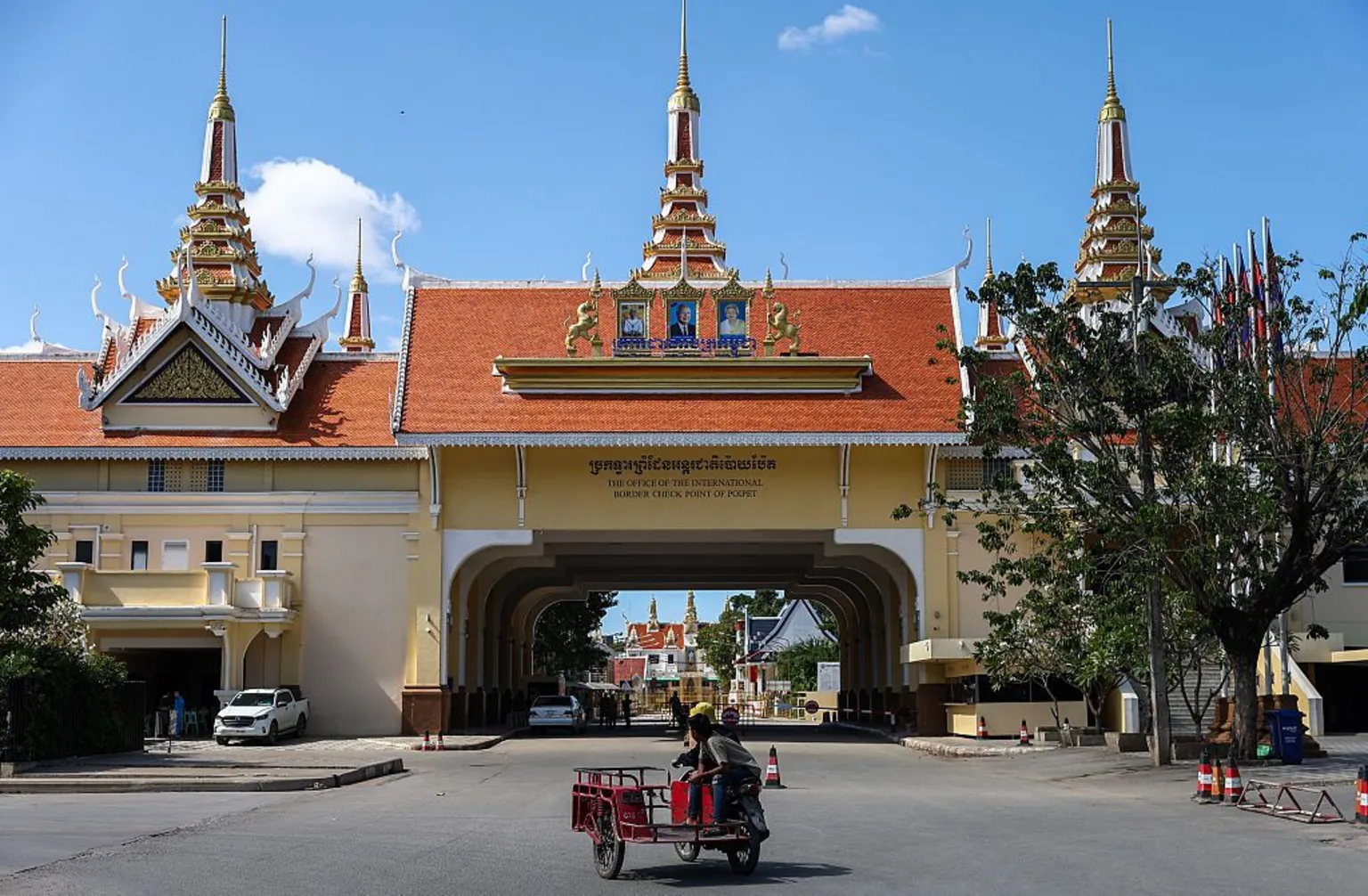
Between October 2025 and April 2026, Cambodia built institutional engagement across seven international bodies, all active during its border dispute with Thailand. The architecture has received little attention as a system in international media. The pattern is consistent with a deliberate strategy of institutional redundancy: a country of seventeen million building parallel documentary records while its larger neighbour contests the same territorial questions through political rather than legal channels.
The seven tracks are: the International Court of Justice, the United Nations Security Council, the ASEAN Observer Team and General Border Committee, bilateral diplomacy with France, trade and security engagement with the United States under the Kuala Lumpur Peace Accord framework, UNESCO and the World Heritage Committee, and the United Nations Human Rights Council. Each track generates its own documentary record. Each operates on its own institutional timeline. The cumulative effect is an unusually comprehensive multilateral positioning effort by a small Southeast Asian state.
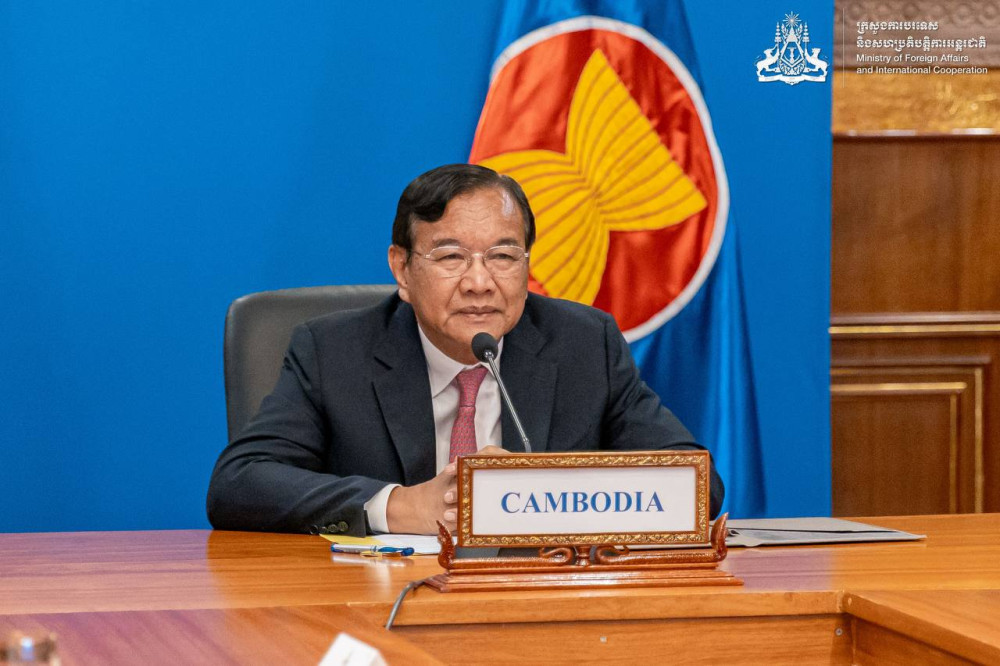
The most recent evidence appeared on April 7, 2026, when Cambodia’s Permanent Mission in Geneva issued a press release documenting its participation in the 61st regular session of the Human Rights Council, held from February 23 to March 31. The release reported that Cambodia delivered 17 statements, co-sponsored three resolutions tabled by Cuba on foreign debt, cultural rights, and the right to food, and supported ten joint statements including those on behalf of a “Like-Minded Group” whose membership was not disclosed.
The press release framed Cambodia’s engagement as evidence of “unwavering commitment to the promotion and protection of human rights.” It did not mention three concurrent developments at the same session.
First, High Commissioner for Human Rights Volker Türk named Thailand and Cambodia alongside Ukraine, Sudan, and Venezuela in his global update on February 27, identifying them as situations where his Office is developing measures on civilian protection, accountability, and peace. The border conflict that displaced an estimated 640,000 Cambodian civilians according to Khmer Times reporting in January 2026 and killed at least 73 Cambodian and 42 Thai soldiers had entered the High Commissioner’s conflict monitoring portfolio.
Second, a new Special Rapporteur on the situation of human rights in Cambodia was being appointed at the session. The outgoing mandate holder, Vitit Muntarbhorn, is a Thai national who has held the position since March 2021. The appointment was a formal agenda item. Cambodia’s delegation operated throughout the session under the simultaneous presence of a country-specific scrutiny mechanism directed at Cambodia itself.
Third, at the previous session in September 2025, Türk had specifically criticized Cambodia’s constitutional amendments allowing citizenship revocation for treason and identified social media vitriol as a factor in Cambodia-Thailand tensions. The April press release’s claim of “progress and achievements across all areas of human rights” was issued against this documented institutional backdrop.
None of these omissions is unusual in diplomatic self-presentation. States routinely emphasize their active contributions and minimize external scrutiny in post-session communications. That Cambodia continued to participate constructively in the HRC while simultaneously subject to the High Commissioner’s conflict monitoring and a country-specific mandate reflects institutional discipline rather than evasion. What makes the HRC track analytically significant is its place within the broader architecture.
The ICJ track is the most legally consequential. Cambodia has signalled its intention to seek adjudication on four disputed border areas, building on the 1962 judgment and 2013 interpretation that established Cambodian sovereignty over the Temple of Preah Vihear and its surrounding promontory. The filing would extend the court’s jurisdiction to territorial questions the original judgment left unresolved. Thailand has not indicated acceptance of the court’s jurisdiction on the new claims.
The UNSC track operates through Cambodia’s formal filing alleging Thai aggression, submitted in July 2025. Prime Minister Hun Manet requested an urgent Security Council meeting and asked that Cambodia’s letter be circulated as a Council document. The filing enters the Security Council’s permanent record regardless of whether the Council takes action. Its function is archival: it creates a citable legal instrument that future proceedings can reference.
The ASEAN track runs through the Observer Team, now under Philippine coordination after the Armed Forces of the Philippines assumed the AOT chairmanship in February 2026. AFP Chief of Staff General Romeo Brawner Jr. visited both sides of the border from February 9 to 14. Verified field inspections have been documented by AKP across at least eight border sites in three Cambodian provinces between January and March 2026, generating a parallel evidentiary stream to the bilateral and international tracks.
The France track, documented through a diplomatic chain from the January 2024 Élysée joint declaration through the February 2026 Sokhonn-Barrot meeting to the April 2026 Hun Manet visit for the One Health Summit in Lyon, serves a dual function. France is being positioned as both a development partner and a potential source of colonial-era archival evidence relevant to the border demarcation. The Fonds de l’Indochine at France’s national archives holds records from the 1904-1907 Franco-Siamese boundary commissions that produced the maps underlying the ICJ’s 1962 ruling.
The US track locks through the Kuala Lumpur Peace Accord of October 2025, which paired a ceasefire framework with concurrent trade agreements. A $45 million US assistance package announced by Assistant Secretary Michael DeSombre in Bangkok on January 9, 2026, with $15 million for border stabilization, $10 million for demining, and $20 million for counter-scam and counter-narcotics operations, creates an institutional stake in the peace framework’s survival.
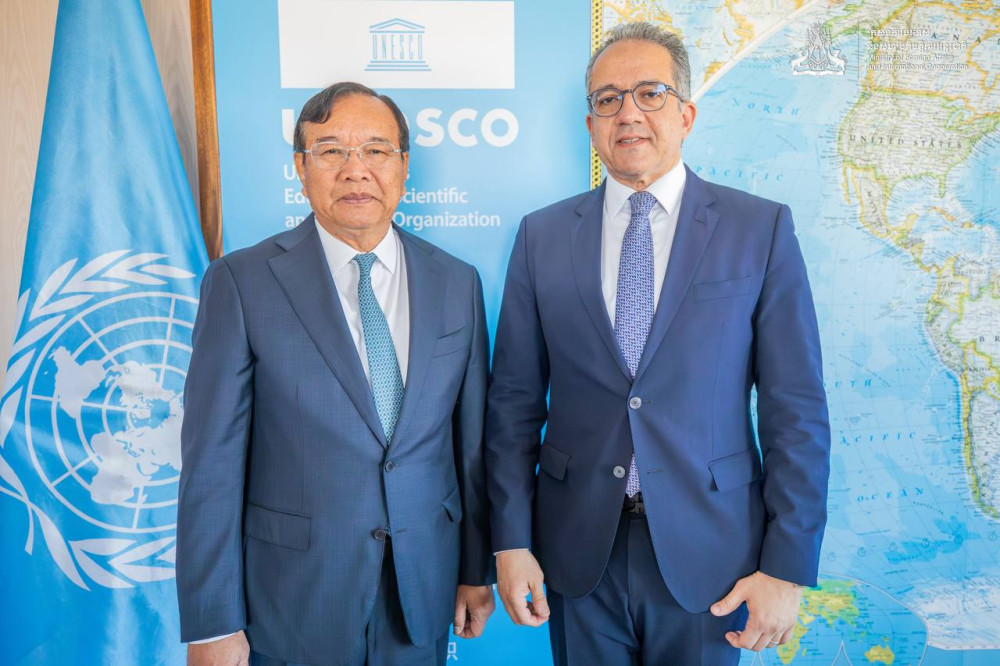
The UNESCO track operates through the World Heritage Committee’s existing jurisdiction over Preah Vihear, activated by damage attributed by Cambodia to Thai airstrikes and rocket fire during the December 2025 fighting. Cambodia organized tours of the damage for foreign military attachés from twelve countries in March 2026, converting heritage destruction into multinational witness testimony.
Each track generates documentation that enters a separate institutional archive. Each operates on a timeline Cambodia does not fully control. And each builds a record that can survive the failure of any other track. If the ICJ declines jurisdiction, the UNSC filing persists. If ASEAN’s mechanism stalls, the France archival channel continues. If the HRC does not act on the border conflict, Cambodia’s participation record and the High Commissioner’s own statements remain in the documentary record.
The strongest alternative explanation is that these tracks are not coordinated strategy but routine diplomatic activity that would have occurred regardless of the border crisis. The ICJ process follows legal timelines. The HRC session was pre-scheduled. France was already pursuing a Strategic Partnership. The test is whether all seven tracks would have run at this intensity and thematic coherence without the crisis as catalyst. The publicly available evidence suggests they would not: the UNSC filing, the AOT deployment, the military attaché tours, and the acceleration of the France archival channel all post-date the July 2025 escalation.
Cambodia’s approach differs from forum-shopping in that it is not seeking a favourable venue but building parallel records in every available one. The strategy does not depend on any single forum to deliver resolution. Whether it produces a territorial settlement remains an open question. What it has produced is a small-state position documented across more international institutional registers than any comparable active territorial dispute in Southeast Asia.