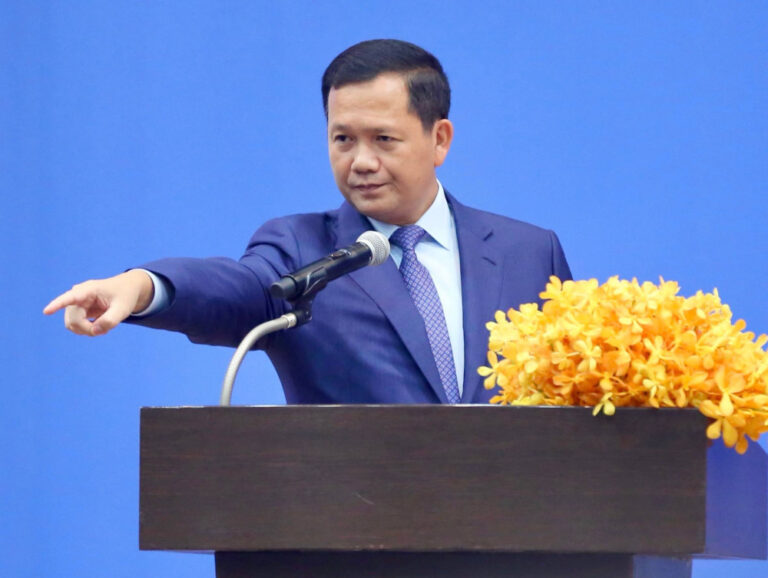
Cambodia’s prime minister on Thursday ordered a multi-agency investigation into allegations that Thai fuel has been smuggled into the country in violation of a nine-month-old ban on Thai energy imports, warning that any fuel company found to be involved would have its licence revoked and that government officials or military personnel implicated would be dismissed regardless of rank.
In a message posted on his official social media platforms, Prime Minister Hun Manet tasked Minister of Mines and Energy Keo Rottanak, National Police Commissioner General Sar Thet, and General Department of Customs and Excise Director General Kun Nhim with launching a thorough investigation. The order was explicitly conditional. “If the allegations are proven true,” Hun Manet said, according to the Agence Kampuchea Presse, “all individuals involved must be identified and prosecuted to the fullest extent of the law.”
The instruction followed a public declaration by Thai Prime Minister Anutin Charnvirakul, who on April 2 described Cambodia-bound fuel smuggling as a national security threat and said a company structure was under investigation by Thailand’s Justice Ministry, police, military, and anti-money-laundering office. Neither government has publicly established that post-suspension Thai fuel deliveries into Cambodia occurred. No company name has been made public in accessible reporting.
A documented supply gap, and a documented pivot
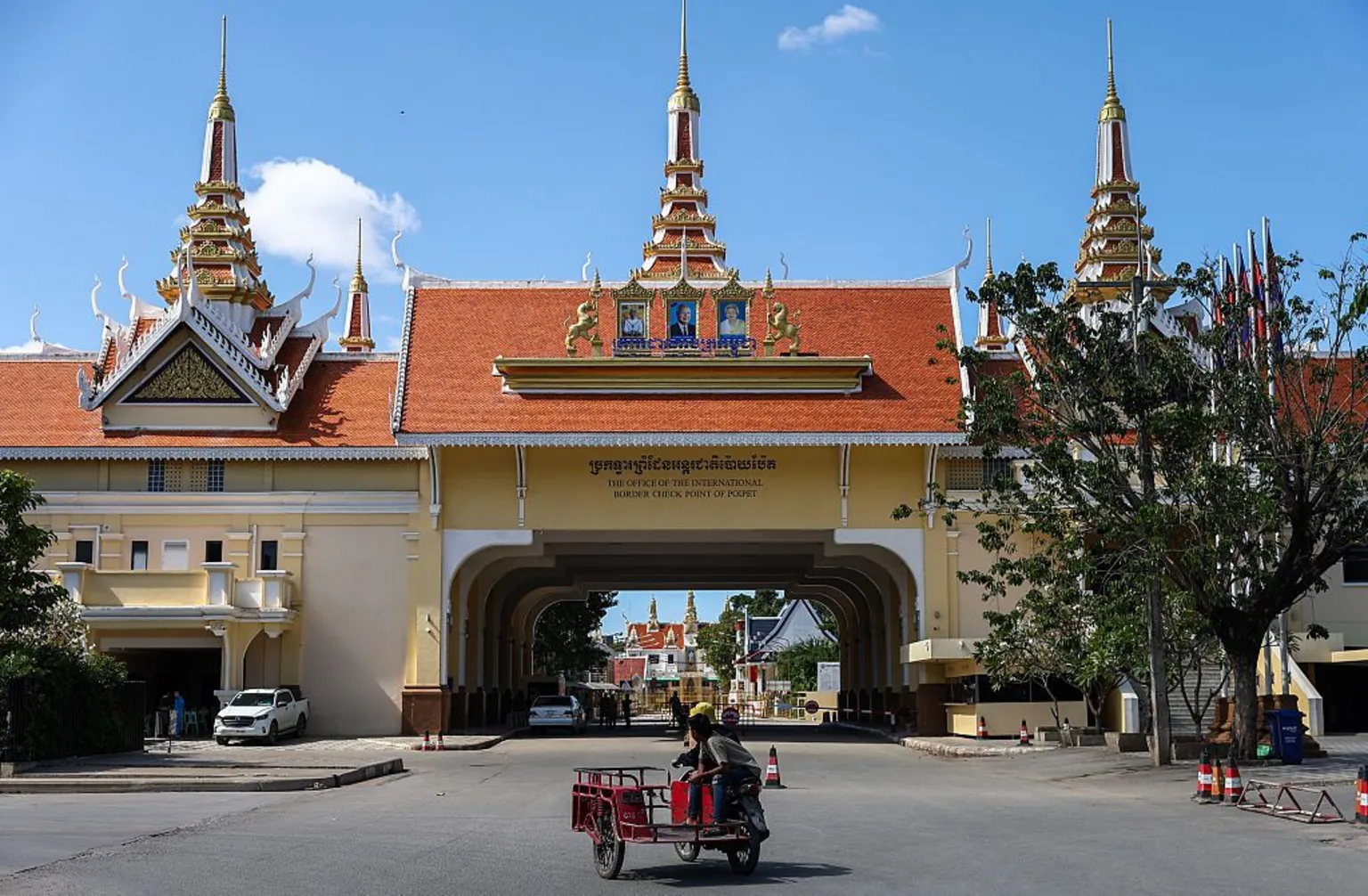
Cambodia officially suspended fuel and gas imports from Thailand effective June 22, 2025, according to an announcement by the Office of the Council of Ministers. In 2024, Thailand and Vietnam together accounted for more than 60 percent of Cambodia’s petroleum product imports, according to International Trade Centre data.
By December 2025, Thailand’s energy ministry said there had been no oil exports to Cambodia since July 2025, according to Reuters. Thai military authorities separately halted a fuel transit route through Laos, citing fears that shipments were being diverted toward Cambodia.
In March 2026, Reuters reported that Keo Rottanak said Cambodia’s fuel reserves diesel, jet fuel, LPG, and petrol had fallen below one month of supply under normal conditions, and that Cambodia was increasing imports from Singapore and Malaysia because Vietnam and China had restricted their own exports.
Cambodia removed customs duties on fuel imports effective April 1, under a General Department of Taxation instruction, with the government absorbing a six-percentage-point reduction in value-added tax to stabilize domestic fuel prices.
Hun Manet’s April 3 statement said Cambodia’s current supply “remains stable without reliance on Thai sources.” That assertion has not been independently verified against official partner-country commodity data for the post-ban period.
The allegation and its origins
Anutin’s April 2 statements reported by Nation Thailand, Thai PBS World, and Thairath described the alleged smuggling as a racket involving Thai businessmen. He labeled the conduct “evil.” When asked whether the activity constituted selling out the nation, Anutin replied, according to Nation Thailand: “That works too.”
Thairath reported on April 3 that Thailand’s Department of Special Investigation said 57 million liters of fuel were unaccounted for during maritime transport and that 20 suspicious vessel trips had been identified, and that the matter had been expanded to special-case status. Admiral Thadawut Tatphithakkul, Chief of Naval Staff and secretary-general of Thailand’s naval maritime security center, said, according to Thairath, that authorities were scrutinizing sea shipments after an order to halt fuel shipments to Cambodia. Yuttana Phraekham, director-general of the Department of Special Investigation, told Thairath that proving missing oil at sea would take time. The 57-million-liter figure and the vessel count appeared in a single Thai media outlet and have not been independently confirmed.
Contradictions within the Thai record
The April 2 statements follow a contradictory position taken by the Royal Thai Army 14 days earlier. On March 19, Army spokesman Major General Winthai Suvaree denied that any illicit fuel exports or smuggling to Cambodia via Laos had been detected, and said border controls remained strict. He characterized remarks attributed to Stung Treng Governor Sor Soputra as the product of mistranslation.
Sor Soputra had acknowledged in a March interview, as reported by the Phnom Penh Post, that Thai goods had entered Cambodia through Laos and that a blanket ban on those goods could not be legally applied. The governor cited Cambodia’s World Trade Organization obligations as the constraint. His remarks, as reported in accessible Cambodian sources, referred to “Thai goods” rather than fuel specifically. The governor’s original Khmer-language record was not accessed by this publication.
The Thai Army’s March 19 denial and Anutin’s April 2 characterization of the alleged smuggling as a national security threat represent contradictory official positions from separate Thai institutions within the same 14-day period.
Cambodia’s documented enforcement posture
Hun Manet’s April 3 order named officials spanning energy, policing, and customs enforcement. His statement said Cambodia had no need for Thai fuel and that the June 2025 import suspension remained in force.
Total mineral fuel and oil imports reached $606 million in January and February 2026, down from $656 million in the same period a year earlier, according to Kiripost, which cited data from Cambodia’s General Department of Customs and Excise. The underlying commodity dataset was not independently accessed by this publication.
The identity of any Thai company or individuals named in Thailand’s enforcement proceedings remains non-public in accessible reporting.