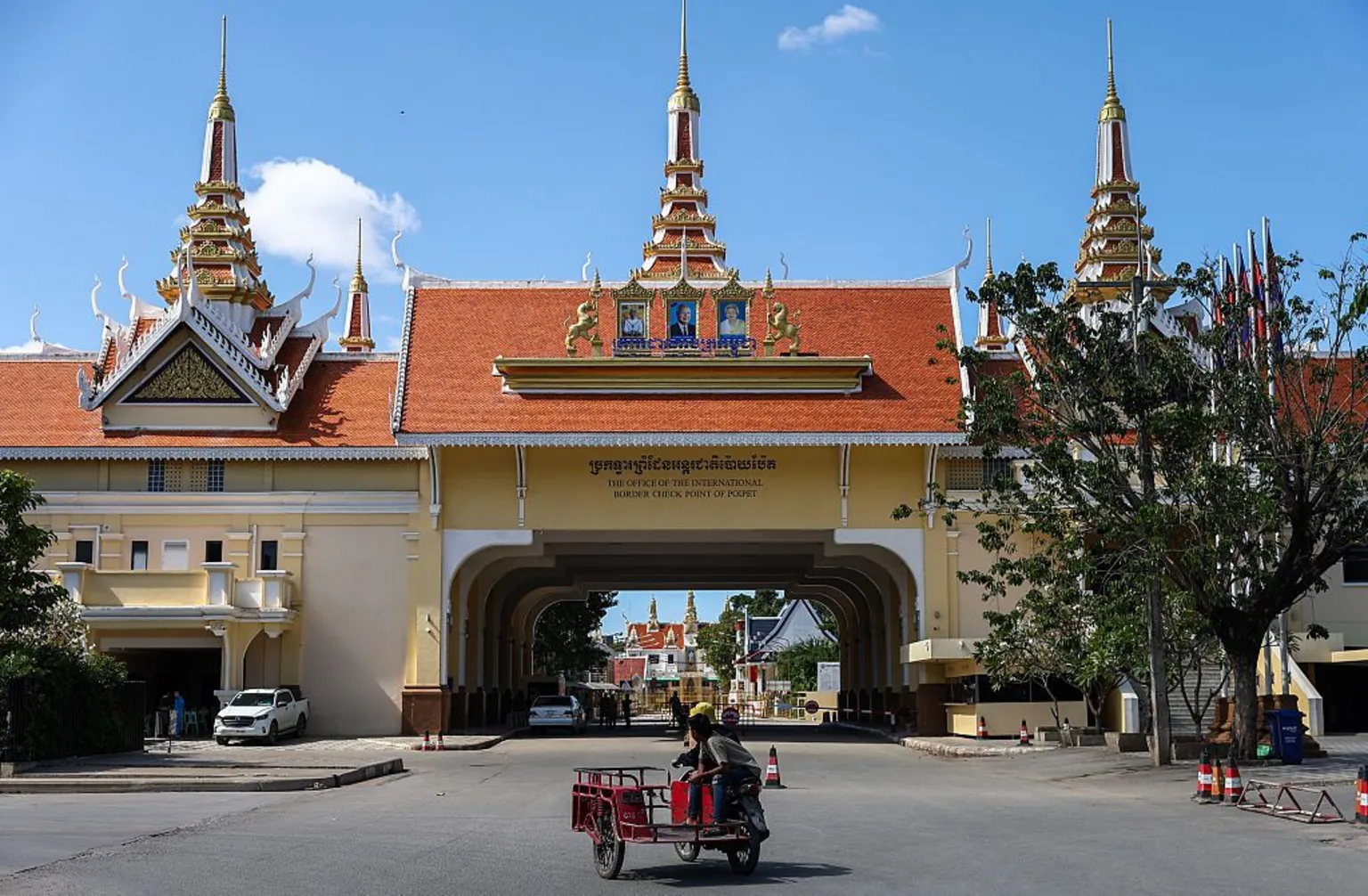
Cambodia’s Ministry of Foreign Affairs and International Cooperation issued a formal diplomatic protest on April 3, 2026, against Thai military and civilian activities in three border areas between March 31 and April 2, alleging violations of the December 27, 2025 ceasefire agreement and the bilateral treaty governing the demarcation process. The protest, numbered PR 47/2026 MFA.IC, named Chouk Chey village in Banteay Meanchey Province, the O’Smach International Border Gate in Oddar Meanchey Province, and Anlong Veng district, also in Oddar Meanchey, as the affected locations.
The Joint Statement of the Third Special General Border Committee meeting, signed on December 27, 2025 by Thai Defence Minister General Nattaphon Narkphanit and Cambodian Deputy Prime Minister and Defence Minister Tea Seiha, commits both sides to specific de-escalation measures: maintaining current troop deployments without further movement, refraining from increasing forces along the entire border, and refraining from constructing or enhancing any military infrastructure or fortifications beyond their own side. The three categories of Thai activity described in Cambodia’s protest each engage at least one of those provisions.
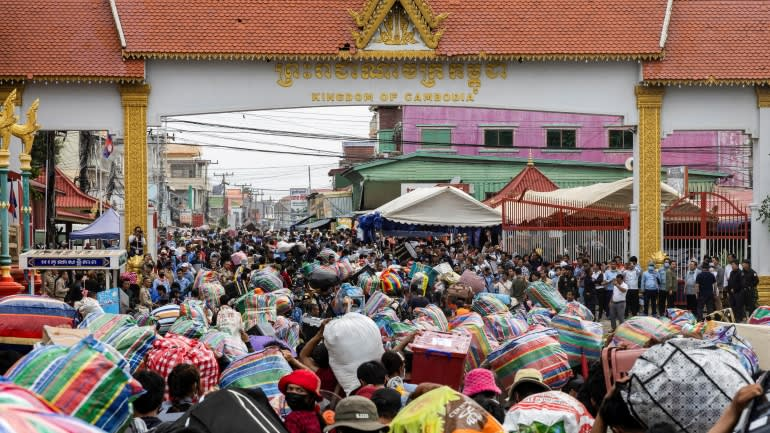
Chouk Chey
According to Cambodia’s Ministry of Foreign Affairs, Thai Burapha forces led a group of Thai citizens to conduct land-ownership verification activities along the border segment between Boundary Pillars 45 and 47 in Chouk Chey village between March 31 and April 2. The Ministry described the activity as a unilateral attempt to create a “fait accompli” and to prejudge the outcome of ongoing demarcation work assigned to the Joint Boundary Commission of both countries.
Article V of the June 14, 2000 Memorandum of Understanding on Survey and Demarcation of Land Boundary bars authorities of either government and their agents from carrying out any work resulting in changes of environment of the frontier zone, except for work performed by the Joint Technical Sub-Commission in the interest of survey and demarcation. Unilateral civilian land-verification activities conducted under military escort fall outside that treaty exception.
O’Smach
The ASEAN Observer Team completed a site visit to O’Smach on March 29, 2026, according to Cambodian state media. Three days later, on April 2, Cambodia’s Ministry of National Defence reported that approximately 70 Thai military personnel accompanied by two armored vehicles were deployed at the O’Smach International Border Gate, where they laid additional barbed wire.
The December 27 Joint Statement provides in paragraph 5 that both sides agree not to increase forces along the entire border. Paragraph 6 provides that both sides agree to refrain from constructing or enhancing any military infrastructure or fortifications beyond their own side. The described deployment of additional personnel and armored vehicles, and the installation of barbed wire, engage both provisions.
The figures of 70 personnel and two armored vehicles derive from Cambodian official sources; no independent verification of those numbers is established in the record available for this piece. Whether the AOT’s March 29 findings documented any prior fortifications at the site is not established in accessible records.
Anlong Veng
Thai armed forces deployed heavy machinery on April 2 to conduct land-clearing near Boundary Pillar No. 2(Present) in Anlong Veng district, according to the Cambodian protest. Article V of the MOU 2000 bars authorities of either government and their agents from carrying out any work resulting in changes of environment of the frontier zone outside of Joint Technical Sub-Commission survey work. No independent verification of the land-clearing activity is established in accessible records.
The Treaty Framework Both Sides Invoke
Cambodia’s Ministry stated that the activities “cannot be regarded as defensive in nature” and “clearly contravene” the de-escalation measures in the December 27, 2025 Joint Statement. The Ministry added that the activities also violate “Thailand’s commitments and obligations under other existing agreements.”
The October 26, 2025 Kuala Lumpur Joint Declaration, signed by Prime Minister Hun Manet of Cambodia and Prime Minister Anutin Charnvirakul of Thailand and witnessed by U.S. President Donald Trump and Malaysian Prime Minister Anwar Ibrahim, commits both sides to the removal of heavy and destructive weapons and equipment from the border and their return to respective normal military installations. The declaration designates the Joint Boundary Commission as the bilateral mechanism for resolving alleged encroachment by either side.
Thailand’s position, articulated across multiple official channels, characterizes its border activities as defensive. Thailand’s Ministry of Foreign Affairs stated in a March 11, 2026 press release that its measures were “strictly defensive in nature,” constituting “provisional stabilization measures” necessitated by Cambodia’s alleged firing of a 40-millimeter grenade round in Si Sa Ket Province on February 24, 2026. Thailand’s ministry stated that technical survey and demarcation work “cannot proceed while the situation along the border has not yet stabilized, and danger is still posed to the Joint Survey Team.”
In Thailand’s January 19, 2026 letter to the United Nations Secretary-General and the President of the Security Council, filed as document A/80/593-S/2026/37, Thailand stated that “the maintenance of Thailand’s current troop positions following the ceasefire constitutes direct compliance with the agreed de-escalation measures, as reflected in Paragraph 2 of the Joint Statement.” That letter also detailed an earlier alleged ceasefire breach: a mortar round fired from the Cambodian side on January 6, 2026 at Hill 469 in Ubon Ratchathani Province, which Thailand described as “fundamentally inconsistent with the ceasefire agreement.” Cambodia attributed the January 6 incident to a garbage explosion during cleaning activities. Neither the January 6 nor the February 24 allegations have been independently verified in accessible records for this piece.
The opposing legal positions rest on the same documentary architecture. Cambodia invokes the December 27 Joint Statement to characterize Thai field activity as violations of de-escalation commitments; Thailand invokes the same document to characterize those activities as compliance with defensive provisions necessitated by Cambodian breaches.
AOT Leadership Transition
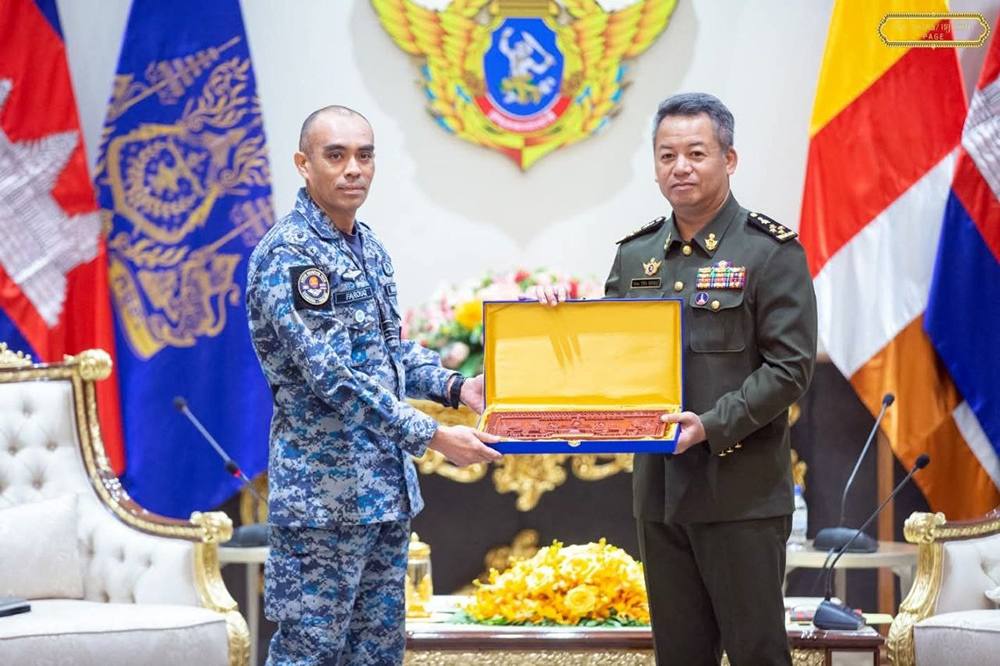
On April 2, Deputy Prime Minister and Minister of National Defence Tea Seiha conferred decorations on members of the ASEAN Observer Team at a ceremony in Phnom Penh, marking the conclusion of Malaysia’s leadership of the mission. Tea Seiha said the team had conducted direct site visits, fact-finding, and documentation throughout its deployment under Malaysia’s leadership. The Philippines is scheduled to assume the AOT leadership role for the remainder of 2026.
Cambodia’s Position
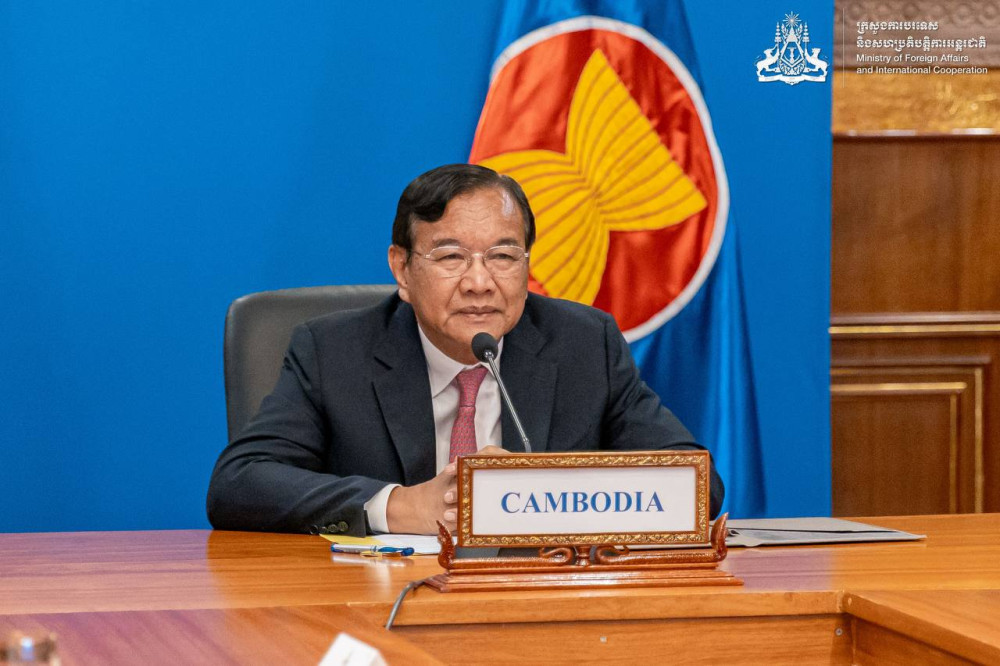
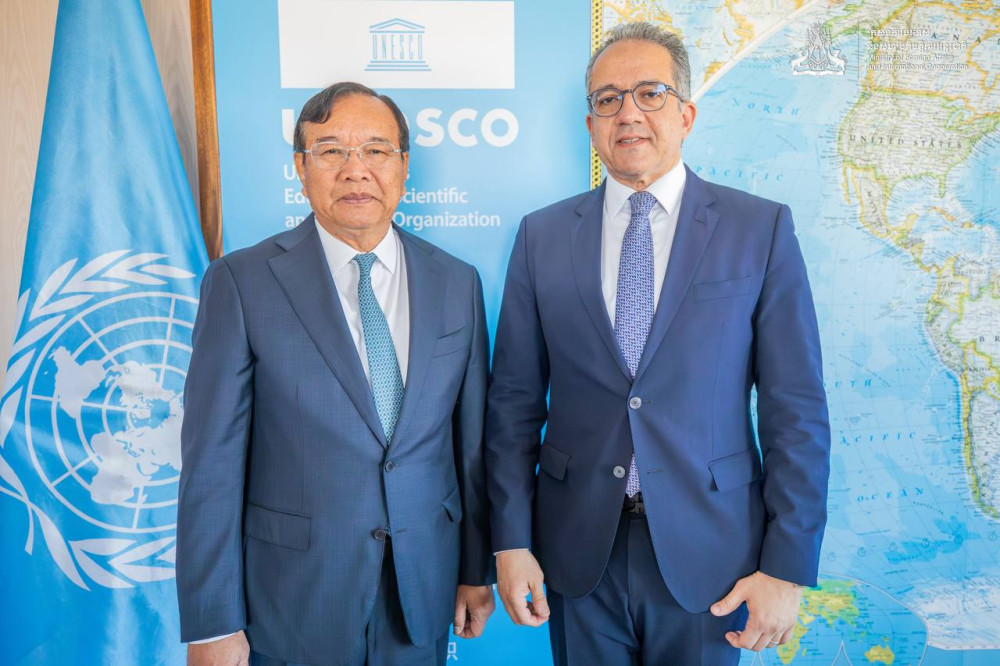
Cambodia’s April 3 press release stated that the Royal Government “neither recognizes nor accepts any boundary line or territorial claims unilaterally asserted by Thailand” and reiterated its commitment to resolving boundary disputes through peaceful means in accordance with international law. Foreign Minister Prak Sokhonn raised the border situation with United Nations Office of the High Commissioner for Human Rights representatives and with his Timor-Leste counterpart during the same period; Cambodian officials reported the activities to the United Nations, alleging violations of international humanitarian law. Prime Minister Hun Manet was scheduled to travel to France on April 6 for the One Health Summit and a working visit at the invitation of President Emmanuel Macron.
Disclosed gaps: The 70-personnel and two-armored-vehicle figures are drawn from Cambodian official sources only. Cambodia’s alleged February 24 grenade firing and January 6 mortar incident have not been independently verified. The AOT’s March 29 O’Smach findings are not established in accessible records.