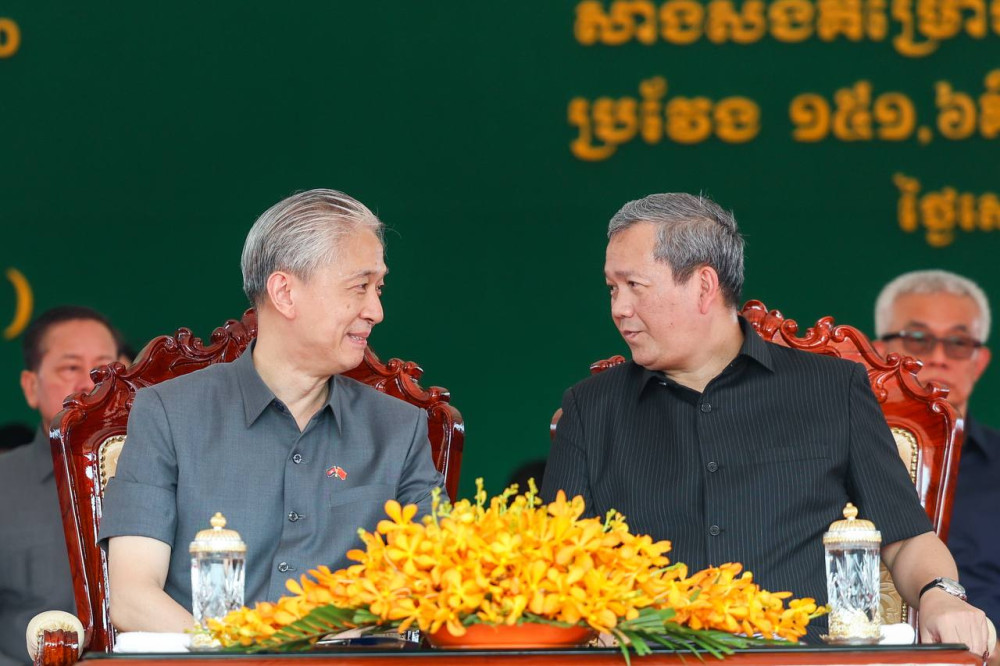
Twenty months after Cambodia held a nationally televised groundbreaking ceremony for the Funan Techo Canal, Prime Minister Hun Manet presided over a second ceremony on Friday, this one for the 151.6-kilometre segment that constitutes the project’s main body.
The first ceremony, on August 5, 2024, took place before China had signed a financing agreement for the project. That agreement, a $1.156 billion public-private partnership contract, came nearly eight months later during Chinese President Xi Jinping’s state visit to Phnom Penh in April 2025.
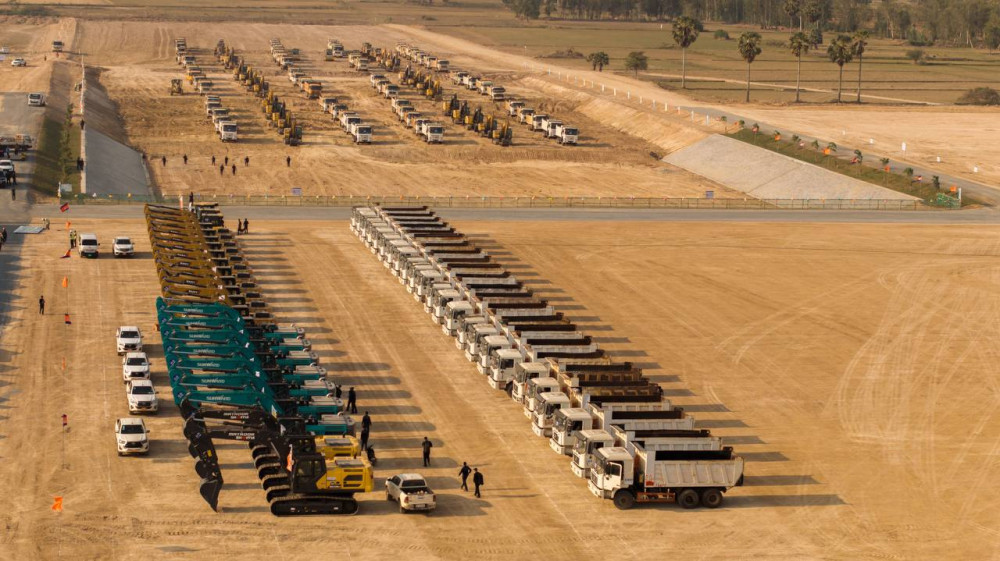
Section II of what Cambodia now calls the Funan Techo Integrated Water Resources Management Project broke ground in Borey Chulsa district, Takeo province. Chinese Ambassador Wang Wenbin stood alongside Hun Manet. The segment runs from Prek Po on the Bassac River through Kandal, Takeo, and Kampot provinces to the coast at Kep, where a new port will connect Cambodia’s inland waterways to Gulf of Thailand shipping lanes. The government pegs the investment at approximately $1.17 billion, with construction projected to take 36 months.
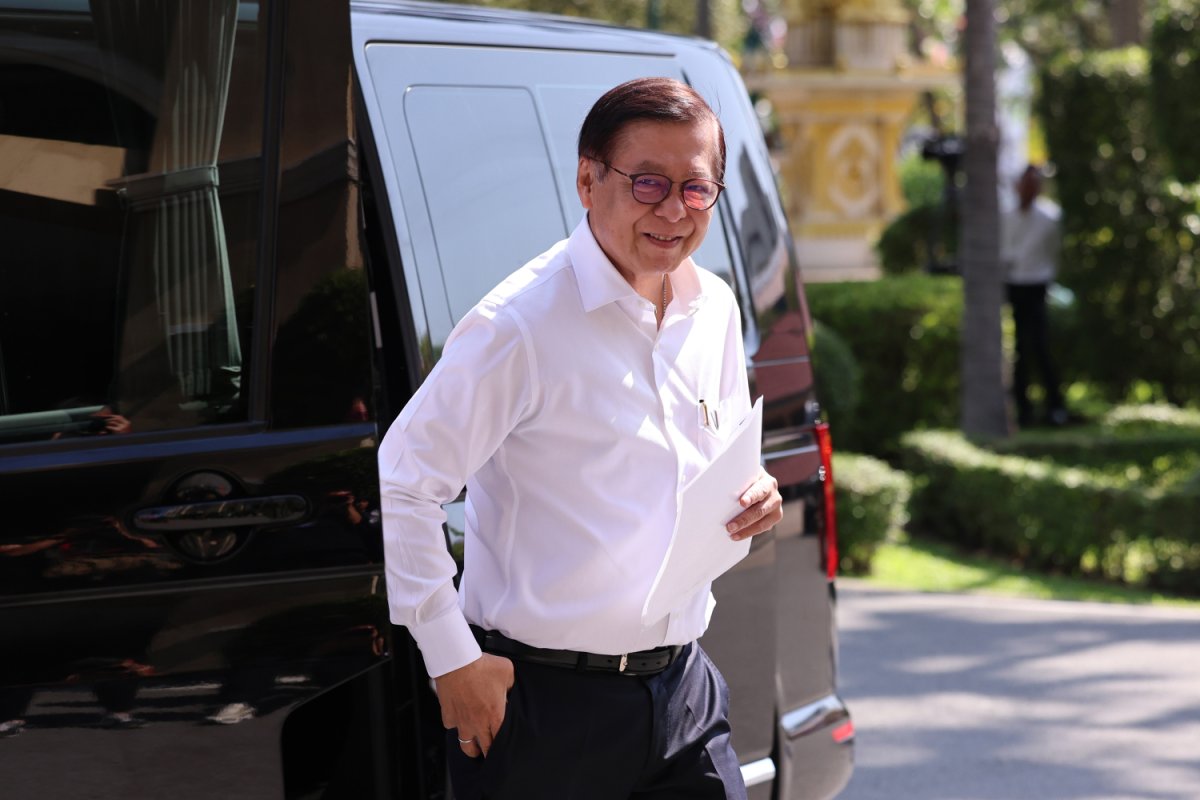
The day before the ceremony, Hun Manet met Song Hailiang, president of China Communications Construction Company, whose subsidiary China Road and Bridge Corporation is the Chinese-side partner. Song pledged to maintain schedule, quality, and social responsibility on the project.
The April 2025 PPP contract formalized an arrangement that had been in doubt for months. Under the deal, Cambodian entities hold 51 percent equity: the Overseas Cambodia Investment Corporation, Phnom Penh Autonomous Port, and Sihanoukville Autonomous Port. CRBC holds 49 percent. The project operates under a build-operate-transfer model with a concession period reported at 40 to 50 years.
The China-Cambodia joint statement issued during Xi’s visit framed Chinese support as being “in accordance with the principles of feasibility and sustainability”, language that stopped short of unconditional commitment.
Five documents were signed on April 17, 2025: a PPP agreement, a shareholders’ agreement, an investment agreement, an engineering procurement and construction contract, and an operation and maintenance contract. The signing resolved an open question. In December 2024, Reuters reported that China had not made definitive financial commitments to the canal and that no Chinese construction contracts had been issued. One person involved in the investment plans told Reuters there was no Chinese money on the table at that stage. A source from one of the Cambodian investors said it would not be a surprise if China did not invest at all.
Between the August 2024 ceremony and the contract signing, the project’s official website displayed zero percent construction progress for November and December 2025 and January 2026, according to Mongabay, which documented conditions along the canal’s route across multiple reporting trips between late 2024 and early 2026.
The canal is divided into two sections with separate financing structures. Section I, covering 21 kilometres near the Mekong River junction, is funded entirely by Cambodian companies. Section II, the segment that broke ground Friday, is the PPP joint venture.
The project’s specifications have shifted over three years of public communication. The government’s original cost estimate was $1.7 billion for a 180-kilometre canal. Reuters reported in April 2025 that Cambodian officials said the higher figure covered a short section to be built by Cambodian firms plus bridges and water-conservation components, though it was unclear who would fund those items. Friday’s AKP announcement put the total length at 172.6 kilometres. No official reconciliation of either the cost or length figures has been published.
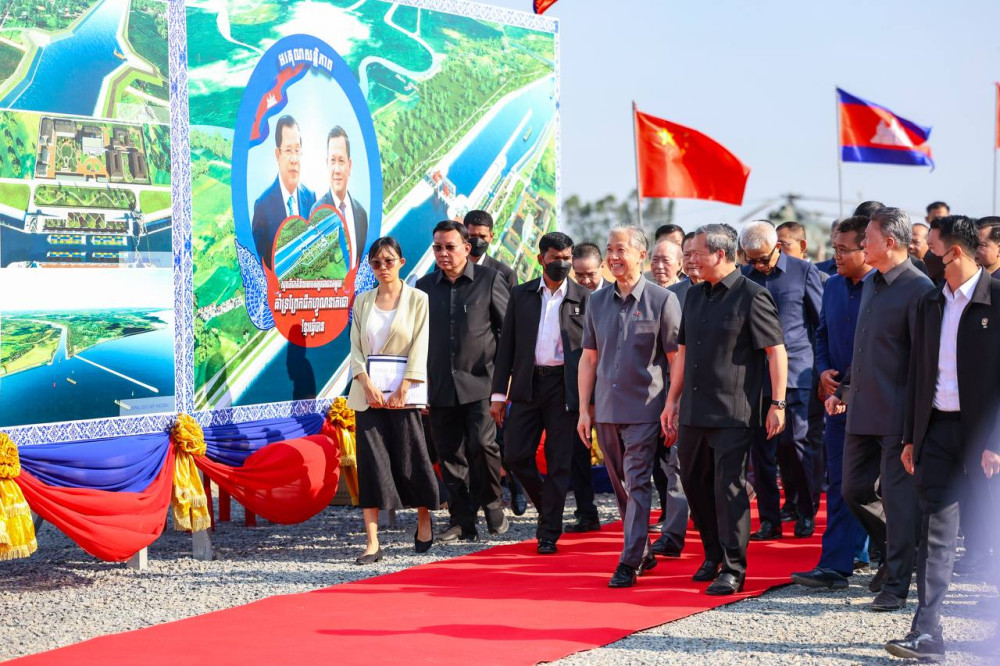
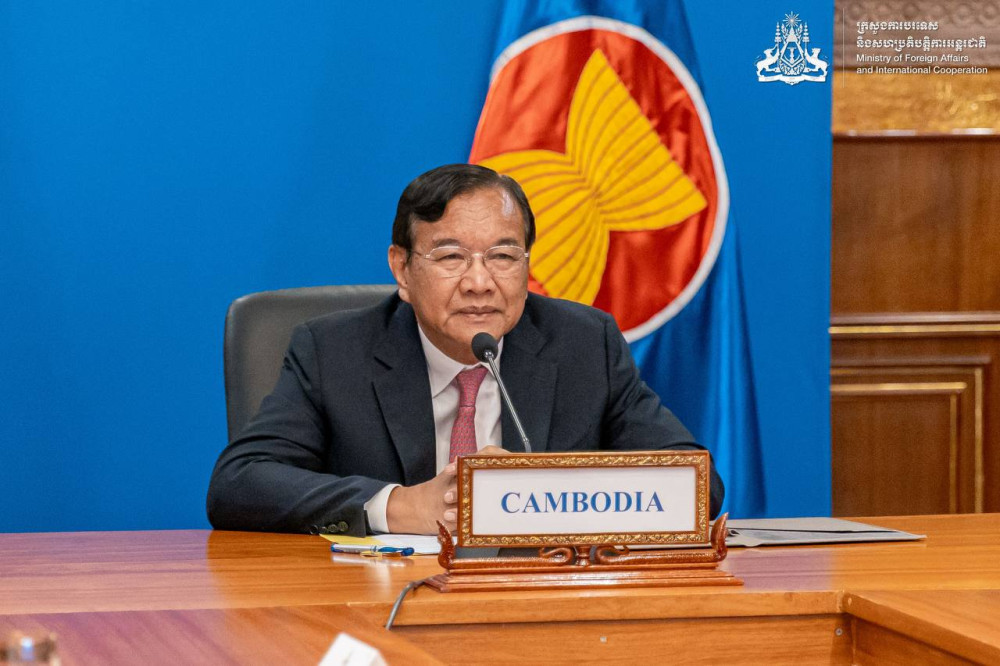
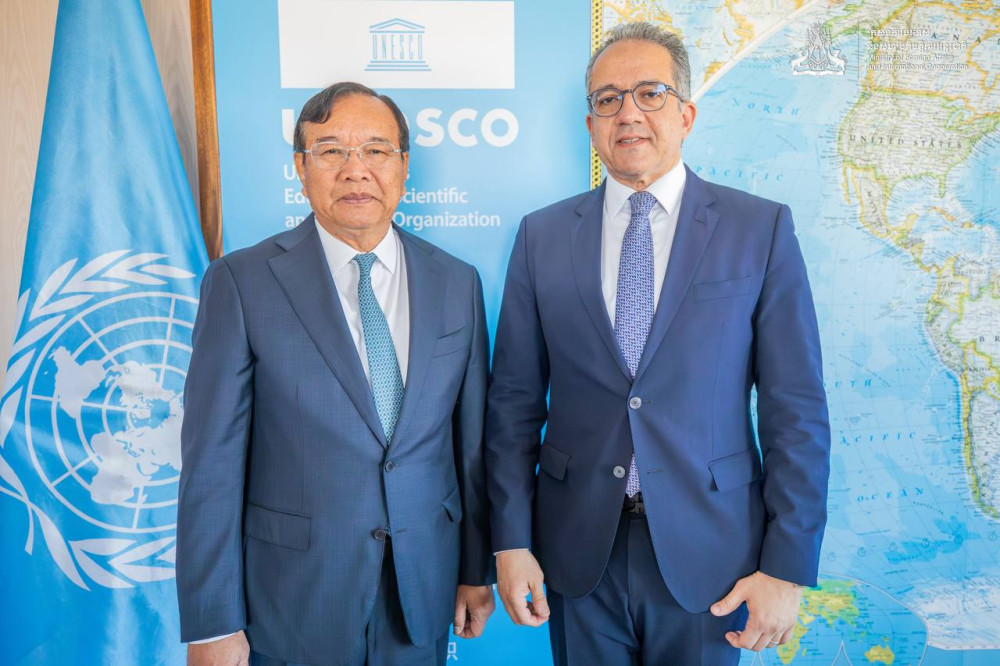
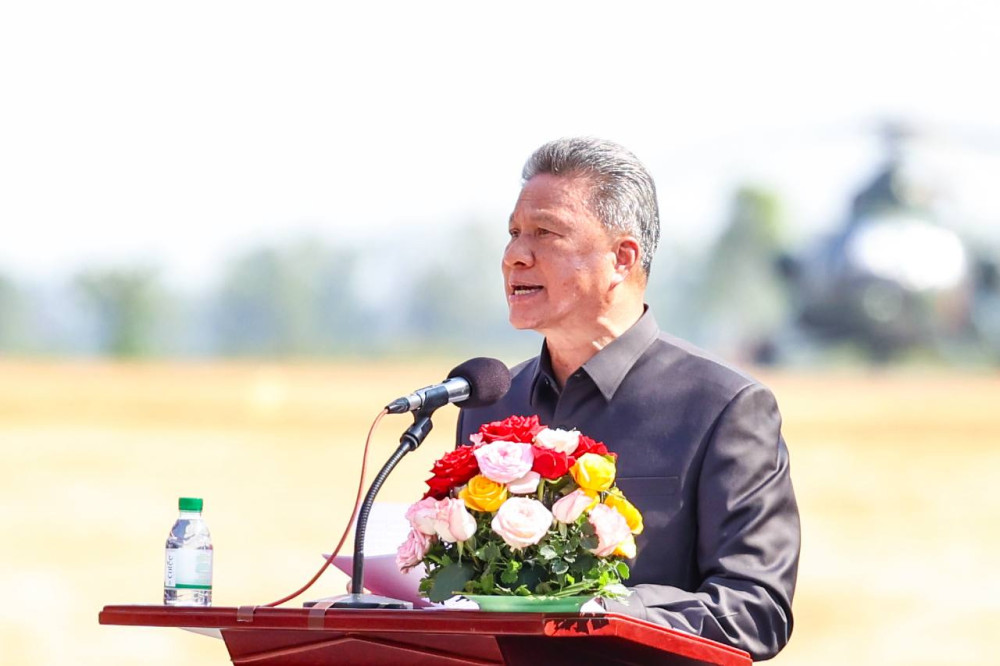
Deputy Prime Minister Sun Chanthol, who oversees the project as First Vice Chairman of the Council for the Development of Cambodia, described the canal at Friday’s ceremony as a testament to national solidarity and determination aimed at long-term economic and social development.
The government’s stated rationale centres on reducing Cambodia’s logistics costs, estimated at 26 percent of GDP, and cutting the country’s reliance on shipping through Vietnamese ports, through which roughly one-third of Cambodian imports and exports currently pass. Government projections estimate the canal could generate $88 million in freight revenue in its first year of operation. Sun Chanthol has compared the canal’s draw on the Mekong to “the size of a straw.”
The route follows existing waterways that the government describes as natural and ancient channels dating to the Funan period, the Southeast Asian maritime kingdom that occupied present-day Cambodia from roughly the first to the sixth century.
The 20-month interval between ceremonies contained real preparatory work. The Ministry of Public Works and Transport completed land demarcation and 3D aerial mapping for Section II, covering approximately 15,836 hectares. The Cambodian Mine Action Centre conducted unexploded ordnance clearance along the canal route, with its director-general confirming the work would not delay the construction timeline. Boundary posts were installed across 58 kilometres in Takeo province alone.
Compensation for displaced communities remained unresolved as recently as February 2026. The government’s own preliminary report estimates the project will affect nearly 10,000 homes and more than 7,000 hectares of farmland. CamboJA News reported that month that construction remained stalled, with the construction company declining to begin work until compensation issues with residents were settled.
Mongabay, which interviewed more than 50 residents across Kandal, Takeo, Kampot, and Kep between late 2024 and early 2026, documented a persistent information blackout. Residents, and in some cases local authorities, reported receiving no information about relocation timelines or compensation amounts. The Ministry of Public Works and Transport, the Ministry of Environment, and Sun Chanthol’s office did not respond to Mongabay’s repeated requests for comment over that period.
At Friday’s ceremony, Hun Manet addressed affected communities directly: “The Royal Government is with you.” Whether the compensation process has been resolved in the weeks since the last independent reporting, or whether construction is proceeding alongside ongoing resolution as a Ministry of Economy and Finance spokesperson indicated was the plan in February, could not be independently confirmed at the time of the groundbreaking.
The Mekong River Commission said in April 2025 that it had received only “basic information” about the project and was seeking the feasibility study and related technical reports. Cambodia has maintained that the canal requires only notification, not consultation, under the 1995 Mekong Agreement.
The Stimson Center has noted that Cambodia’s notification classified the project as a tributary intervention rather than a mainstream one, a distinction that determines the level of disclosure obligation. The same analysis assessed that the canal’s levee structure could split a one-million-hectare floodplain, increasing flood risk on one side while restricting water supply on the other.
Vietnam has said it “respects Cambodia’s implementation” of the project while pushing for closer coordination on downstream impacts to the Mekong system.
Senate President Hun Sen, who conceived the project during his tenure as prime minister, told lawmakers in April 2025 that the canal would be built “with or without help from our Chinese friends.” The help came. Whether the communities along its 151.6-kilometre path received equivalent attention is the question the second groundbreaking does not answer.