
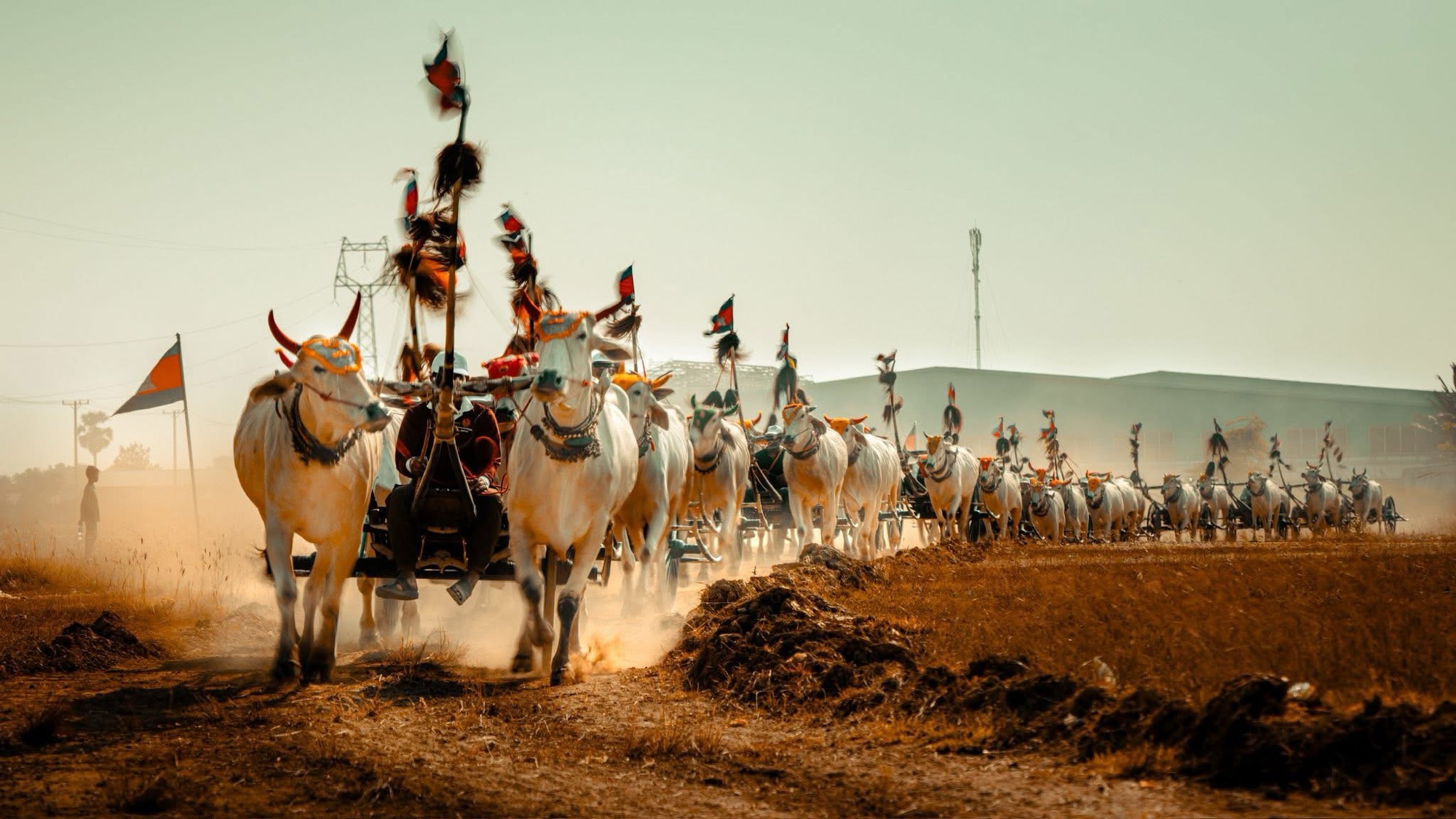
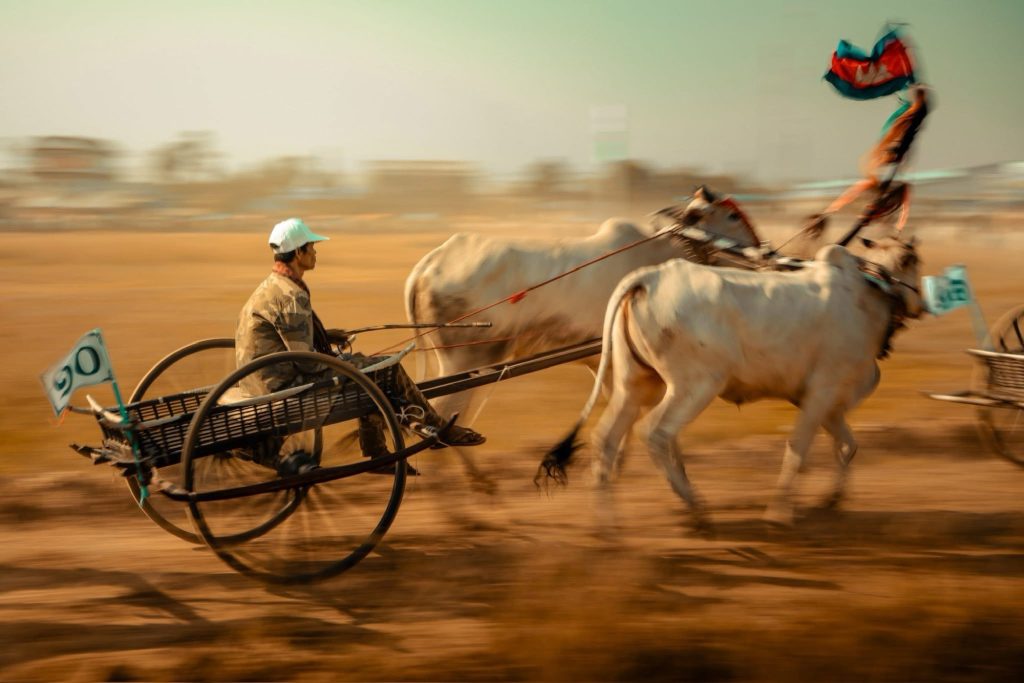
Chhim Mao has loved ox-cart racing since he was a child. In April 2024, the 40-year-old lined up his pair of oxen on a dirt track in Kampong Speu province, as he had done many times before. He told Xinhua that the tradition had been passed from older generations to younger generations, and that each year, more people came to watch and more oxen were brought to race.

The event Mao races in is called Saly Kolleun, the traditional Khmer ox-cart race, held every year in Kampong Speu in the days before Khmer New Year (April 14 to 16 in 2026). It is now a documented four-year growth story. In April 2023, Khat Sokhay, head of the Kampong Speu Provincial Oxen Association, counted 38 pairs on an 800-meter track in Rolaing Sangke village, Chbar Mon. By April 5, 2026, 80 pairs raced on a one-kilometer course in Snor 1 village, Chbar Mon, 42 kilometers west of Phnom Penh, photographed by Xinhua and the Associated Press. In between, the field grew to 50 pairs in 2024 and 67 in 2025, according to figures from Xinhua, AFP, and Agence Kampuchea Presse across successive annual coverage.

The tradition predates its modern organized form. Ox-carts were once used across rural Cambodia to carry dowries and elderly family members to weddings and festivals, according to the Ministry of Culture and Fine Arts. Villagers later began racing them to mark the new year. In modern Kampong Speu, tractors, trucks, and motorized rickshaws have replaced the ox-cart in daily life. The organized Saly Kolleun, now in its 10th edition as of 2024 with a two-year gap during COVID-19, exists because the people of Kampong Speu chose to keep racing rather than let the practice disappear. Tep Chantheng, 38, from Phnom Sruoch district, told Khmer Times in 2024 that villagers used to hold the races in paddy fields, and she was glad authorities had moved them to a large open venue that could accommodate more people. In Chbar Mon city, the provincial capital, a public roundabout is decorated with sculptures of a pair of oxen pulling a cart.
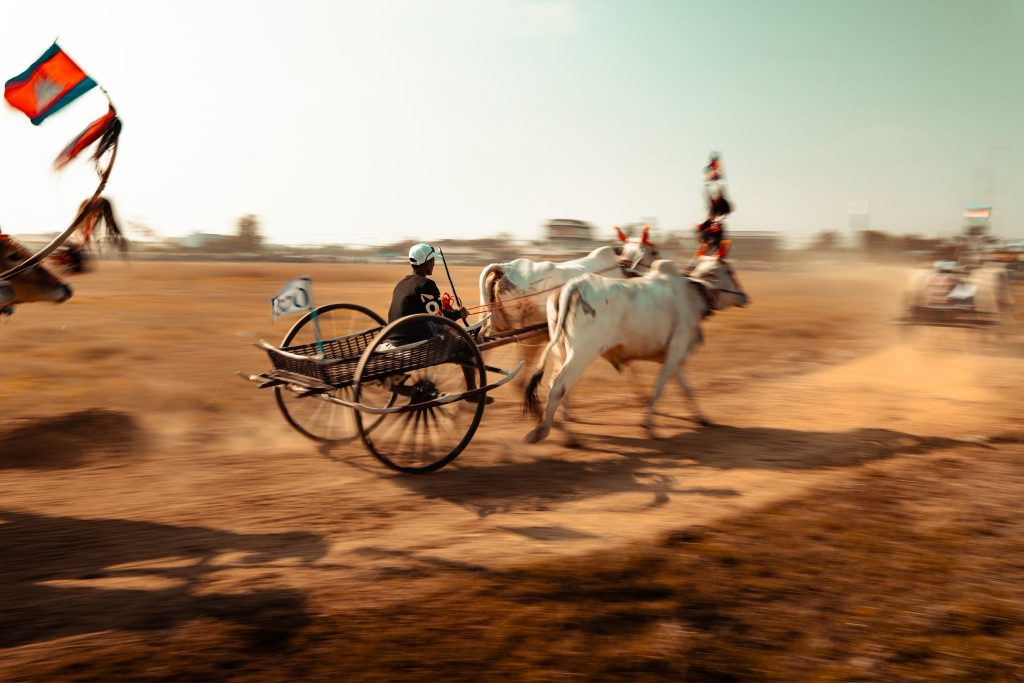
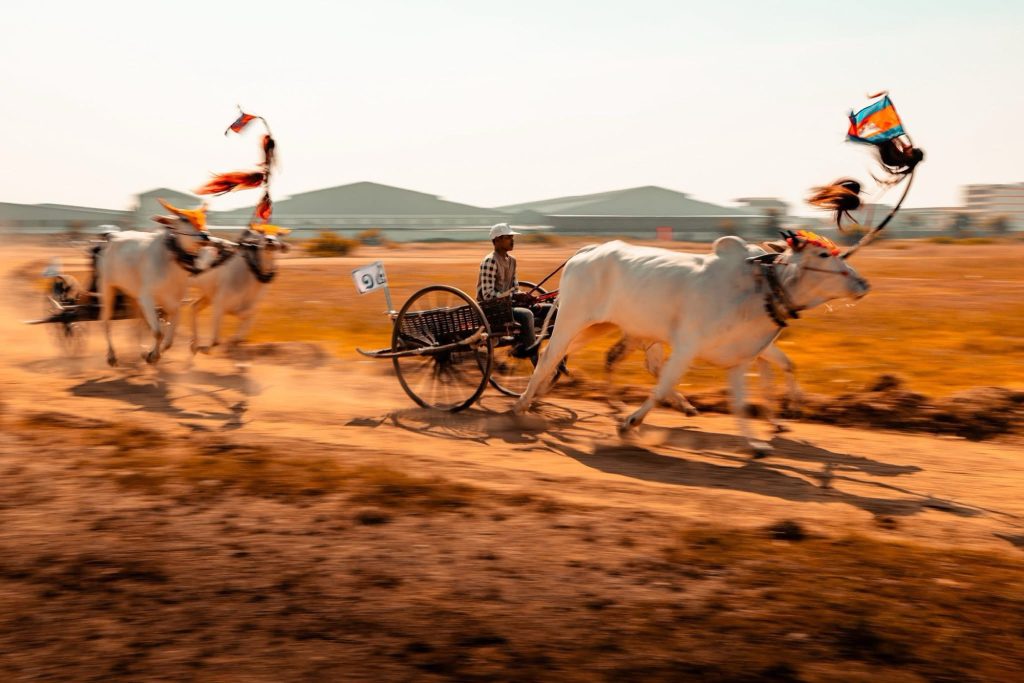
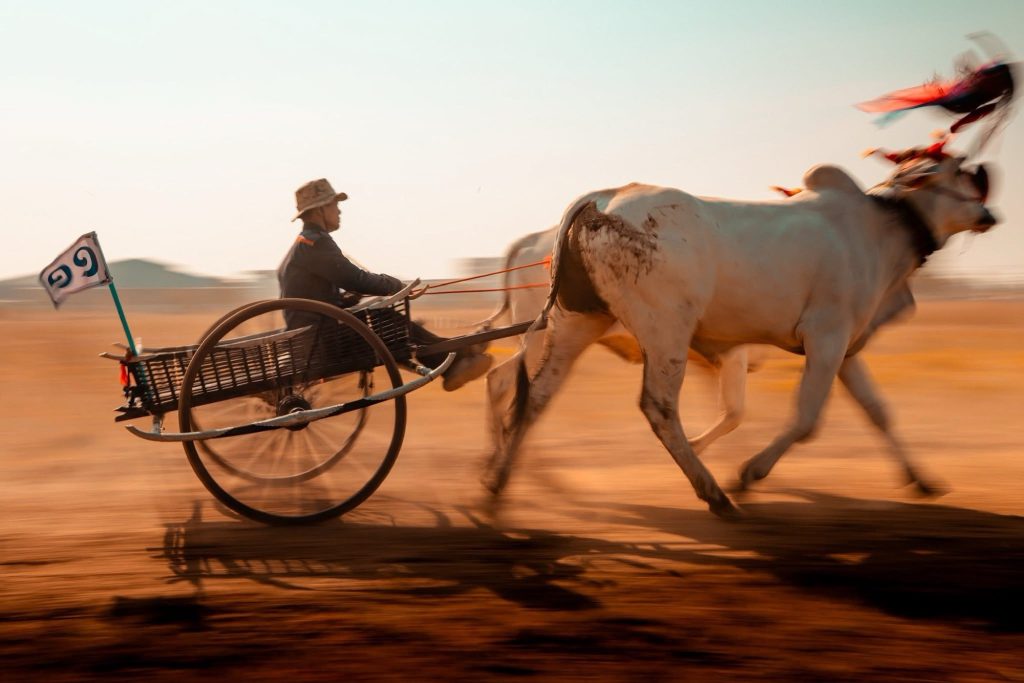
The oxen arrive adorned with colourful masks, headgear, and small bells around their necks, AFP reported in 2024. Pairs sprint the length of the dirt track while hundreds of spectators watch and cheer. Tradition forbids betting on the outcome, according to Khmer Times. Winners receive prizes for first through third place, with fourth and fifth given honourable mentions, and all races are monitored by a technical committee. Sokhay told Xinhua in 2023 that the race was for fun, not for winning or losing. He called it Cambodia’s own version of Formula 1 in his remarks to AFP the following year.
The racers come from beyond the province. In 2024, Sun Meanchey, director of the Kampong Speu Provincial Department of Culture and Fine Arts, told Khmer Times that teams had travelled from four provinces: 26 from Kampong Speu, 16 from Kandal, four from Phnom Penh, and two from Kampong Cham. The 2024 race was co-organized by the Provincial Department of Culture and Fine Arts, the Union of Youth Federations of Cambodia’s Kampong Speu chapter, the Samrong Tong District Administration, and the Provincial Oxen Association. By 2025, provincial governor Cheam Chansophoan was publicly attached to the event, describing it as an effort to preserve, promote, and develop the tradition.
The spectators are part of the record too. Siek Sothea, a 39-year-old watching for the first time in 2024, told Xinhua she wanted to encourage more people to join so the tradition could be passed to children and grandchildren. Chantheng told Khmer Times she planned to bring her family because she wanted Khmer traditions of their ancestors to survive for years to come. Nhib Phanny, a returning spectator in 2023, told Xinhua he had never lost his excitement and that the race gave people a happy moment before the new year.
Sun Meanchey has appeared in race coverage across four consecutive years. In 2023, he called the tradition Kampong Speu’s intangible heritage. In 2024, he told AFP he worried that as Cambodia develops, rice fields would give way to factories and the grounds for racing would be lost. In 2026, he told Xinhua the event existed to protect the tradition from extinction. The venue has shifted between editions, from Rolaing Sangke village in 2023 to Prey Rumduol in Samrong Tong district in 2024 to Snor 1 village, Chbar Mon in 2025 and 2026, with track lengths varying from 800 meters to 1.3 kilometers across different sites.
The participation figures carry reporting inconsistencies across years and outlets that no outlet has reconciled. For 2024, AFP counted 46 pairs, Khmer Times reported 48 pre-event, and Xinhua reported 50 post-event. Xinhua’s April 2026 copy stated the 80-pair field was up from 50 pairs in the previous year, but Xinhua’s own April 2025 report placed the 2025 field at 67 pairs, with the 50-pair figure belonging to 2024. The discrepancies do not change the documented direction of the growth. No accessed source documents the funding behind the expansion.
Khat Sokhay has been in the record from the start. In 2023, he told Xinhua that since the generation of his grandparents, he had always seen the ox-cart race at the end of the rice harvesting season. He asked people to preserve the tradition from extinction and maintain it for the next generation. In 2026, he was still there. He told Xinhua the event had preserved the centuries-old tradition and created a joyful atmosphere for people before Khmer New Year.