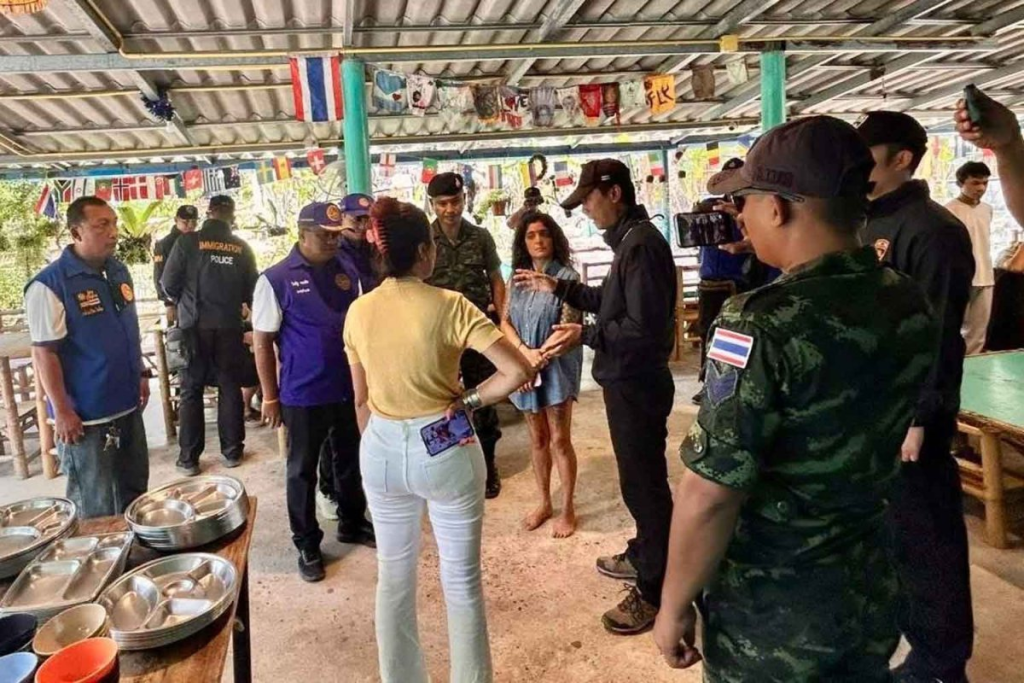
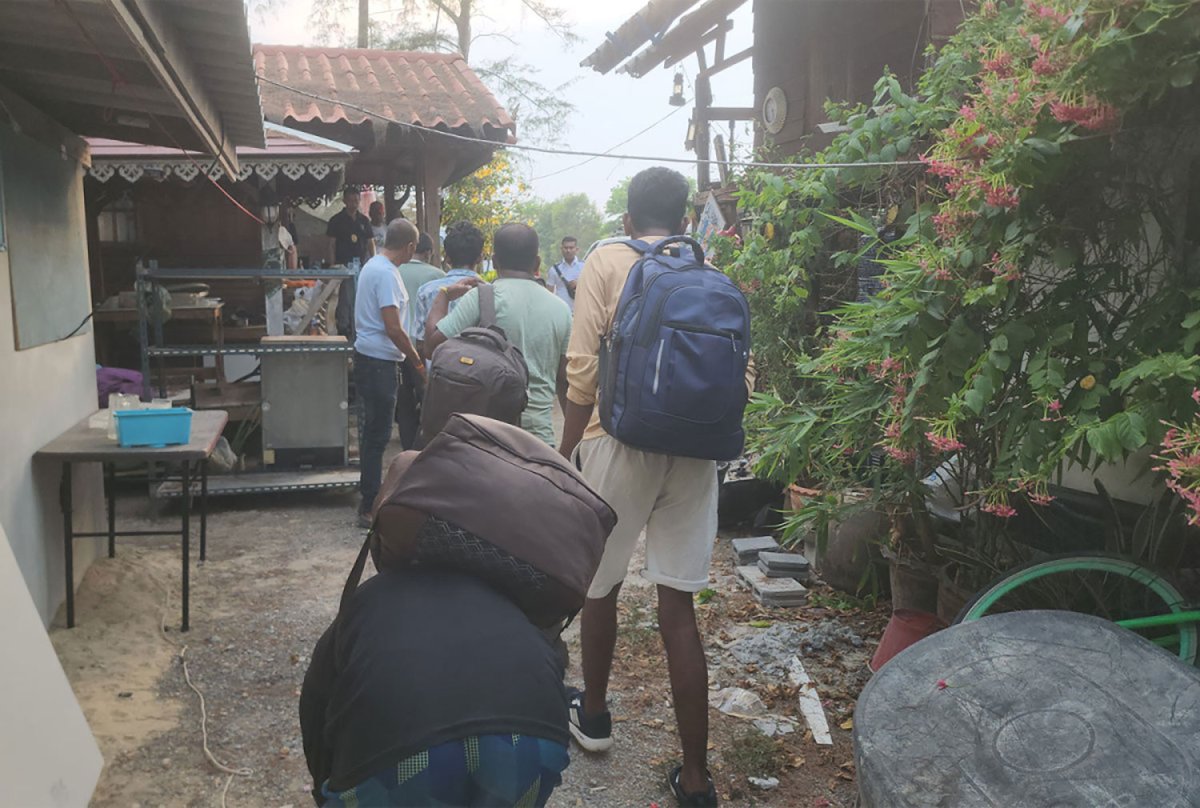
The Associated Press wire filed on April 7 carried a dateline that did most of the work. “O’SMACH, CAMBODIA, Tuesday, April 7, 2026.” The compound at the other end of that dateline is on Cambodian soil, is owned by a Cambodian senator the United States Treasury sanctioned in September 2024, and was seized by the Thai military during combat operations in December 2025. Thailand’s government spokesperson on May 3 described that same compound as part of a Thai dismantling operation, citing more than 10,000 trafficked workers found across networks along the Thai-Cambodian border. Cambodia filed a UN Security Council protest on January 5 naming “O Smach area” in Oddar Meanchey Province among the territories Thai forces seized and continued to occupy after the December 27 ceasefire.
Deputy government spokesperson Rachada Dhnadirek told the Bangkok Post on May 3 that Thailand aims to move from Tier 2 to Tier 1 in the next US Trafficking in Persons Report after four consecutive years at Tier 2. The same address ran in Nation Thailand the same day. Each load-bearing operational claim attributes differently than the spokesperson framing presents.
The omission lands inside a calendar window in which Cambodia promulgated a specialized cybercrime law on April 6, extradited the founder of a US-sanctioned scam conglomerate to China on January 6, raided 2,709 locations in two weeks in February, and shut more than ninety casinos by late April. The same calendar window contains no documented Cambodian legal proceeding against Ly Yong Phat. The 2025 US Trafficking in Persons Report places Cambodia at Tier 3 for the fourth consecutive year and named Cambodia, under the TVPA’s “policy or pattern” framework, a state sponsor of trafficking. The same report places Thailand at Tier 2 for the same four-year stretch.
None of this enters the May 3 spokesperson address.
On November 21, 2025, foreign defense attachés were taken on a Thai military tour framed around “false narratives” attaching to Thai operations at the border. In January 2026, the Royal Thai Government established the Joint Information Centre under Air Chief Marshal Prapas Sornchaidee. Three Thai-organized international media tours of the O’Smach compound have followed. The December 2025 Thai air campaign had targeted scam-linked casino zones at Chong An Ma, Chong Chom, and O’Smach, per Nation Thailand reporting. Reuters reporting on February 2, 2026 carried the Thai military’s account of the O’Smach seizure, with senior officers presenting fraud evidence to reporters and foreign delegates in Surin. CSIS analysts later wrote that Thai military statements framed the strikes as a “war against the Scam Army.”
The compound the May 3 address counted as Thai enforcement output had appeared on a US Treasury sanctions list nineteen months earlier. Neither government acted against the compound, or against its owner inside its own jurisdiction, across the fourteen months between the September 2024 OFAC designation and the December 2025 seizure.
The O’Smach Resort stretches across 197 acres and 157 buildings, organized into zones the Thai military lettered A through G. The April 7 tour was the third Thai-organized international media tour of the site. Sixty-plus Thai and international journalists were taken to view scam scripts written in Chinese, American SIM cards, detention rooms, and a hospital staffed by Chinese personnel. Prapas told the AP that no single country could solve the problem alone. The dateline above their copy read “O’SMACH, CAMBODIA.” The seizure had come through Thai air strikes and ground operations in December 2025 that targeted casino zones at Chong An Ma, Chong Chom, and O’Smach. The compound’s owner, Ly Yong Phat, had been sanctioned by the US Treasury in September 2024 for, in OFAC’s wording, serious human rights abuse related to forced labor in online scam centres.
The “Ben Smith, Yim Liak and their associates” prosecutions Rachada cited as enforcement evidence trace, in The Diplomat’s account of the Thai Anti-Money Laundering Office’s seizure orders, to a money-laundering network linked to Cambodia-based cyber scam operations. Yim Leak is Cambodian. He chairs BIC Group and BIC Bank Cambodia. Ben Smith is a working name used by Benjamin Mauerberger, a South African national who fled Thailand in 2025 and is reported in the Seychelles, not in Thai custody. AMLO’s seizure orders against the Yim Leak network reached more than 20 billion baht across February and April, the figure Rachada gave to the Bangkok Post.
The principal foreign defendant has fled. The Cambodian principal sits at the centre of a Cambodia-based network. The Thai institutional response to that network exists and is documented. The May 3 framing of that response as Thai enforcement of “the Thai-Cambodian border” erases the network’s geography and the location of its principal actor.
Royal Thai Police unveiled the SHIELD platform in mid-January 2026 at police headquarters in Bangkok. Rachada described it on May 3 as a regional information-sharing hub linking more than ten countries, launching in June. The Royal Thai Police record names eighteen participating countries: Korea, China, Japan, Nepal, Brunei, Bangladesh, the Philippines, Malaysia, Myanmar, Laos, Vietnam, Sri Lanka, the United Kingdom, Singapore, Australia, India, Indonesia, and Thailand. Cambodia is not among them. The public record does not document whether Cambodia was invited and declined or was excluded from the architecture. The platform’s stated purpose is intelligence on scam compounds in Cambodia, Myanmar, and Laos. Two of the three sovereign jurisdictions are participating. The third, the territorial sovereign of the compound at the centre of the May 3 address, is not.
The Law on Combating Online Scams was promulgated by Royal Decree NS/RKM/0426/006 on April 6, 2026. The National Assembly had adopted the text on March 30 with all 112 lawmakers voting in favour. The Senate concluded its review on April 3 in extraordinary session. Acting Head of State Hun Sen, serving in that constitutional role with the King abroad, signed the decree. The law took effect immediately. Article 2 extends jurisdiction to offences committed by Cambodian nationals abroad, against Cambodian nationals abroad, and through banking systems of the Kingdom of Cambodia. Article 21 establishes international cooperation on mutual legal assistance, extradition, asset identification, freezing, and proceeds recovery. Article 22 provides confiscation of instruments and proceeds even where the charged person has died or remains unidentified. Penalties for organising a scam centre that causes death run to fifteen-to-thirty years or life imprisonment.
Cambodia’s enforcement record arrived in pieces across the same months the Thai narrative architecture took shape. Chen Zhi, founder and chairman of Prince Group, was arrested in Cambodia on January 6 and extradited to China. The US Treasury had sanctioned him in October 2025. The National Bank of Cambodia ordered Prince Bank into liquidation. In February, Cambodian authorities raided 2,709 locations in two weeks and identified more than 21,000 foreign nationals as potential suspects. Interior Minister Sar Sokha told reporters in February that more than 30,000 suspected foreign scammers had been deported and over 210,000 had voluntarily left the country since June 2025. The same record contains no Cambodian charge, prosecution, asset freeze, or domestic enforcement action against Ly Yong Phat across the nineteen months since OFAC’s designation. The 2025 TIP Report records that Cambodia has never arrested or prosecuted a suspected compound operator or owner and has not prosecuted the sanctioned official.
On April 24, 2026, US Attorney Jeanine Ferris Pirro, in a virtual press briefing on Southeast Asian scam networks, said Cambodian authorities had recently taken action against scam compounds, per Khaosod English coverage. The CSIS analysts Julia Dickson and Japhet Quitzon, in analysis published in January and updated in February, wrote that the Thai narrative architecture works to “deflect criticism of official complicity or inaction against scam networks” while advancing domestic political objectives. Their analysis also located Thailand structurally as a major transit hub for trafficking victims recruited into the compounds, a structural finding that runs counter to the May 3 spokesperson framing of regional architecture.
Cambodia’s enforcement record sits inside structural conditions the May 3 address also did not surface. The 2025 US TIP Report records that senior officials in Cambodia owned properties used by online scam operators to exploit victims in forced labor and forced criminality. A 2024 estimate by the United States Institute of Peace placed annual illicit revenues from Cambodia-based online scams at approximately twelve and a half billion US dollars, roughly half of Cambodia’s formal economy. Prime Minister Hun Manet, in a 25 February interview with AFP in Brussels, said the scam economy was destroying Cambodia’s honest economy and had put a bad reputation on the country. Most of the proceeds, he said, do not enter the government of Cambodia.
The Thai enforcement architecture is real. The Anti-Money Laundering Office’s actions against the Yim Leak network are documented in the Thai courts. Royal Thai Police, Meta, and the FBI coordinated a disruption operation in March 2026 across Meta platforms, with arrests reported. The Anti-Online Scam Operation Centre operates. The Anutin government faces documented domestic Thai political pressure on enforcement, in The Diplomat’s account of the post-election period after Anutin’s Bhumjaithai Party assumed government following the March 2026 snap election. Thailand’s framing as a Tier 1 candidate is, in part, a domestic Thai political deliverable. The mechanism by which Cambodia’s enforcement record disappears from that architecture operates regardless of which Thai motive predominates. The May 3 address could not surface Cambodia’s non-action on Ly Yong Phat without forcing Thailand to surface its own fourteen-month interval before the December 2025 seizure. Selective omission across both states is what the Tier 1 architecture rests on.
The next US Trafficking in Persons Report releases in June. The SHIELD platform launches the same month. The Cambodian law took effect on April 6. The Anti-Money Laundering Office’s case against the Yim Leak network continues in Thai courts with the foreign principal in the Seychelles. The compound at O’Smach remains under Thai military control on Cambodian soil, owned on paper by a Cambodian senator neither government has prosecuted. The dateline above the AP wire on April 7 read “O’SMACH, CAMBODIA.”