BANGKOK, March 1, 2026 – Thailand’s military has eased a 76-day suspension on fuel exports to Laos, resuming shipments through the Chong Mek checkpoint under enhanced monitoring measures that it says are designed to prevent onward diversion to Cambodia.
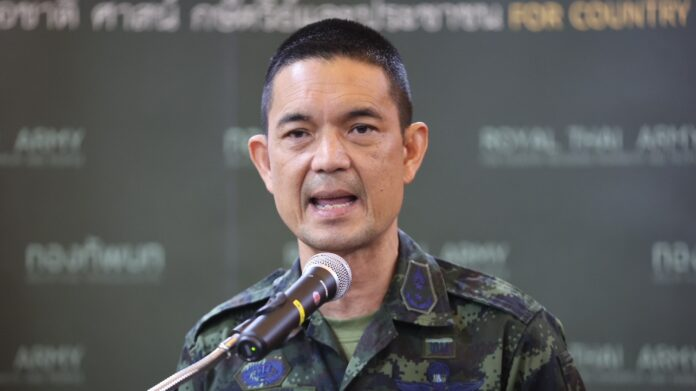
Maj. Gen. Winthai Suvaree, a spokesperson for the Royal Thai Army (RTA), said exports had been halted since Dec. 14 for security reasons amid concerns that fuel transported to Laos was being re-routed across the border. On Feb. 28, the 2nd Army Area introduced what it described as “relaxed” procedures combined with tighter oversight, including GPS tracking of tankers, vehicle inspections tied to permit conditions, and mandatory certification of delivery at designated depots in Laos. Transport reports must be filed with the Suranaree Task Force for each shipment.
Thai authorities said they coordinated the new framework with Lao counterparts in Champasak province. According to the RTA, Lao provincial officials provided written confirmation that the importing company is legally registered and will not re-export fuel to third countries.
The suspension and subsequent resumption come against the backdrop of prolonged tension along the Thai-Cambodian border and an earlier policy shift by Phnom Penh. In June 2025, Cambodian Prime Minister Hun Manet announced a halt to fuel and gas imports from Thailand, framing the move as a step to reduce economic dependency amid deteriorating bilateral relations. Since then, Cambodia has sourced a larger share of its fuel via maritime imports, including shipments from Singapore, according to regional trade reporting.
Thai officials have not publicly disclosed the volume of fuel allegedly diverted during the suspension period, nor have they provided quantitative data detailing the scale of the suspected leak. The military’s position, as stated by Maj. Gen. Winthai, is that the revised monitoring regime balances border security with the need to mitigate economic disruption to Lao businesses and consumers.
The mechanism relies primarily on tanker-level tracking and documentation. While GPS monitoring provides visibility over vehicle routes, Thai authorities have not outlined downstream controls once fuel is discharged into storage facilities in Laos. The effectiveness of the new system in preventing re-export will depend on compliance and enforcement beyond the point of delivery.
Bangkok has framed the policy as a targeted security measure rather than a trade restriction against Laos. The RTA emphasized that the objective is to preserve good relations with Vientiane while ensuring that Thai-Lao coordination remains in place to prevent illicit diversion.
No formal response from Cambodia’s Ministry of Mines and Energy addressing the latest Thai allegations of diversion was publicly available as of Sunday. The absence of quantified seizure data or independent verification leaves open questions regarding the scale of the smuggling risk cited by Thai authorities.
For now, the episode underscores how border trade flows particularly in strategic commodities such as fuel have become entwined with security management amid wider regional friction. Whether the current “tight watch” protocol stabilizes the corridor or becomes a durable feature of Thai-Lao trade will depend on both enforcement outcomes and the trajectory of Thai-Cambodian relations in the weeks ahead.