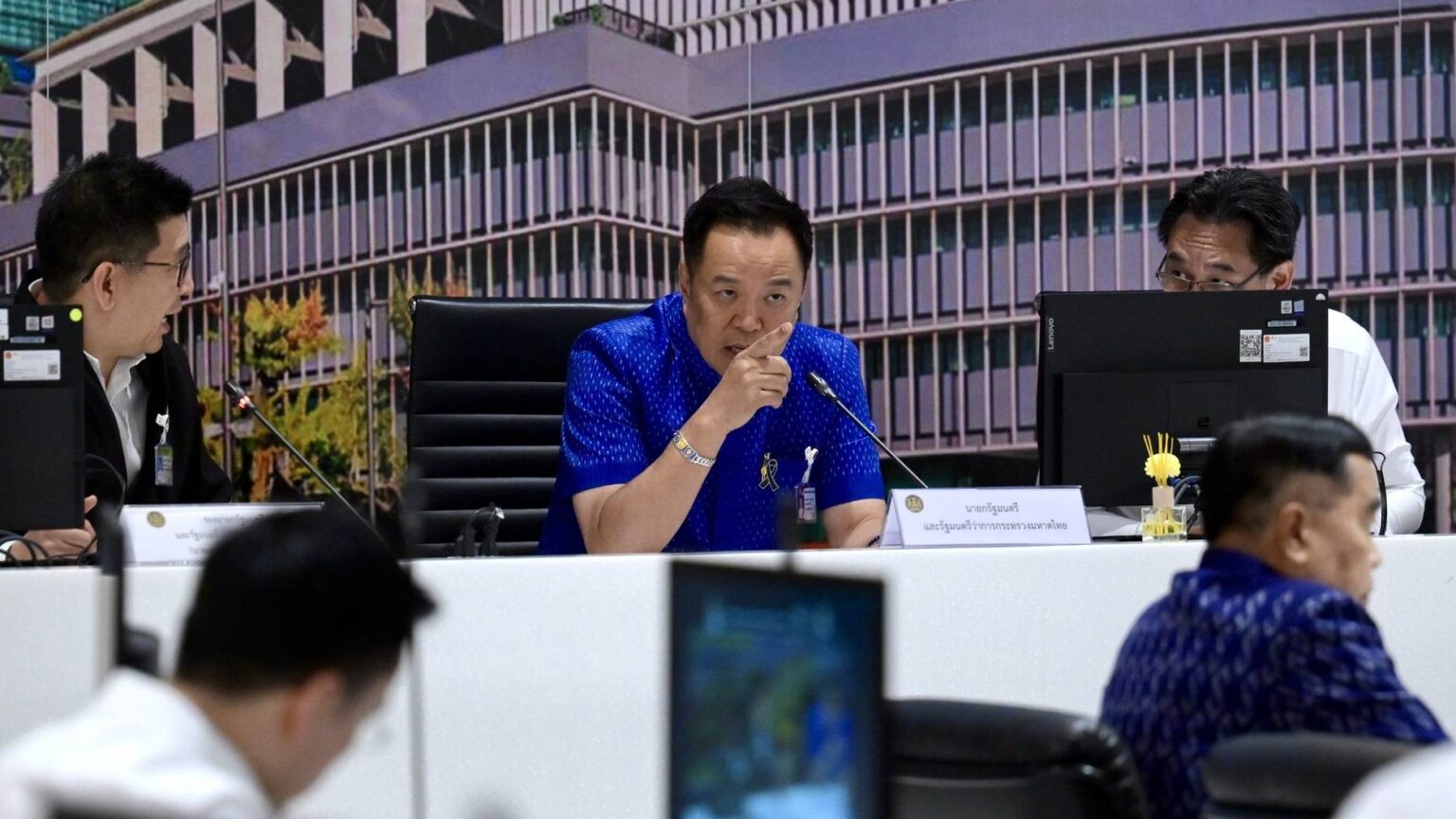

Bangkok, March 08 2026 – Thailand’s February 8, 2026 general election has produced a functioning parliamentary coalition led by Anutin Charnvirakul and his Bhumjaithai Party, but the result reflects a fragile political settlement rather than a definitive restoration of stability. Certified results show Bhumjaithai emerging as the largest bloc in the 500-member House of Representatives, allowing the party to assemble a governing alliance with the Pheu Thai Party and several smaller parties. The coalition holds a workable majority in parliament, positioning Anutin to remain prime minister and enabling the government to project an image of managerial continuity after years of political volatility.
Yet the outcome illustrates a deeper structural tension in Thailand’s political system. According to analysis by Prajak Kongkirati, the election represents a form of elite accommodation rather than a consolidation of ideological power. Bhumjaithai secured a plurality through strong performance in constituency races, winning 172 constituency seats and 19 party-list seats for a total of 191. In contrast, the reformist People’s Party performed significantly better in the party-list vote and dominated Thailand’s capital, winning all 33 parliamentary seats in Bangkok. The result highlights the extent to which Thai electoral competition now operates across two distinct arenas: provincial constituencies dominated by entrenched local networks, and national party-list contests shaped by urban reformist politics.
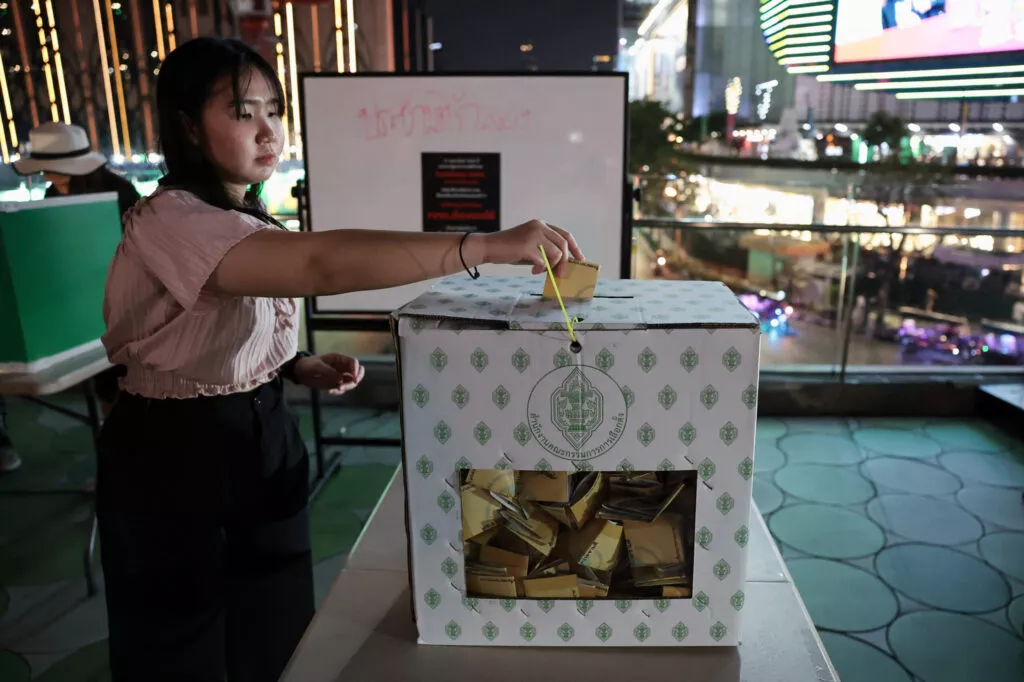
Thailand’s mixed electoral system requires voters to cast separate ballots for constituency candidates and national party lists. This structure often produces divergent outcomes between local representation and national vote preferences. In the 2026 election, Bhumjaithai’s commanding constituency success contrasted sharply with its more limited party-list support, suggesting that its strength rests less on broad ideological appeal and more on its capacity to mobilise provincial political machines. These networks include long-established political families, local brokers and constituency-level patronage structures that remain central to electoral mobilisation across much of the country.
Analysts argue that this pattern reflects the evolving nature of Thailand’s political order. Historically, conservative authority rested on a tightly coordinated alliance linking the monarchy, military, judiciary and senior bureaucracy. That institutional configuration repeatedly intervened in politics through coups, constitutional engineering and judicial rulings. While those mechanisms weakened overt authoritarian control, they did not eliminate demands for democratic reform. Instead, the system appears to have adapted. Rather than ruling directly above electoral politics, traditional power centres increasingly rely on cooperative political intermediaries capable of winning elections while remaining acceptable to established institutions. Within this framework, Bhumjaithai functions as a pragmatic electoral broker rather than a classical ideological conservative party.
The coalition between Bhumjaithai and Pheu Thai reflects this adaptive political logic. Pheu Thai, long associated with the Shinawatra political network, historically represented a populist electoral challenge to establishment authority. Its participation in the current coalition demonstrates a pragmatic accommodation among political actors whose primary shared interest lies in maintaining governmental stability and access to state resources. The alliance therefore represents less a unified policy platform than a negotiated arrangement among factions with distinct political constituencies.
Maintaining this arrangement will likely require continuous bargaining. Cabinet positions, budget allocations and policy priorities must be balanced among competing factions, each backed by different provincial networks and political interests. Fiscal pressures and slowing economic growth could complicate this process by limiting the resources available for patronage distribution, historically a key mechanism for maintaining coalition cohesion in Thai politics.
The political environment is further complicated by ongoing legal and institutional disputes. Several reformist politicians connected to the former Move Forward Party remain subject to legal proceedings related to attempts to amend Thailand’s lèse-majesté law. Court rulings affecting these figures could reshape the parliamentary balance and influence the future strength of reformist opposition forces. Allegations of electoral irregularities have also prompted petitions seeking judicial review of aspects of the election, though the viability of these challenges remains uncertain.
For now, the new government benefits from a degree of parliamentary stability. The coalition controls a majority in the House and appears capable of forming a functioning administration. Yet the broader political landscape suggests that Thailand has not exited the cycle of uncertainty that has defined its politics for more than two decades. The 2026 election underscores a persistent divide between constituency-level political machines that dominate provincial elections and urban reformist movements that command strong support in national party-list voting.
The result is a political equilibrium that may prove durable in the short term but structurally fragile over time. Thailand’s current government rests on a coalition sustained by electoral arithmetic and institutional accommodation rather than a shared national political mandate. As long as the gap between these competing sources of legitimacy remains unresolved, the country’s political order is likely to remain characterised by negotiation, legal contestation and periodic institutional intervention rather than stable consolidation.