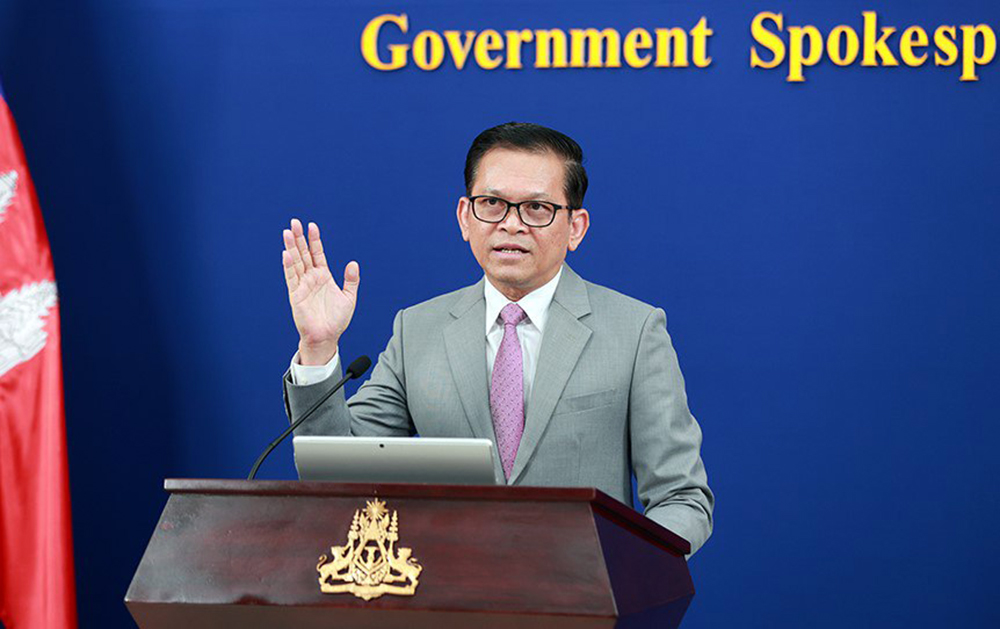
Families of Myanmar workers killed or injured in the collapse of Bangkok’s under-construction State Audit Office tower have received a total of 28.4 million baht in compensation, according to Myanmar’s Ministry of Foreign Affairs, which said the final round of payments was completed on March 2, 2026.
Myanmar authorities said the compensation covered 27 deceased workers and seven injured workers, with payouts of 1 million baht for each death and 200,000 baht for each injury. The ministry said the final ceremony in Bangkok marked the fourth and last round of assistance arranged through coordination between the Myanmar embassy, labour officials and the Lawyers Council of Thailand.
The funds were provided by the ITD-CREC joint venture, linked to the project’s construction. Myanmar’s official account presented the payments as humanitarian assistance secured through a special committee mechanism rather than the outcome of a completed negligence ruling.

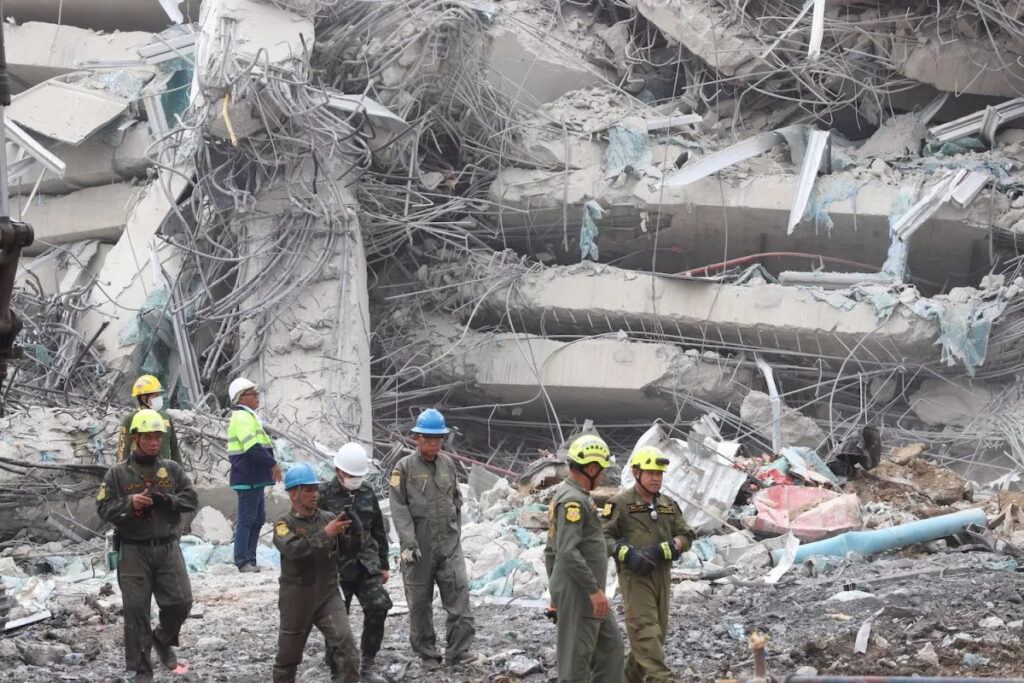
The tower collapsed on March 28, 2025, after a 7.7 magnitude earthquake centered in Myanmar sent tremors across the region, including Bangkok. Reuters reported that the State Audit Office tower was the only building in the Thai capital to collapse completely during the quake.
But the case has not been treated solely as an earthquake-loss event. Reuters reported soon after the collapse that Thai authorities were examining possible irregularities including concerns over materials and construction practices, while later Associated Press reporting said Thai prosecutors indicted 23 individuals and companies over alleged design, supervision and construction failures, as well as related documentation issues.
That leaves the public record with two parallel realities. The earthquake was the immediate trigger for the disaster. The unresolved legal and engineering question is whether the structure should have failed in that way at all.
For Myanmar, the completed payout offers a tangible consular outcome in a case involving vulnerable migrant workers abroad. For Thailand, the compensation process does not close the broader issue of accountability around one of the most consequential structural failures linked to the 2025 quake.