OSAKA/HANOI, March 10, 2026 – Smaller Japanese manufacturers that built their businesses around Nissan Motor are increasingly turning to Vietnam in search of new clients and growth as the automaker’s restructuring reduces orders from its traditional supplier base.
Companies clustered around Yokohama, Nissan’s historic home base say demand from the carmaker has weakened sharply over the past year, forcing many second- and third-tier suppliers to diversify their customer networks beyond Japan’s domestic automotive supply chain.
“Sales to Nissan alone are now about half of what they were before,” said Kouichi Masuda, president of Okaya Seiken, a precision parts manufacturer whose components are used in automotive production.
Orders from the automaker have declined since last year, Masuda said, and the company does not expect a full recovery soon. Okaya Seiken still expects to remain profitable in the fiscal year ending March 31 thanks to business with other carmakers, but annual pretax profit is projected to fall roughly 30% to about 200 million yen ($1.26 million).
The downturn has rippled through the company’s overseas operations. Okaya Seiken’s factory in Vietnam had been heavily tied to the automotive sector, which accounts for about 90% of its sales, with Nissan alone representing roughly 60%.
To reduce that dependence, Masuda has begun targeting Japanese companies operating in Vietnam as potential new clients.
“Executives from large companies who would be hard to get a meeting with soon in Japan are easier to meet if they are on assignment in Vietnam,” he said.
The strategy has already produced some early contracts. Okaya Seiken has opened new business accounts with three Japanese companies, including a manufacturer of pneumatic control equipment that has asked the firm to produce about 40 prototypes.
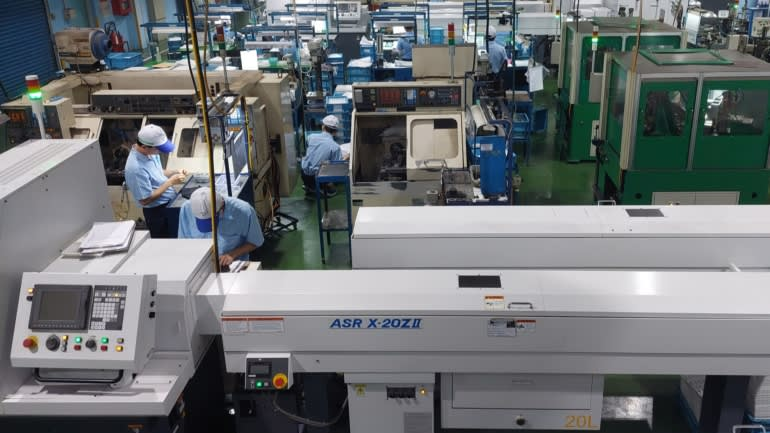
The company has also invested roughly 100 million yen in advanced machine tools at its Vietnamese facility to support new projects.
The shift reflects broader pressure across Nissan’s supplier ecosystem as the automaker undergoes another period of restructuring. Industry analysts note that many smaller manufacturers remain structurally dependent on a single automaker despite efforts to diversify since the sweeping cost reductions introduced under former chief executive Carlos Ghosn in the late 1990s.
In Yokohama, where Nissan remains a central pillar of the industrial economy, local support institutions are now helping companies explore alternative markets.
The public development agency IDEC Yokohama has been assisting small manufacturers seeking to enter new sectors or expand overseas.
One example is Yokohama Zoki, a company that manufactures inspection jigs used in automobile factories. Facing a drop of more than 50% in sales to Nissan, the firm has begun exploring non-automotive products.
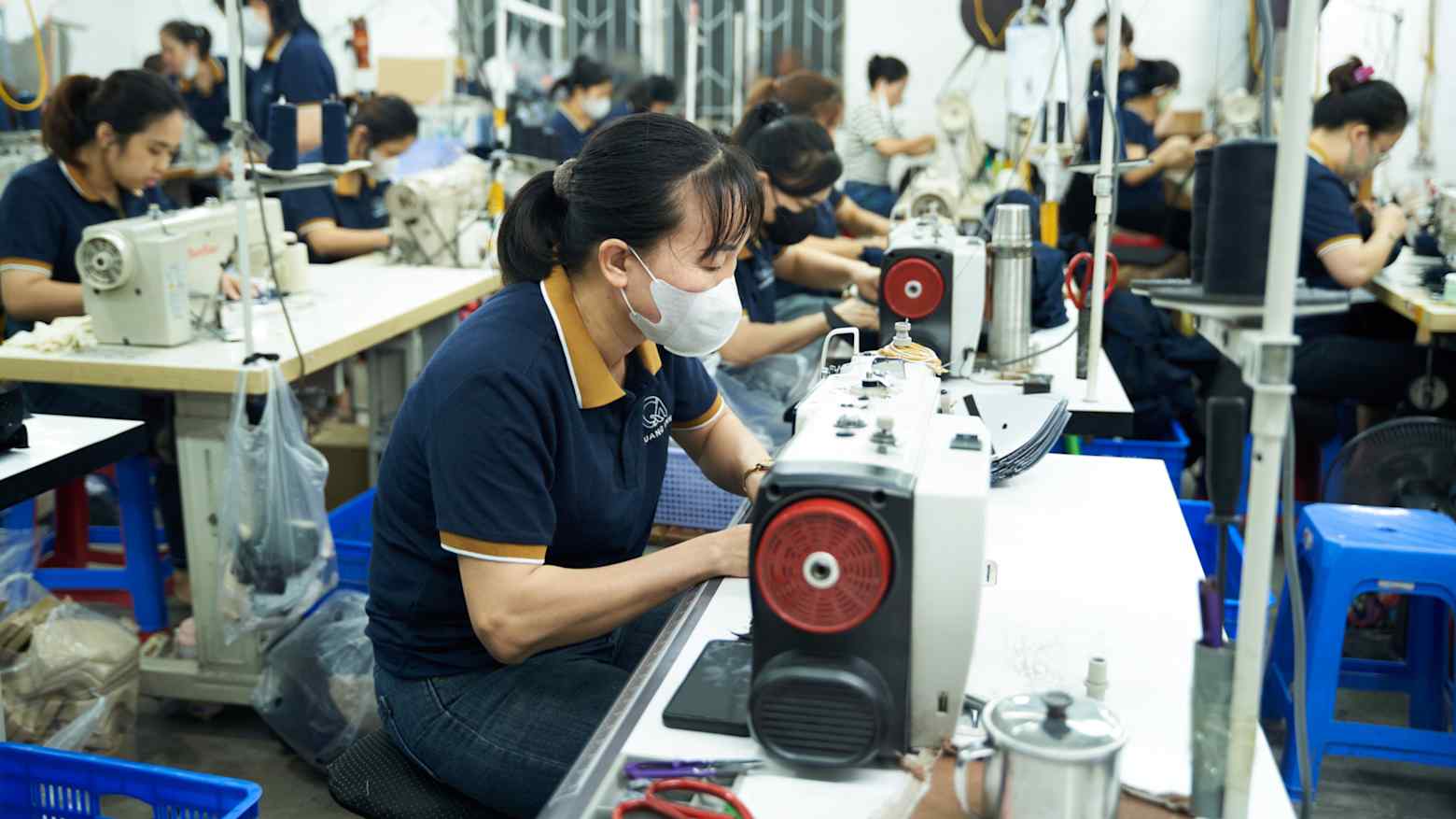
Working with a former Vietnamese employee who previously served as a computer-aided design engineer at the company, Yokohama Zoki is launching a small apparel project focused on ultraviolet-protection hats designed for hot summer conditions.
For the initial run, the company plans to produce about 1,000 hats using a sewing factory in Vietnam recommended by the former employee, while sourcing specialized fabric from a Japanese textile supplier. The partners are considering selling the products through crowdfunding platforms.
“We have technology we want to preserve, and we’re taking on a new business venture,” said Shota Masanoya, an executive at Yokohama Zoki.
IDEC Yokohama helped facilitate the project by connecting the company with financial institutions capable of handling international remittances and overseas business operations.
Vietnam has become an increasingly attractive destination for Japanese manufacturers seeking to diversify supply chains or establish new customer relationships.
According to the Asian Development Bank, Vietnam’s economy grew by about 7.4% in 2025 and is projected to expand by roughly 6.4% this year, among the fastest rates in Southeast Asia.
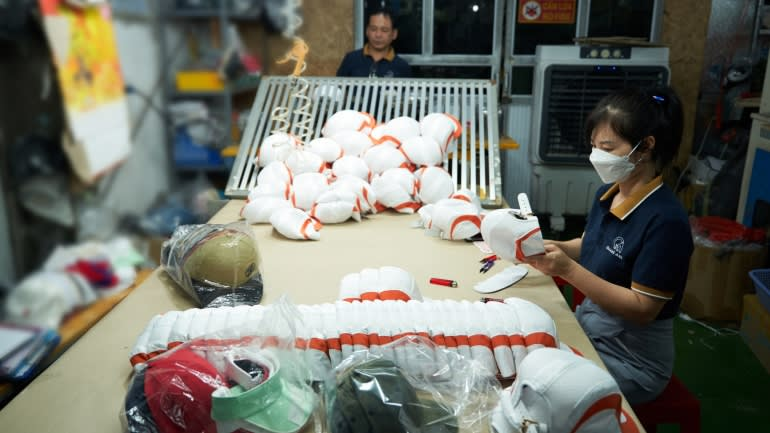
More than 2,100 Japanese companies now operate in Vietnam about 50% more than a decade ago reflecting a steady shift of manufacturing and supply-chain activity into the country.
Executives say the country’s political stability and strong industrial workforce have contributed to its appeal.
“Expectations for Japanese companies are extremely high,” said Takeshi Omika, deputy general director of Amata City Ha Long Industrial Park, a joint project run by Thai property developer Amata Corporation and Japanese trading house Marubeni.
Still, some manufacturers warn that Vietnam is no longer the low-cost production base it once was.
Motoyoshi Otsuka, president of automotive seat-parts manufacturer Ohtsuka Sangyo Material, said labor costs for Vietnamese workers have been rising by more than 10% annually in some technical roles as factories compete for skilled employees.
“If we think of Vietnam as a country with cheap labor, we could end up failing,” he said.
Ohtsuka Sangyo Material has opened three factories in Vietnam since entering the market in 2017. Otsuka said the facilities now operate at technological standards comparable to the company’s operations in Japan.
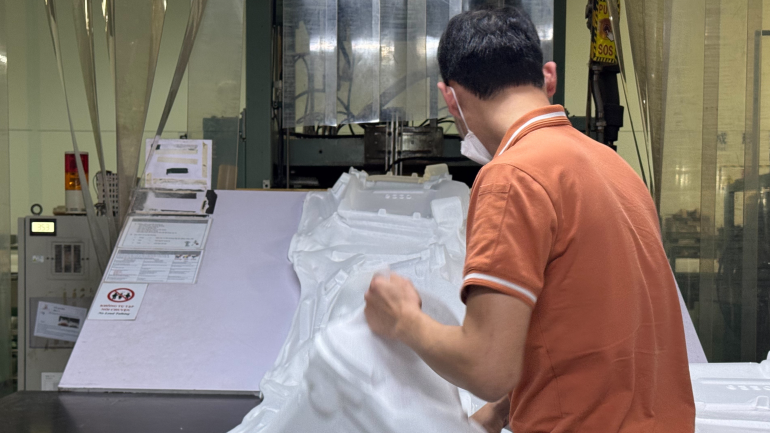
Vietnamese employees, he added, tend to have strong technical training and quickly absorb new production methods.
“They have a high level of education and quickly absorb what we teach them,” he said.
For Japan’s smaller suppliers tied to the fortunes of major automakers, Vietnam is increasingly less a low-cost refuge than a strategic platform a place to rebuild customer networks as the structure of the global auto industry continues to shift.