BANGKOK, March 10 – An Israeli diplomatic intervention in Bangkok this week highlighted how the war with Iran is expanding beyond the Middle East into the political and information environments of countries far from the battlefield.
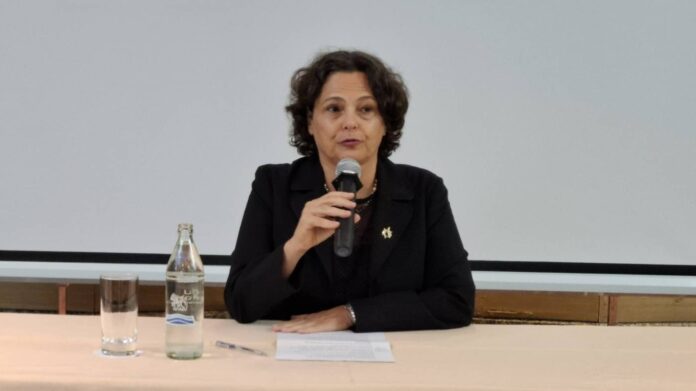
During a press conference on Tuesday, Israeli Ambassador to Thailand Alona Fisher-Kamm told Thai audiences that rising fuel prices should be blamed on Iran, arguing that Tehran’s actions had destabilized global oil markets. “Thais should be upset with Iran,” she said, linking domestic economic pressure directly to the conflict.
The remarks did more than defend Israel’s military campaign. They attempted to translate a distant geopolitical confrontation into a domestic Thai grievance, encouraging Thai consumers to view rising energy costs through the lens of a single external antagonist.
Oil markets have indeed been shaken by the conflict. Prices surged amid fears that fighting and retaliatory attacks could disrupt supply routes across the Gulf and the Strait of Hormuz, sending ripples through global energy markets. But attributing Thailand’s economic strain exclusively to Iranian action compresses a more complex chain of events involving military escalation, maritime risk and broader geopolitical volatility.
The Bangkok briefing also carried a second layer of messaging aimed squarely at Thailand’s internal concerns. Fisher-Kamm highlighted the presence of tens of thousands of Thai workers in Israel and emphasized the scale of Israeli tourism to Thailand, presenting the bilateral relationship as evidence of trust and security.
Behind that reassurance lies a deeper strategic dynamic.
By linking Thai fuel costs to Iranian actions, the Israeli message effectively synchronizes global war objectives with the immediate economic anxieties of Thai households. The approach attempts to reshape how the conflict is interpreted locally, shifting it from a distant regional confrontation to a direct source of domestic instability. In practical terms, it reframes the price of fuel in Bangkok as the downstream effect of Iranian behavior rather than the systemic volatility of a widening regional war.
The strategy relies on a powerful emotional lever: energy prices. Fuel costs are among the most visible economic pressures on ordinary citizens, and linking them to a clear external culprit can anchor public perception before more complex explanations take hold.
Yet a gap between narrative and institutional reality is already visible.
While the ambassador projected confidence in the safety of Thai workers in Israel, Thai authorities have taken a more cautious stance. Thailand’s Labour Ministry said this week it had activated full monitoring procedures and stood ready to evacuate nationals if security conditions deteriorate.
That divergence reflects the Thai state’s underlying priority: stability management. Bangkok must simultaneously protect citizens abroad, maintain labour and tourism ties with Israel, and avoid being drawn too deeply into a conflict between larger powers.
It also highlights the economic stakes behind the diplomatic messaging. Thai workers form the backbone of Israel’s agricultural labour force, and the sector remains heavily dependent on foreign workers from Thailand. A large-scale withdrawal would disrupt production and expose the structural reliance of Israeli agriculture on migrant labour.
Seen from that perspective, the Bangkok briefing was not simply a statement about oil markets. It was also a signal of how governments are attempting to manage the political consequences of a widening war.
The ambassador described the campaign against Iran as a “gateway to peace,” framing the conflict as a necessary step toward eliminating existential threats. But the war’s humanitarian dimension continues to complicate that narrative, particularly following reports of civilian casualties, including the strike on a school in Iran that has drawn international scrutiny.
For Thailand, the episode illustrates a broader reality of modern conflict: wars no longer remain confined to battlefields. They travel through global supply chains, migrant labour networks and domestic political discourse in countries far removed from the fighting.
Bangkok has historically tried to maintain a careful balance in such situations, preserving economic ties while avoiding strategic entanglement. The Israeli envoy’s message shows how difficult that balance can become when global conflicts begin to affect everyday costs, citizen safety and public perception at the same time.
In effect, Bangkok has become a secondary stage in the struggle over how the war is understood not only in the Middle East, but in the wider world where its economic and political consequences are now being felt.