G7 finance ministers were set to discuss a possible co-ordinated release of emergency oil reserves on Monday with the International Energy Agency, as a sharp jump in crude prices intensified fears of wider economic fallout from the conflict involving Iran.
The talks, first reported by the Financial Times and later confirmed to Reuters by a French government source, come after oil prices surged to their highest levels since mid-2022, rattling financial markets and raising concerns over inflation and energy security. Reuters reported that three G7 countries, including the United States, had backed the idea of a joint release.
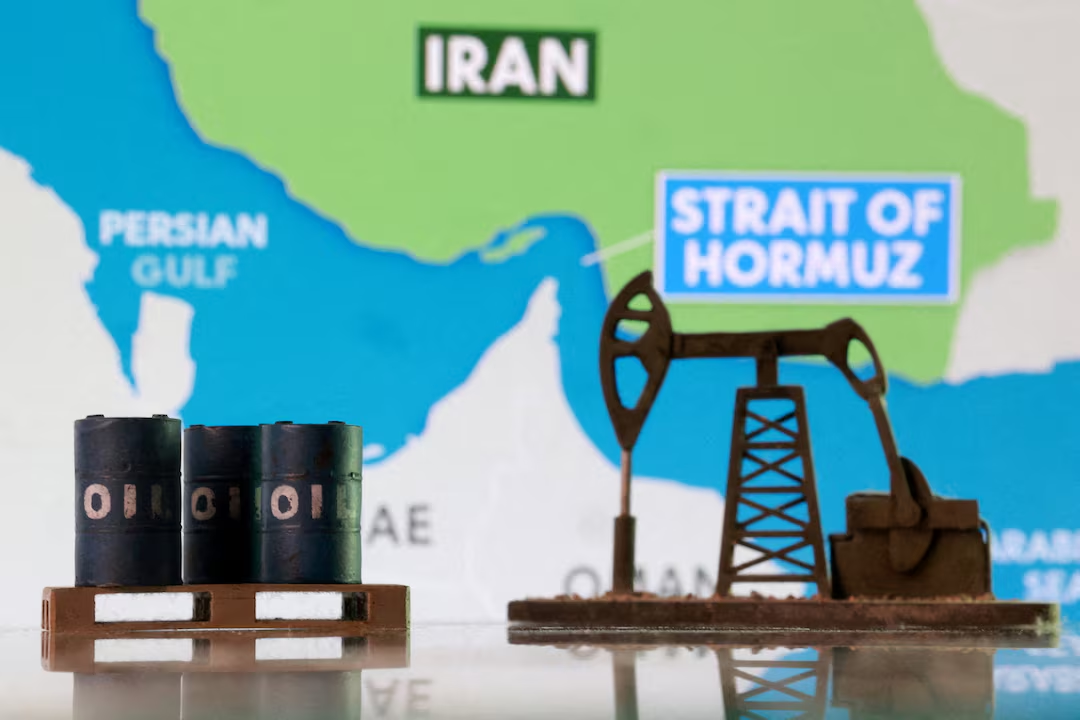
Brent crude briefly rose as high as $119.50 a barrel on Monday before easing, while the broader commodity shock spilled into metals and agricultural markets. The price spike was driven by escalating supply fears linked to disruption around the Strait of Hormuz and output cuts by producers in the Gulf.
Any co-ordinated intervention would draw on the IEA’s emergency stockholding system, created after the 1973 oil shock. The agency says its 32 member countries hold more than 1.2 billion barrels of public emergency oil stocks, with additional industry stocks available under government obligation. Under the IEA framework, members are required to maintain oil stocks equivalent to at least 90 days of net imports.
The scale of any release was not officially confirmed. The FT reported that officials were discussing a draw of 300 million to 400 million barrels, but that figure remained based on people familiar with the talks rather than a formal public decision.
The discussions mark a notable shift in market management as governments move from monitoring price volatility to considering direct use of emergency inventories. Last week, President Donald Trump had publicly downplayed the need to tap reserves, telling Reuters he was not looking to use the U.S. Strategic Petroleum Reserve even as pump prices rose. By Sunday night, he described higher oil prices as “a very small price to pay” for what he framed as a broader security objective.
In the United States, fuel costs had already begun to climb before Monday’s market spike. Reuters reported that the national average price for regular gasoline stood at $3.32 a gallon on March 7, up 11% from a week earlier, while other contemporaneous public reporting put the average at $3.45 on March 8.
The IEA has not, in the material reviewed here, publicly confirmed a fresh collective stock release. It has said it is closely monitoring developments in the Middle East and their implications for energy security and oil flows through the Strait of Hormuz.
The immediate question for markets is whether a reserve release, if approved, would be large enough to calm prices without signalling deeper concern over the durability of global supply. The broader risk is that a prolonged disruption in Gulf exports would test the limits of emergency stockpiles and revive inflation pressures just as major economies remain exposed to energy-led price shocks.