
Cambodia’s Special Programme to Promote Investment in the Northeastern Provinces, known as SPIN, received project proposals worth $2.41 billion in its first year. That sum equals roughly 55 percent of Cambodia’s foreign direct investment inflows for 2024. The proposals concentrate in Kratie province at eighteen times its population weight, arriving through a documented policy architecture during the border conflict with Thailand and ahead of Cambodia’s scheduled graduation from least-developed-country status at the end of 2029.
The comparison puts pipeline against realised capital; proposals precede approvals, and approvals precede disbursement. Even at pipeline stage, the scale positions SPIN as a central instrument of pre-graduation diversification, not a marginal crisis-response programme. Its capital base spans Vietnamese agro-industrial operators, Chinese-financed infrastructure, and domestic partners. What the programme has not disclosed is a project-level ledger of actual disbursement against approved incentives. Cambodia publishes that kind of ledger for its public external debt. It has not published it for SPIN.
The headline figure comes from the Working Group itself. As of late April 2026, the Working Group reported 58 proposals valued at $2.41 billion since the programme’s launch on 9 April 2025, with 33 projects worth $1.07 billion receiving initial approval at projected employment of 17,213; Kratie accounted for roughly $1.06 billion of that total.
Against national benchmarks, the ratios are not marginal. Cambodia’s 2024 foreign direct investment inflows totalled $4.4 billion, an eleven percent increase over 2023. The Council for the Development of Cambodia approved 414 projects valued at $6.9 billion in 2024 and 630 projects at roughly $10 billion in 2025, with aggregate employment projections reported alongside the capital totals. SPIN’s approved-value-per-job stands at $62,200, roughly two-and-a-half to three times the CDC-wide aggregate ratio in either year. The Kratie share of the SPIN total, at 44 percent in a province holding 2.4 percent of Cambodia’s 17.3 million population, gives a concentration ratio near 18 to 1.
The capital-per-job differential tracks sectoral composition: SPIN’s pipeline is weighted toward integrated agro-industrial parks, port infrastructure, and forest restoration, all more capital-intensive per job than garments or footwear. The direction of signal remains clear. Cambodia’s northeastern programme is a concentrated diversification bet ahead of scheduled structural change, not a high-employment stopgap.
The policy architecture is documented with unusual specificity for a regional-promotion programme. The IMF’s 2025 Article IV consultation confirms Cambodia’s scheduled LDC graduation at the end of 2029, with attendant loss of European Union preferential market access. The World Bank’s June 2025 Cambodia Economic Update situates the Pentagonal Strategy Phase I, the Hun Manet government’s 2024-2028 national development framework, around diversification away from garments, construction, and real estate. SPIN sits inside both frames. The Cambodian investment-incentive regime, as set out in IMF and World Bank staff work, offers tax holidays of three to nine years followed by a further six-year reduced rate of corporate income tax, a schedule Fund staff describe as at least as generous as neighbours. That regime is competitive, not desperate.
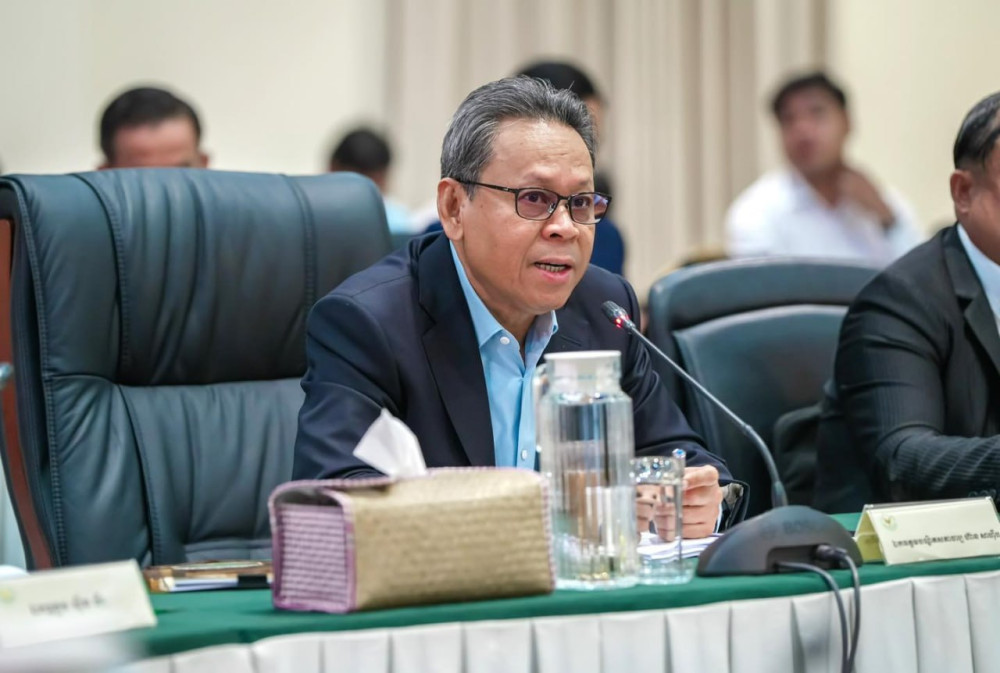
Implementation runs through an Economic and Financial Policy Committee with devolved decision authority, supported by a Working Group whose Secretariat sits at the Ministry of Economy and Finance. In his 9 April 2025 inauguration speech, Prime Minister Hun Manet said, “All decisions are delegated to this committee. That is equivalent to national decisions,” adding that the design responded to “a problem of inconsistency” encountered during the initial implementation in Sihanoukville. The committee responds to a prior failure of execution, not to a fresh bureaucratic impulse. The programme’s $100,000 capital threshold for some project classes in the northeastern zone, set below the general level under the 2021 Law on Investment, also lowers the entry bar for smaller domestic operators, broadening the pipeline to include Cambodian capital alongside foreign.
The capital base of that pipeline therefore extends beyond what any single-frame reading allows. The largest identified agro-industrial partnerships in the approved SPIN tranche are led by THACO AGRI, a subsidiary of Vietnam’s Truong Hai Group Corporation, which has been operating in Kratie and Ratanakiri since 2018 and holds approximately 35,000 hectares across the two provinces. Its January 2026 SPIN-approved projects include a 310-hectare integrated park in Kratie with Cambodian partner Sovann Vuthy and a 300-hectare park in Ratanakiri with Daun Penh Agrico, a subsidiary of the domestic Daun Penh Group. Those approvals formalize expansion by an operator with seven years of prior presence in the northeast, not a fresh foreign entry.
Two other projects in that January batch were Indochine Rubber under a Forest Restoration Agreement and an agro-industrial timber venture with a tree-nursery laboratory and wood-processing facility in Kratie. The Chinese dimension sits primarily at infrastructure level. The Cambodia-China Friendship Mekong Kratie Bridge, financed with a $114 million Chinese concessional loan and constructed by Shanghai Construction Group, opened on 1 April 2026. Noun Rithy, chairman of the Cambodian KFA Group, tied the proposal inflow directly to that enabling asset, citing “favourable location, improved infrastructure, especially a new connecting bridge, and strong water transport links.”
The frame that picture supports is neither Chinese-captured northeast nor Vietnamese-captured northeast, the two single-source characterisations most readily applied to Cambodia’s northeastern investment profile. THACO AGRI’s involvement is not new entry; it is existing presence registering under formal incentive architecture. Domestic partnerships with Sovann Vuthy, Daun Penh, and KFA extend Cambodian ownership into the pipeline. The Chinese role is visible at the infrastructure-enabling layer rather than the equity-ownership layer. None of those observations prevents a future shift in composition. They do not fit either single-source reading.
A secondary analytical reading is available. Kratie’s proposal concentration could reflect the province’s pre-existing economic weight rather than a SPIN-induced shift. That reading is not fully testable from public records. A pre-SPIN provincial FDI baseline is not disclosed. The 18-to-1 ratio against population is robust, but population is not a perfect proxy for prior economic activity, and the claim that concentration is SPIN-attributable rests on inference rather than comparison to baseline.
The larger gap runs through the programme itself. Cambodia’s National Bank publishes a Financial Stability Review carrying FDI data at national level. The Council for the Development of Cambodia releases aggregate annual approval totals. The Ministry of Economy and Finance publishes, through its open data portal, a full ledger of public external debt covering loan commitments, actual disbursements, and debt service payments, updated quarterly. What is not public is the corresponding ledger for SPIN: approved projects individually tied to approved incentives, actual capital disbursed, jobs realised against projection, and tax foregone against projection. That ledger exists inside the Working Group’s “latest report” referenced by state media. It has not been published. Whether SPIN’s current disclosure practice is typical or atypical among ASEAN regional-promotion programmes is not tested here; the relevant comparison for purposes of this finding is Cambodia’s own existing transparency standard for public external debt.
The disclosure gap is therefore not a technical or capacity problem. Cambodia has demonstrated the institutional capability to publish the relevant data in an adjacent fiscal domain. The gap is programmatic, a choice about what to release for SPIN that does not track the choice already made for sovereign debt. Implementation-stage activity is itself visible: seven projects worth $136 million approved in April 2026, twenty-two projects worth $395 million reviewed in late January, four projects worth $355 million approved on 14 January, and a major enabling-infrastructure asset opened on 1 April. Proposals continued to arrive in March and April 2026 despite, as Hean Sahib, the Working Group’s chairman, said to state media, “external crises, such as the border dispute with Thailand and the oil crisis in the Middle East.” What is absent is the bridge between proposals, approvals, and disbursed capital at the level a creditor, a policy analyst, or an external ministry could audit.
That absence is the piece of SPIN most within Cambodia’s own authority to close. Publishing the ledger would align the programme with the transparency standard Cambodia already applies to its public external debt, and would remove the single element that sustains both capture framings and suspicions of programmatic hollowness in regional commentary.