PHNOM PENH, March 13 – Renewable energy developer SchneiTec Group said on Thursday it plans to expand battery storage capacity in Cambodia to around 1,000 megawatt-hours (MWh) by 2030, presenting the figure as part of a long-term portfolio roadmap rather than the capacity of a single facility.
The company announced the plan during a launch event in Phnom Penh, describing it as a strategic program to scale battery storage alongside the country’s growing solar power sector.
Current SchneiTec-linked storage assets and projects under development total roughly 56 MWh, according to project documents from the Asian Infrastructure Investment Bank (AIIB) and financing disclosures on the Cambodia Securities Exchange (CSX).
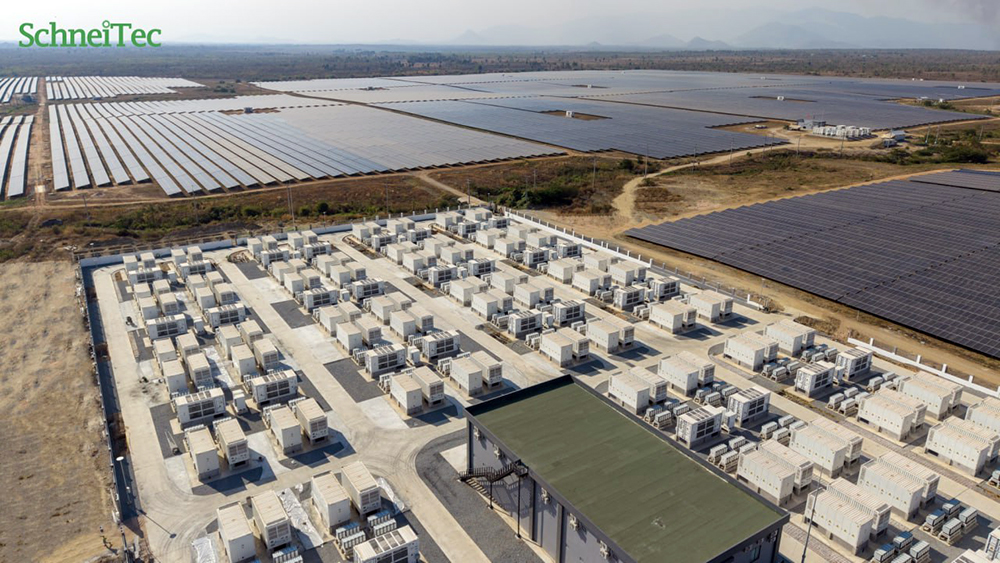
Existing installations include several pilot-scale battery systems in Pursat province and a solar project with integrated storage in Kampong Chhnang province.
A larger 150-megawatt solar project paired with a 30-MW battery system is under construction in Pursat, backed by financing from the AIIB and German development lender DEG.
Battery energy storage systems are increasingly viewed as critical infrastructure for Cambodia’s power sector as solar generation expands rapidly and begins to account for a larger share of the national electricity mix.
Storage systems help stabilize the grid by providing fast-response power when solar output fluctuates, reducing the risk of frequency instability or short-term supply gaps.
SchneiTec has financed several of its projects through a combination of development finance and capital markets, including a green infrastructure bond listed on the Cambodia Securities Exchange to support the 60-MW SchneiTec Dynamic solar project in Kampong Chhnang.
While the company’s operational storage footprint remains relatively small, the 1-gigawatt-hour target signals a potential ten-fold expansion in battery deployment over the remainder of the decade.
Cambodia has set a goal of increasing renewable energy to roughly 70% of electricity generation by 2030, a shift that analysts say will require larger-scale storage capacity to maintain grid stability.