
PHNOM PENH March 13 – Cambodia says its nationwide crackdown on cyber-scam networks has reduced the number of active fraud compounds by about half, as the government prepares legislation aimed at dismantling an industry that has drawn international scrutiny and sanctions.
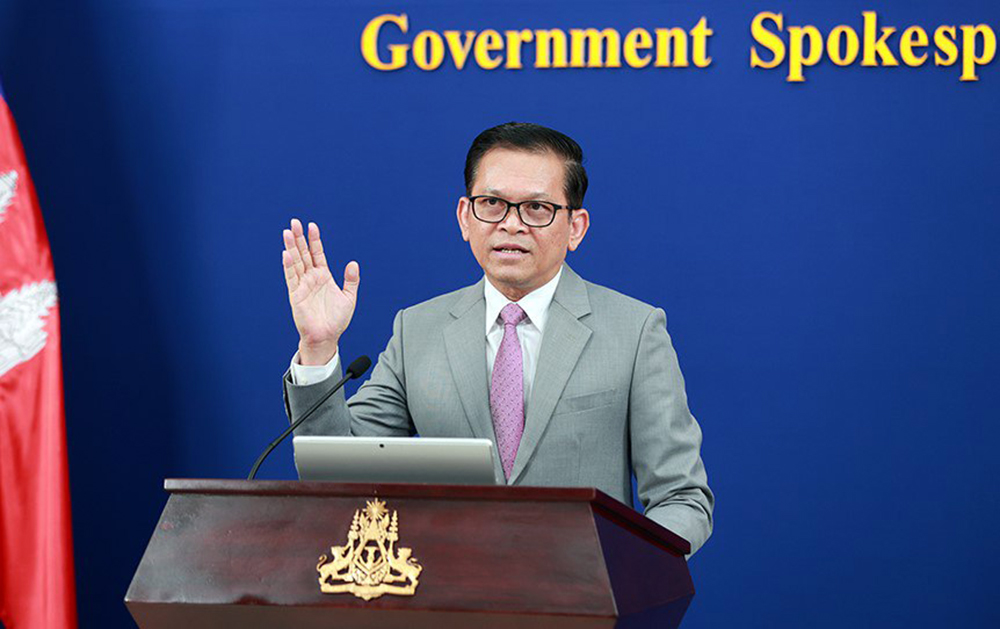
Senior Minister Chhay Sinarith, who heads the Commission for Combating Technology Crimes, said authorities had targeted roughly 250 suspected locations linked to online fraud and shut down about 200 of them since the campaign intensified last year.
The enforcement drive has also resulted in 79 legal cases involving nearly 700 suspects, according to figures cited by Cambodian officials, while thousands of foreign nationals linked to scam operations have been repatriated or deported.

PHOTO: REUTERS
Interior Minister Sar Sokha said earlier this year that more than 210,000 foreign nationals had left Cambodia voluntarily since mid-2025 and over 30,000 suspected scammers had been arrested and deported.
The government says the measures have cut scam activity by about 50%, a figure officials attribute to the closure of compounds and the departure of large numbers of foreign workers.
However, authorities have not publicly disclosed the methodology used to calculate the reduction, and the figure appears to refer primarily to the visible presence of scam facilities and personnel rather than to the underlying volume of fraud.
The campaign comes amid rising international pressure on Phnom Penh to address cyber-scam operations that investigators say have generated billions of dollars in illicit proceeds and trafficked large numbers of workers into forced-fraud compounds across mainland Southeast Asia.

The United States and United Kingdom have imposed sanctions on individuals and businesses linked to the industry, while China whose citizens have been among the primary targets of the scams has pushed for stronger enforcement.
Cambodia extradited businessman Chen Zhi to China in January following a joint investigation into transnational crime networks. Authorities also arrested tycoon Ly Kuong, who was placed under court investigation on charges including fraud, human trafficking and money laundering.

Officials say the crackdown will be reinforced by a new anti-telecom fraud law currently under review by the Cabinet.
According to government briefings and regional media reports, the draft legislation would impose criminal liability on property owners and recruiters linked to scam operations, introduce maximum prison terms of up to 30 years, and allow authorities to prosecute local officials who tolerate illegal activities in their jurisdictions.
Prime Minister Hun Manet has said the government aims to eliminate large-scale scam compounds by April, describing the campaign as necessary to protect Cambodia’s reputation and legitimate economy.
Analysts say the enforcement push marks one of the most visible efforts by Cambodian authorities to address the problem, but warn that the industry has historically adapted quickly to crackdowns.
Experts tracking the sector say scam networks often relocate to smaller sites, shift across borders to jurisdictions with weaker enforcement, or fragment operations into distributed online models.
Blockchain-analysis firms and international law-enforcement agencies have also reported that the financial infrastructure used by scam networks including cryptocurrency laundering channels and underground banking systems continues to operate across the region.
As a result, while Cambodia’s actions may have disrupted large physical compounds, there is no publicly verified evidence that the overall volume of cyber-fraud originating from Southeast Asia has declined proportionally.
For Phnom Penh, the success of the crackdown may ultimately depend on whether enforcement reaches beyond individual compounds to dismantle the financial and protection networks that have allowed the industry to expand across the region.