PHNOM PENH, March 2026 – Cambodia’s garment industry posted record exports in 2025 while attracting a surge of new investment approvals, but the country remains heavily dependent on imported textile inputs as efforts to build a domestic upstream manufacturing base remain at an early stage.
Cambodia exported about $15.5 billion in garments, footwear and travel goods in 2025, up 15.7% from a year earlier, according to reporting citing the Ministry of Commerce.
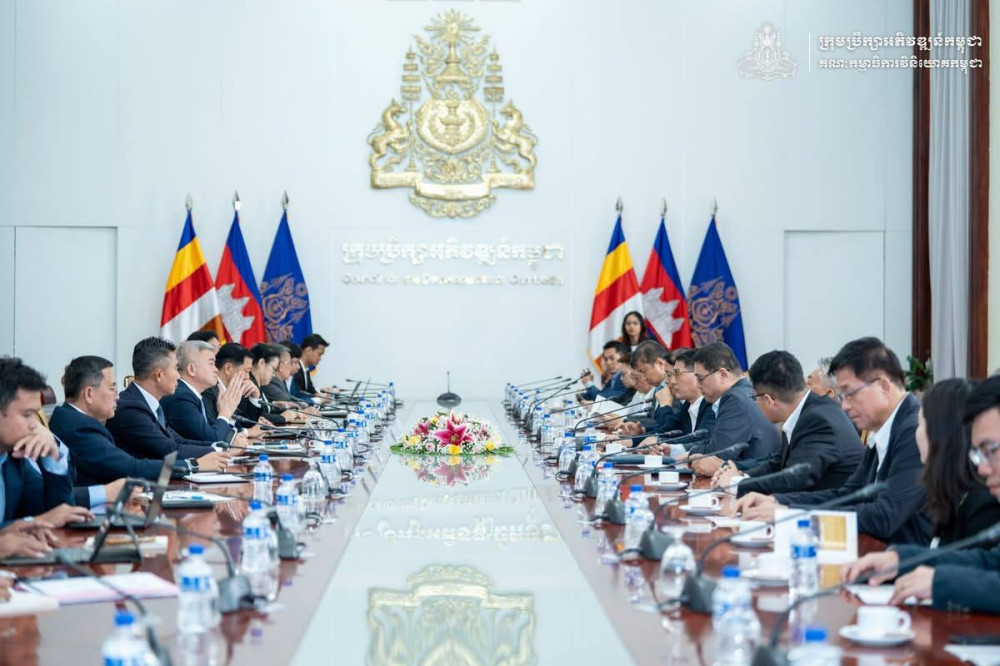
At the same time, the Council for the Development of Cambodia (CDC) approved 630 investment projects worth roughly $10 billion, a 45% increase in value compared with 2024, according to CDC-linked reporting.
Chinese investors accounted for about $5.42 billion, or 54.25%, of the total approved capital, underscoring Beijing’s dominant role in Cambodia’s manufacturing investment pipeline.
Despite the strong growth in exports and investment approvals, the sector continues to rely on imported raw materials.
Cambodia’s imports from China reached $18.04 billion in 2025, accounting for 53.25% of total imports, based on data cited from the General Department of Customs and Excise (GDCE). Industry reporting indicates that a large share of those imports consists of factory inputs such as fabrics, yarn and other production materials.
Exact textile-specific sourcing shares for 2025 remain unclear in publicly available data, though industry analyses consistently describe Cambodia’s garment sector as highly dependent on imported fabrics and yarn due to limited domestic spinning and weaving capacity.
The government has also tightened environmental enforcement affecting the sector.
The Ministry of Environment issued Notification No. 333/0125 on Jan. 17, 2025, banning factories from burning textile and industrial waste in boilers or kilns without proper pollution-control systems.
The measure follows Cambodia’s Law on Wastewater Systems, enacted in November 2024, which established a national framework for wastewater infrastructure and industrial discharge regulation.
Officials say the stronger regulatory framework is designed to address environmental constraints that have historically complicated investment in upstream textile processes such as dyeing and finishing, which require large volumes of water and stricter pollution controls.
Some textile-related projects have been approved. Investment lists for early 2026 include a project to establish a fabric-production facility in Kandal province, though public sources do not confirm whether the facility has entered construction or operation.
Analysts say that distinction remains critical.
Large numbers of approved projects do not necessarily translate into immediate industrial capacity, as factory construction cycles typically take 18 to 24 months.
For now, Cambodia’s garment industry appears to be entering a transition phase, combining record exports, strong investment approvals and tighter environmental regulation, while still relying heavily on imported textile inputs.