
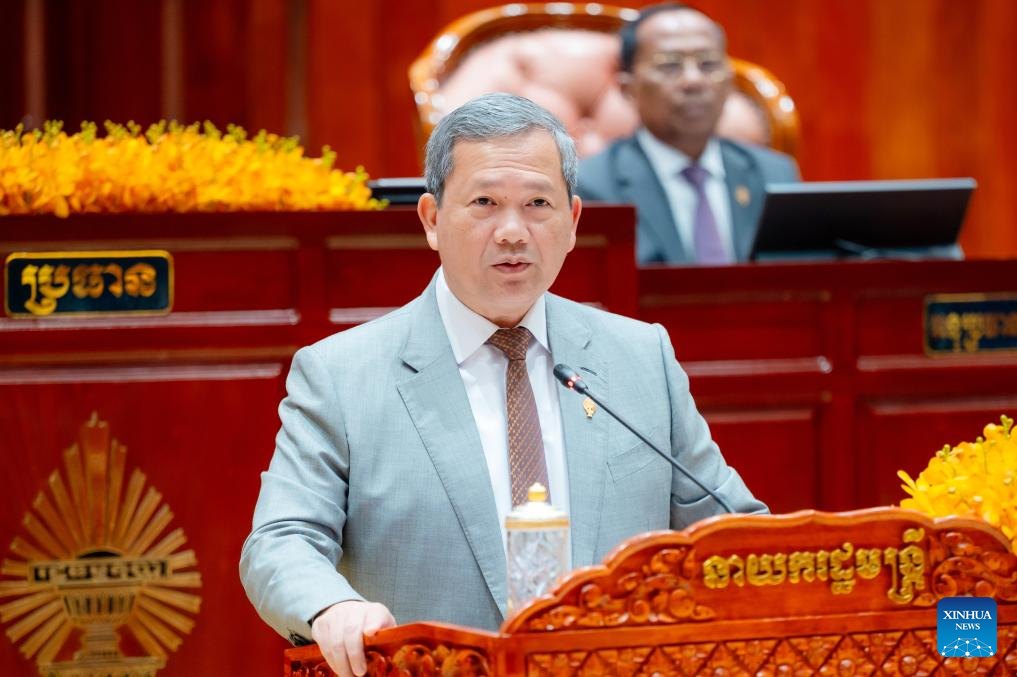
On 5 May 2026, Thailand’s cabinet terminated the 2001 Memorandum of Understanding governing the bilateral framework for negotiating the Cambodia-Thailand maritime boundary. The same day, Cambodia’s Deputy Prime Minister Prak Sokhonn told the Associated Press that Cambodia would seek compulsory conciliation under the United Nations Convention on the Law of the Sea. Eight days afterward, on 13 May, Cambodia’s diplomatic apparatus anchored the pre-cancellation peace architecture across four channels in a single day.
Thailand’s Government Spokesperson Rachada Dhnadirek announced the cabinet decision at Government House on 5 May. The Royal Thai Government’s published explanation cited the 1982 UN Convention on the Law of the Sea as the framework Thailand intended to use after the MOU’s termination. The National Security Council had pre-approved the cabinet path on 23 April. Prime Minister Anutin Charnvirakul said publicly that the move was for adjusting the cooperation framework, not for ending negotiations. Sebastian Strangio reported in The Diplomat the same day that Thailand had voided the agreement unilaterally.
Cambodia’s UNCLOS ratification preceded Thailand’s cabinet act by three months.
MOU 2001 contains no termination clause and no dispute-resolution provision; the Vienna Convention on the Law of Treaties Article 56 governs any unilateral withdrawal and requires twelve months’ notice once the right to withdraw is established. The MOU’s operative text is five articles and a signature block, with no provision for termination, denunciation, or expiry. UNCLOS Annex V Section 2 produces a non-binding conciliation report rather than a binding arbitral award. Both Cambodia and Thailand filed structurally identical declarations under UNCLOS Article 298, excluding all three categories of compulsory procedures. Cambodia deposited its instrument of ratification on 6 February 2026, with entry into force on 8 March 2026; Thailand deposited on 15 May 2011, with entry into force 14 June 2011. The Article 298(1)(a)(i) proviso requiring compulsory conciliation on maritime boundary disputes applies to both states regardless of their declarations, subject to three textual gates: the dispute must arise after UNCLOS entry into force, must not necessarily involve unsettled sovereignty over land territory, and must follow negotiations that did not produce agreement within a reasonable period. Whether each gate is cleared in the Cambodia-Thailand maritime dispute is itself contestable.
On 7 May 2026, Philippine President Ferdinand Marcos Jr., as ASEAN Chair, hosted a trilateral meeting at the Shangri-La Mactan with Hun Manet and Anutin on the sidelines of the 48th ASEAN Summit in Cebu. Hun Manet said compulsory conciliation under UNCLOS was “a peaceful path to a just solution for both parties.” Anutin said the following day that both sides had agreed to use UNCLOS as the key framework for future discussions and that Cambodia had acknowledged Thailand’s cancellation of the 2001 MOU. Thai-side coverage also reported that Anutin said Thailand’s position on Koh Kut sovereignty remained unchanged. The Cambodia-side accounts of the trilateral did not characterise an agreement on UNCLOS as the bilateral framework; the Cambodian position named Annex V conciliation as the procedural path.
The first documented Cambodia-US engagement after the cabinet act, in Cambodia’s own readout, was Prak Sokhonn’s 12 May phone call with US Under Secretary of State for Political Affairs Allison Hooker. Hooker has been the US working-level interlocutor with Prak Sokhonn since at least the margins of the 47th ASEAN Summit in Kuala Lumpur on 27 October 2025, when she met him in the same window during which the Kuala Lumpur Joint Declaration was signed. The Cambodia-side AKP readout cited reaffirmation of the 28 July 2025 ceasefire, the 26 October 2025 Kuala Lumpur Joint Declaration, and the 27 December 2025 Joint Statement of the 3rd Special General Border Committee (UN document A/80/593-S/2026/37); the Cambodia-side AKP readout did not name MOU 2001 termination or the Annex V instrument, and a US State Department public readout of the call was not located at the time of publication.
The peace trinity was the named architecture in the Cambodia-side 12/13 May exchanges; the maritime instrument, named by Hun Manet at Cebu six days earlier, was not.
On 13 May, the Agence Kampuchea Presse reported four diplomatic exchanges across the day. Hun Manet received departing US Chargé d’Affaires Bridgette Walker at the Peace Palace, with Walker citing bilateral achievements during her tour, including the repatriation of Khmer cultural artefacts, port calls by US naval vessels, the 75th anniversary of US-Cambodia diplomatic relations, and the October 2025 reciprocal tariff trade agreement. Prak Sokhonn’s call with Hooker was reported separately the same day. Cambodia’s Permanent Mission to the United Nations had delivered a statement at the Second International Migration Review Forum at UN Headquarters during 5–8 May, which AKP reported on 13 May; Minister Counsellor Doeuk Vannarith said Cambodia “firmly rejects any attempts to use online scam-related issues as a pretext for territorial violations or acts of aggression.” Khuon Sudary, President of the National Assembly, received Azerbaijani envoy Elchin Amirbayov at the National Assembly Palace and briefed him on Cambodia’s position regarding “Thailand’s unilateral cancellation of MOU 2001.” The “unilateral cancellation” language appears in one of the four 13 May AKP readouts and only in the Azerbaijani briefing.
Cambodia named Annex V Section 2 conciliation from the compulsory procedures available under Part XV of UNCLOS. Annex V Section 2 produces a non-binding conciliation report; Annex VII arbitration produces a binding award. Both states had excluded binding maritime-boundary adjudication in their Article 298 declarations, and the Annex V proviso to that exclusion is what remains compulsory under the article both invoked, subject to the conditional gates the article itself sets.
The compulsory instrument Cambodia named was the procedure that returns the parties to negotiation with a third-party reading of the dispute rather than a binding ruling on it.
On 13 March 2026, Thai Foreign Minister Sihasak Phuangketkeow said Cambodia had made resolving the bilateral situation more difficult by raising the dispute at the UN Security Council, UNESCO, and the International Court of Justice. The Annex V instrument Cambodia named on 5 May produces non-binding conciliation, not binding adjudication, which is the structural difference from the three forums Sihasak’s March statement identified, on the same day Thailand terminated the bilateral framework. The Cambodian record across the 13 May exchanges anchored the bilateral peace trinity in US bilateral, US multilateral, and small-state-solidarity registers, with one of four readouts naming the cancellation of MOU 2001 and none naming the Annex V instrument by name.
Thailand’s 5 May 2026 cabinet act is the second time a Thai cabinet has moved to terminate MOU 2001. The 2009 cabinet resolution to cancel was reversed in 2014. A Thai government statement of 13 November 2024 by then-Vice Minister for Foreign Affairs Russ Jalichandra described the MOU as Thailand’s “most effective tool” for negotiations on the disputed maritime area, and said that cancellation without Cambodia’s consent would be problematic. Thailand’s January 2026 UN filing of the 3rd Special General Border Committee Joint Statement, document A/80/593-S/2026/37, relied on the 2000 land-boundary MOU as the bilateral framework governing border demarcation. That UN filing reached the Secretary-General two months before the Thai Senate recommended MOU 2000’s cancellation, and four months before the cabinet acted on MOU 2001. The institutional record now contains both Thai positions.
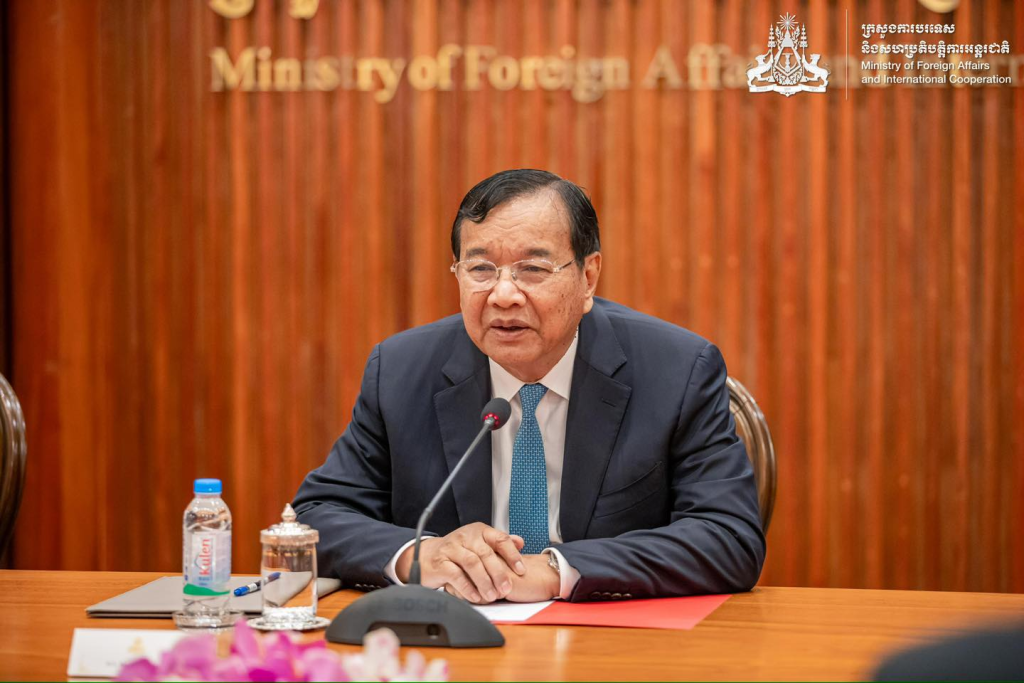
The next phase of the record depends on Thailand’s formal notification of MOU 2001 termination to Cambodia, the procedural document that takes the cabinet act from political decision to legal instrument with effect. Whether the Cambodian Annex V conciliation request reaches submission, and on what timeline, will sit alongside that notification in the documentary archive both governments are building.