PHNOM PENH/BANGKOK, March 1, 2026 – Cambodia’s agriculture ministry has accused Thailand’s The Nation of misrepresenting a U.S. government report on Cambodia’s rice output by inserting the phrase “chemical fertiliser” and suggesting the country is adopting hybrid rice varieties wording Phnom Penh says could damage farmers and export markets.
The Cambodian Ministry of Agriculture, Forestry and Fisheries (MAFF) said the disputed characterisation appeared in The Nation Thailand’s reporting of the USDA’s Rice Outlook: February 2026, which noted a marginal rise in global 2025/26 rice production driven mainly by an increase in Cambodia.
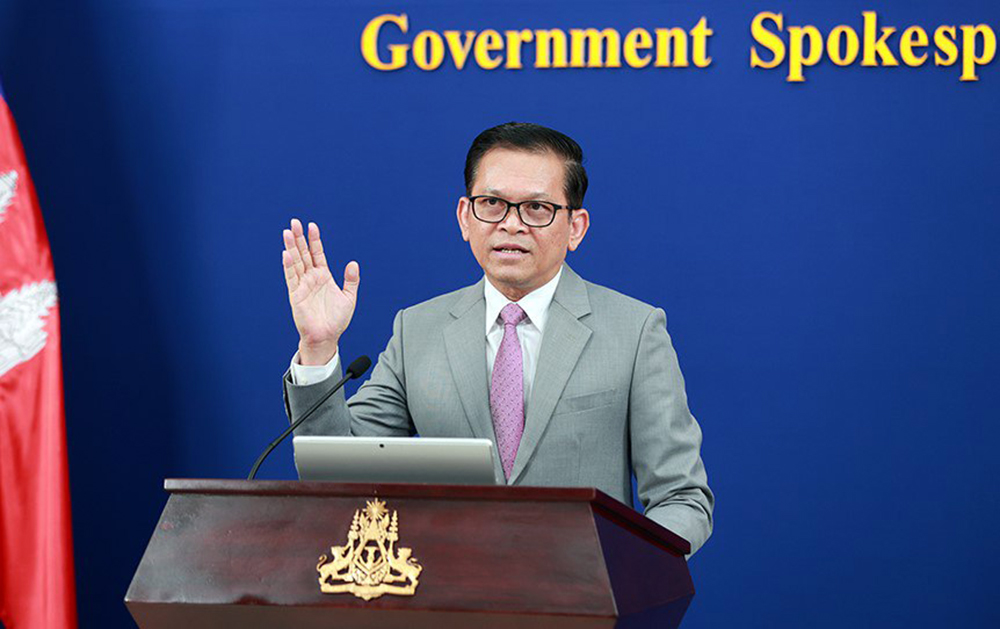
In a statement carried by state-run Agence Kampuchea Presse (AKP), MAFF spokesperson Khim Finan said The Nation “explicitly added” the descriptor “chemical fertiliser,” which he said does not appear in the USDA’s assessment. He warned that the wording could create a negative perception of Cambodia’s agricultural practices and harm farmers and markets.
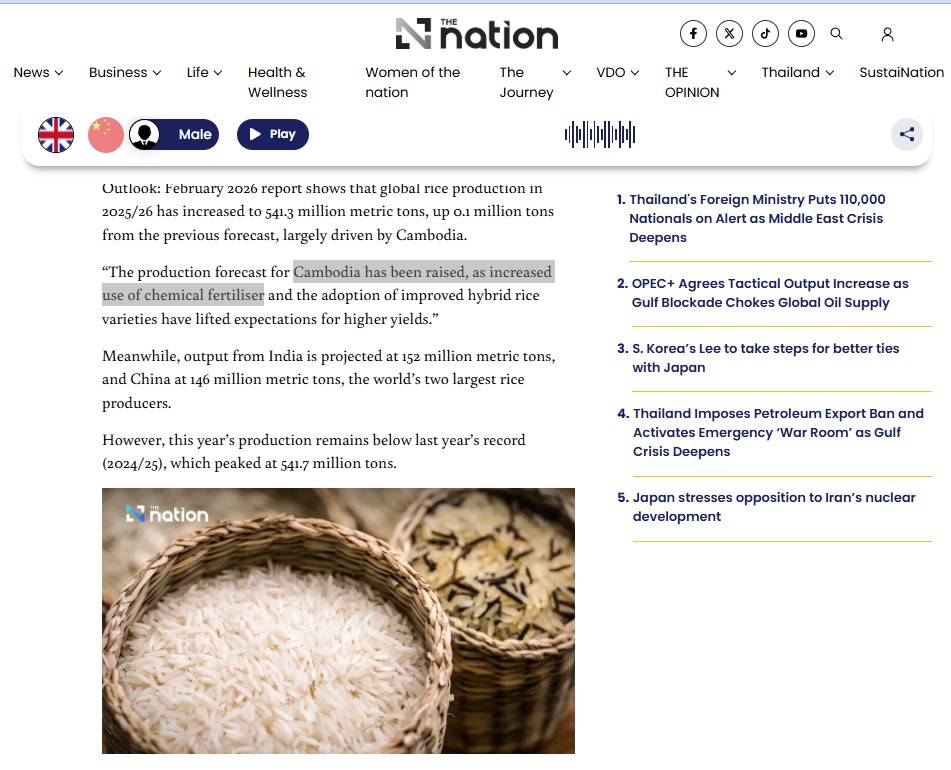
A The Nation Thailand article cited the USDA report as saying Cambodia’s raised production forecast reflected “increased use of chemical fertiliser” and “the adoption of improved hybrid rice varieties.”
The USDA document itself states Cambodia’s higher estimated production was linked to “increases in fertilizer use” and the “adoption of better hybrids” that raised expectations for yields, without using the adjective “chemical.”
MAFF also disputed the “hybrid” framing. Khim Finan said Cambodia does not adopt hybrid rice varieties and that agricultural development relies on “long-established, improved non-hybrid” varieties.
The USDA report uses hybrid language in its narrative section but also describes Cambodia’s yield improvement as farmers “utilized more available fertilizer and adopted improved rice varieties,” creating potential ambiguity over whether “hybrids” is being used as a technical seed classification or as a broad productivity shorthand.
MAFF attributed Cambodia’s reported 2025 production gain about one million tonnes to expanded cultivation areas, improved farming techniques and pest management, favourable rainfall distribution and effective mitigation of climate impacts. The ministry said the growth was not driven by increased fertiliser use or hybrid rice cultivation.
The spokesperson added that official data showed Cambodia’s fertiliser imports “declined slightly” in 2025, which he said supported the ministry’s position that output growth was not linked to higher chemical input use. MAFF did not publish the underlying import figures in the AKP report.
The dispute highlights how contested terminology particularly around “chemical” inputs and “hybrid” seeds can carry market consequences for rice exporters competing on branding and quality perception, especially where buyers and regulators are sensitive to residue standards, production methods and varietal claims.
Neither The Nation Thailand nor Cambodian officials indicated in the cited reports whether a correction request had been formally issued or would be acted upon.