
The Thai cabinet on 5 May 2026 terminated the 2001 Memorandum of Understanding that had governed the maritime boundary framework with Cambodia for nearly a quarter century. The same cabinet approved a THB 400 billion emergency borrowing decree, roughly 12.21 billion US dollars at the Reuters-cited exchange rate, half directed at vulnerable groups and half at energy transition.
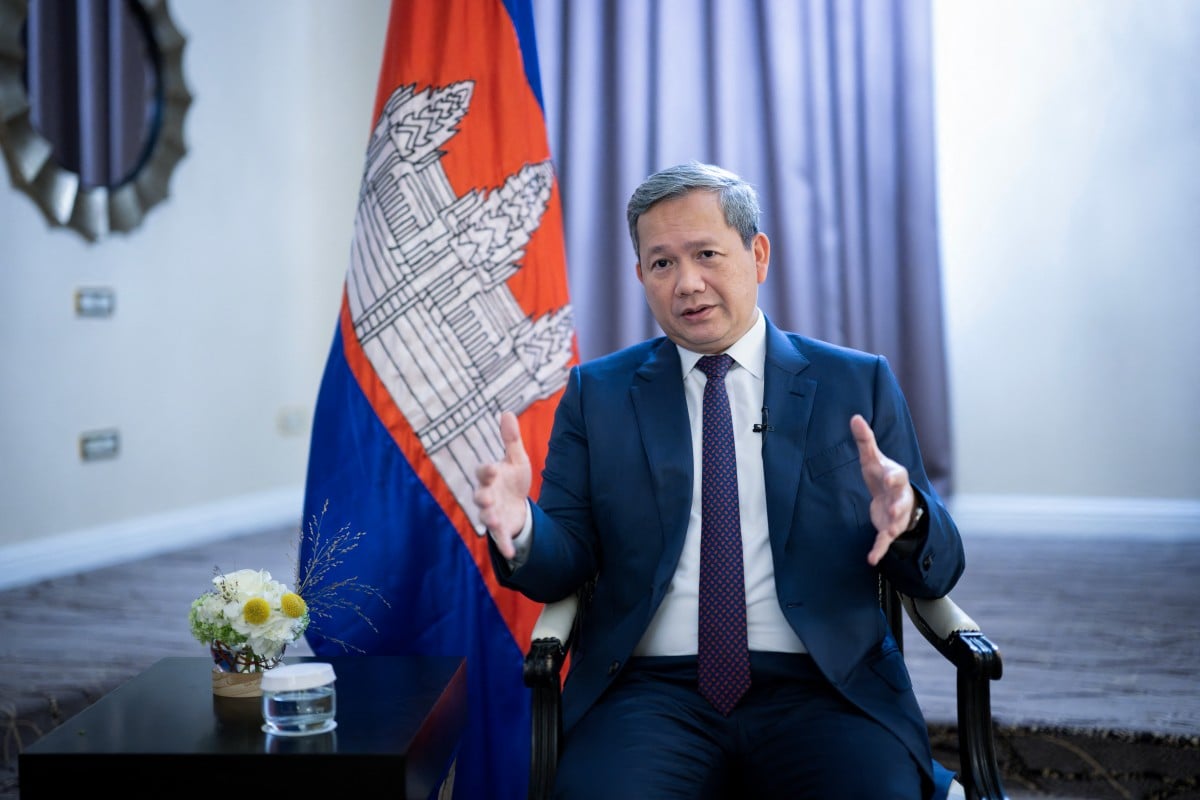
Within hours, Cambodia’s Deputy Prime Minister and Minister of Foreign Affairs Prak Sokhonn announced that Cambodia would initiate compulsory conciliation with Thailand under the United Nations Convention on the Law of the Sea. By evening, Prime Minister Hun Manet had reaffirmed the position from the head of state.
The legal instrument that made Sokhonn’s statement operative had entered into force sixty days earlier. Cambodia became a State Party to UNCLOS on 8 March 2026, thirty days after depositing its instrument of accession on 6 February, the standard treaty-mechanical interval following the unanimous 16 January National Assembly vote of 114-0.
Thailand cancelled the bilateral framework on a cabinet day. Cambodia activated the international one on the same cabinet day. The activation was not improvisation. The pathway had been built across sixteen months and was operative two months before Thailand acted.
What Sokhonn stated was the activation language. “Today, following Thailand’s unilateral rejection of MoU-2001, Cambodia announces that it will initiate compulsory conciliation with Thailand under the UN Convention on the Law of the Sea (UNCLOS),” he said in an official statement carried by Phnom Penh Post. To Xinhua, he described Thailand’s withdrawal as a departure “from the spirit and political will that enabled our two countries to establish a framework for peacefully resolving these issues in accordance with international law.”
Hun Manet’s evening statement carried the head-of-state seal. Cambodia, he said, “would be left with no choice but to rely upon international law and the United Nations Convention on the Law of the Sea (UNCLOS), particularly the mechanism of Compulsory Conciliation under this Convention.” Of Thailand’s act, Hun Manet stated that the unilateral withdrawal “would reject the only bilateral agreement, which constitutes the only bilateral framework that both parties have relied upon for more than two decades.”
The two statements were sequenced. Foreign Minister first, head of state in the evening. The diplomatic register escalated across the same calendar day Thailand’s cabinet ended the bilateral path.
The architecture Thailand cannot refuse
UNCLOS Part XV is the body of dispute-settlement law that governs disagreements between States Parties over the interpretation or application of the Convention. Section 1 of Part XV covers the obligation to settle disputes peacefully. Section 2 covers the compulsory procedures with binding decisions, including the International Tribunal for the Law of the Sea, the International Court of Justice, and arbitration under Annex VII. Section 3 contains optional exceptions to Section 2.
Thailand ratified UNCLOS in 2011 and lodged a declaration under Article 298 excluding all three categories of disputes sea boundary delimitation, military activities, and Security Council matters from the Section 2 compulsory binding procedures. Cambodia, on accession in February 2026, lodged a parallel Article 298 declaration with the same scope, excluding ITLOS, the ICJ, and Annex VII arbitration on the maritime boundary as routes to a binding decision. Both states excluded the same procedures. Both states reserved that ground.
That symmetry matters. The proviso embedded inside Article 298(1)(a)(i) operates against both declarations equally.
Article 298(1)(a)(i) requires any State that has lodged the declaration to accept compulsory conciliation under Annex V Section 2 when three conditions are met. The dispute must arise after the Convention entered into force. Negotiations within a reasonable period of time must have failed. The dispute must not necessarily involve the concurrent consideration of an unsettled dispute concerning sovereignty over continental or insular land territory.
The proviso lives inside the article. Neither state’s declaration overrides it. The proviso is what either party’s declaration cannot exclude.
A second architectural element matters here. While MOU 2001 remained in force, it served Thailand as a double shield against the Section 2 procedures in any event. Article 281 makes Part XV procedures available only where the parties’ bilateral agreement does not produce settlement and does not exclude further procedure. Article 298(1)(a)(iii) makes the conciliation proviso itself inapplicable to any sea boundary dispute “to be settled in accordance with a bilateral or multilateral agreement binding upon those parties.” Thailand’s Ministry of Foreign Affairs in November 2024, through Vice Minister Russ Jalichandra, described MOU 44 as “Thailand’s most effective tool” for protecting its interests in maritime boundary and resource-sharing negotiations. Russ noted that a 2009 Cabinet resolution proposing cancellation had been reversed in 2014 after subsequent studies identified strategic advantages in keeping the framework. The double shield was the strategic advantage.
Cancelling MOU 2001 removes both shields simultaneously. Cambodia did not remove them. Thailand’s cabinet did.
The Timor-Leste precedent and what it does and does not establish
The mechanism Cambodia is activating has been used once successfully between Article 298 declarants. Timor-Leste filed against Australia in April 2016. The conciliation commission was constituted under Annex V Section 2, administered by the Permanent Court of Arbitration, and produced a report in 2018. Australia had also lodged an Article 298 declaration. The proviso operated regardless. The report was non-binding in form. The parties then signed a Maritime Boundary Treaty on 6 March 2018 that established a permanent boundary in the Timor Sea.
The Timor-Leste outcome rested on Australia’s willingness to return to the table after the non-binding report. The conciliation commission cannot compel a treaty. What it can compel is exposure: an authoritative international record, produced under Annex V procedures, that defines what each party would not agree to negotiate and on what terms. That record carries diplomatic weight even where it carries no binding force. Whether Thailand would respond as Australia did is not foreclosed and is not guaranteed.
The three gates remain genuine. Thailand will likely argue that the underlying dispute predates UNCLOS Cambodia’s claim line dates to the 1972 Lon Nol presidential decrees, Thailand’s counterclaim to 1973, both prior to UNCLOS’s general entry into force in November 1994. Cambodia will counter that the bilateral framework governing the dispute, MOU 2001, was signed in 2001 well after 1994 and that Thailand’s 2026 cancellation creates a new dispute about the governing legal architecture. The Timor-Leste commission engaged the temporal question and did not treat pre-1994 origin of underlying claims as an automatic bar. Whether Cambodia’s commission would adopt the same reading is contestable but not foreclosed.
The negotiation-failure gate hardens with the cabinet act itself. By terminating the only bilateral framework, Thailand has closed the bilateral path. The land-territory gate turns on Koh Kut, which Thailand’s own MFA stated in November 2024 has been recognised as Thai territory since the 1907 Franco-Siamese treaty and on which no negotiations were underway. Cambodia has never claimed Koh Kut. Thailand’s prior official position works against its own Gate 3 argument.
This is the architecture Cambodia activated. Thailand’s Article 298 declaration does not refuse it. The cabinet act of 5 May completed the procedural opening by removing the bilateral shield Thailand had relied on to keep the proviso inapplicable.
Sixteen months of preparation, sixty days of operative status
The diplomatic record runs in the other direction from the framing that placed Cambodia in reaction.
On 16 January 2026, the National Assembly ratified UNCLOS by a 114-0 vote. The instrument of accession was deposited on 6 February. The treaty’s standard thirty-day interval brought entry into force on 8 March 2026, the date confirmed by depositary notification C.N.85.2026.TREATIES-XXI.6 and reflected in Thai security agency analysis carried by Nation Thailand which read Cambodia’s accession as a rights-preservation instrument tied to MOU 44.
Across April 2026, Cambodia’s MFA built a documentary record. The 24 April baseline statement set out Cambodia’s position on the MOU’s continuing force. The Thai National Security Council met on 23 April under Anutin’s chairmanship and approved the cancellation in principle. Eight days later, the 2 May reiteration carried by Cambodianess confirmed that Cambodia would continue peaceful pursuit even if Thailand withdrew, and Secretary of State Kung Phoak named Annex V Section 2 directly. By 2 May, with the NSC approval-in-principle already public, the specific procedural mechanism Cambodia would invoke had been named publicly. Three days later, the cabinet acted.
The architecture was bifurcated. For the 2000 MOU on land boundary demarcation, Cambodia’s State Secretariat for Border Affairs had positioned the durability clause and the Vienna Convention on the Law of Treaties Article 62(2)(a) defence as the response to the parliamentary cancellation pledge contained in Anutin Charnvirakul’s 9 April 2026 policy statement. For the 2001 MOU on maritime boundary, the path ran through UNCLOS Article 298, Article 281 removal, and Annex V.
Two MOUs. Two legal architectures. Both pathways prepared. Both held in waiting for the cabinet act that completed the procedural conditions.
The Thai cabinet day
Anutin’s account on 5 May was that the cancellation was unrelated to the border conflict. “Cancelling the deal is not related to the border conflict with Cambodia, but part of my policy,” he said. “It has been 25 years and there has been no progress.”
The campaign record carries different framing. Anutin’s February 8 election platform, documented across Reuters, Bangkok Post, Cambodia Daily, and Khaosod, included the cancellation pledge against the backdrop of the November-December 2025 border hostilities that produced more than 100 deaths and the displacement of more than half a million people. The WHO Public Health Situation Analysis of 18 December 2025 recorded 18 Cambodian civilian deaths, 79 injured, and 16 Thai civilian deaths. The National Committee for Disaster Management figure cited by World Vision was 644,589 Cambodians displaced as of 25 December 2025. The 27 December ceasefire ended active hostilities. The political cost remained.
Anutin’s coalition was reformed in February 2026. The 23 April National Security Council meeting he chaired approved the cancellation in principle, citing stalled talks. To Khaosod, Anutin had said the cabinet had the authority to revoke unilaterally and would not need to formally notify Cambodia. To Reuters on 5 May, he said Cambodia would be informed.
The notification position appeared in three forms across thirteen days. Khaosod 23 April, no notification needed. Reuters 5 May, Cambodia would be informed. AP, in wire reporting on 5 May, that the decision does not legally take effect until Thailand sends formal notification. The cabinet act and its legal effect occupy different positions in the record.
The same cabinet approved THB 400 billion in emergency borrowing. Reuters reported the allocation: half for vulnerable groups, half for energy transition, sourced from domestic markets, decree to parliament next week. Finance Minister Ekniti Nitithanprapas’s stated rationale was that vulnerable groups required help.
The fiscal context is documented. The Bank of Thailand’s Monetary Policy Committee on 29 April 2026 held the policy rate at 1.00 percent, projected 2026 GDP growth at 1.5 percent, and named Thailand’s relatively high dependence on Middle East energy imports. The Public Debt Management Office’s March 2026 figure was THB 12,681,203.98 million in public debt, 66.38 percent of GDP. The new borrowing represents approximately 2.09 percent of GDP, which would push the ratio to roughly 68.47 percent if added without GDP change, a hypothetical computation rather than an official projection.
What the chronology supports
The cabinet decision and the conciliation announcement happened on the same calendar day. Whether the two cabinet items were sequenced agenda items or coincident agenda items is not in the public record. The chronology stands without further inference on that question.
What the chronology supports is narrower and harder. Cambodia’s UNCLOS accession entered into force on 8 March 2026. The National Assembly vote was on 16 January, two days before Anutin’s clearest February cancellation pledge in formal policy. Japan’s 2025 advocacy for Cambodia’s accession was framed in a regional threat assessment carried in prior MQC research. The MFA’s April baseline statement, the 23 April Thai NSC public approval-in-principle, the 2 May Kung Phoak naming of Annex V Section 2 by procedural name, and the 5 May MFAIC and head-of-state statements were sequenced.
The 30-day entry-into-force interval is determined by treaty mechanics. The Thai cabinet date is determined by Thai political calendar. Those two intervals operate independently. What does not operate independently is the 2 May naming of the specific Annex V Section 2 mechanism three days before the cabinet act, eight days after the public NSC approval-in-principle, and within an MFA documentary record that had been built across April. The 60-day gap between operative instrument and activation is structural. The 5 May coordination was prepared.
The position Cambodia holds
Cambodia is not the party that ended the bilateral framework. Thailand’s cabinet ended it. The MOU 2001 was, on Hun Manet’s account verified against the primary text in MQC investigation files, the only bilateral framework either party had relied upon for joint maritime boundary work. It was also Thailand’s Article 281 shield and Article 298(1)(a)(iii) bar the bilateral mechanism that kept the Section 2 procedures from operating at all and the bilateral agreement that made the conciliation proviso inapplicable. Removing the framework removed both shields.
Cambodia had ratified UNCLOS unanimously. The accession was in force. The Article 298(1)(a)(i) proviso was the operative law. The Annex V Section 2 mechanism was the procedural pathway. The Timor-Leste precedent was the case law, though not the guaranteed outcome. The three gates remain to be cleared, though Thailand’s prior official position on Koh Kut works against its land-territory argument and the negotiation-failure gate hardens with the cabinet act itself. The MFA’s April record was the diplomatic predicate. The 2 May Kung Phoak naming of Annex V Section 2 was the procedural signal. The same-day Sokhonn and Hun Manet statements were the activation.
Thailand’s cabinet ended the bilateral path. Cambodia did not. The international path was open because Cambodia had opened it sixty days earlier, ratified it 110 days earlier, and prepared the diplomatic record across the four months between.
The conciliation commission, when constituted, will operate under Annex V Section 2. The commission’s report will be non-binding in form. Whether the parties return to the table to sign a treaty depends on Thailand’s posture afterward. Cambodia has the instrument. Cambodia opened the procedural door. What happens behind it is the next chapter.