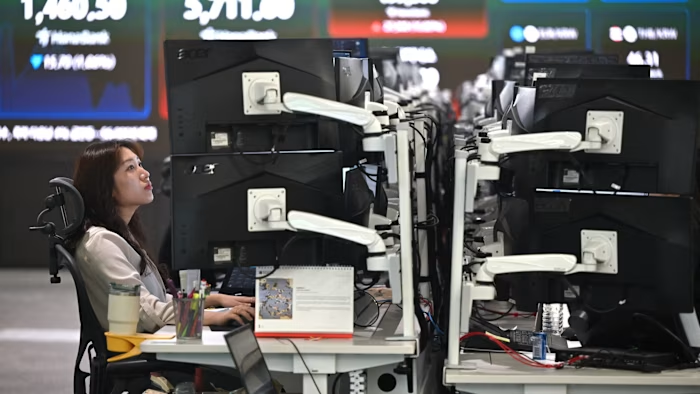
SINGAPORE, March 5, 2026 – Asian equity markets fell sharply on Wednesday as investors rushed to reduce risk exposure amid fears that escalating conflict in the Middle East could disrupt energy flows and prolong global inflation pressures.
MSCI’s broadest index of Asia-Pacific shares outside Japan dropped 4.2%, while South Korea’s benchmark KOSPI plunged more than 11%, triggering a market circuit breaker. Japan’s Nikkei 225 and Taiwan’s benchmark index each fell more than 4%, reflecting widespread selling across technology and export-oriented sectors.
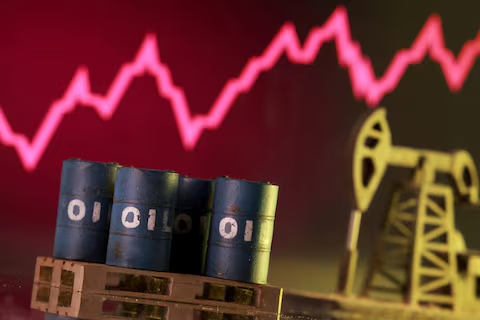
The selloff comes as markets reassess the potential duration and economic consequences of the conflict, particularly the possibility that shipping disruptions in the Strait of Hormuz one of the world’s most critical oil transit routes could drive a sustained surge in global energy prices.
Analysts said the decline reflects a shift from treating the conflict as a short-term geopolitical shock toward pricing in longer-term structural risks to energy supply and inflation.
Charu Chanana, chief investment strategist at Saxo in Singapore, said markets are increasingly factoring in the prospect of a prolonged conflict.
“The pricing now reflects a conflict that could drag on, with spillover risks rising rather than fading,” Chanana said. “Investors are not just repricing geopolitics they are repricing energy logistics, security premia and the possibility of longer-lasting inflation pressure.”
The rising energy risk premium is particularly sensitive for Asian economies, many of which rely heavily on imported oil and natural gas shipped through the Strait of Hormuz.
Financial markets are also reacting to the possibility that higher energy prices could delay expected interest-rate cuts from major central banks, undermining the investment environment that had supported equities earlier this year.
Kenneth Goh, director of private wealth management at UOB Kay Hian in Singapore, said uncertainty about how the conflict will evolve is now the dominant market driver.
“Investors feel there is no clear end game, and more importantly no visible plan for one,” he said. “What we’re seeing is not panic liquidation but a deliberate shift in asset allocation toward cash and safe-haven assets.”
That rotation has included increased interest in commodities such as gold as investors hedge against geopolitical instability and potential inflation shocks.
Technology stocks, particularly semiconductor manufacturers in South Korea and Taiwan, were among the hardest hit as investors unwound positions in sectors that had rallied strongly earlier in the year.
Christopher Forbes, head of Asia and Middle East at CMC Markets, said the sharp decline in Seoul reflected a momentum unwind rather than a fundamental collapse in corporate performance.
“The order book evaporated as foreign investors withdrew funds and risk models triggered selling,” Forbes said, noting that more than $7 billion in foreign capital left South Korean equities in two sessions.
Some strategists cautioned that the downturn could reverse quickly if geopolitical tensions ease, given the large number of hedge funds holding short positions in regional equities.
Still, the immediate outlook remains highly dependent on developments in the Middle East and their impact on global energy transport routes.
Rupal Agarwal, Asia quantitative strategist at Bernstein in Singapore, said Asian markets are particularly vulnerable to any disruption around the Strait of Hormuz because of their dependence on Middle Eastern energy imports.
“For markets to find a floor, we need signs of de-escalation on the war front or a stabilisation of the situation,” she said. “Until then, the risk premium linked to energy supply disruptions is likely to remain elevated.”
Central banks across the region are expected to remain cautious as they monitor the economic consequences of rising oil prices and geopolitical uncertainty.
Radhika Rao, senior economist at DBS Bank in Singapore, said policymakers are unlikely to respond immediately unless the energy shock begins feeding directly into inflation and growth indicators.
“Regional central banks will likely stay on hold while assessing the transmission from energy prices into domestic inflation and demand,” Rao said.
For now, investors are bracing for further volatility as markets attempt to gauge whether the conflict represents a temporary shock or the beginning of a prolonged geopolitical disruption with global economic consequences.