

Phnom Penh, March 6, 2026 – Cambodia’s recent crackdown on online scam compounds has disrupted a network of cybercrime operations that have drawn growing international scrutiny, but observers say the industry’s profitability and adaptability mean enforcement alone may not quickly eliminate the problem.
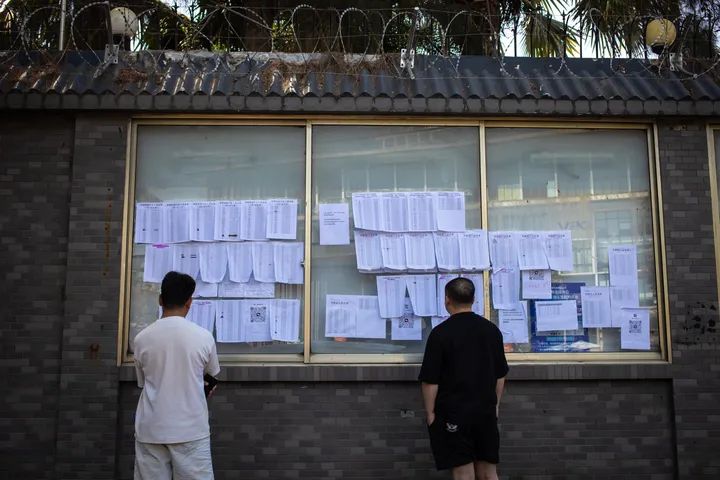
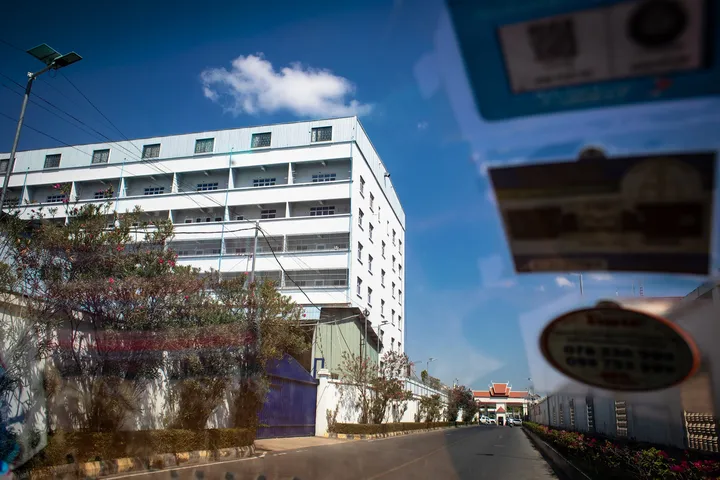
Field reporting in Phnom Penh shows clear signs of recent police action. Buildings previously associated with scam operations have been emptied, while groups of foreign nationals displaced from compounds have gathered near embassies or temporary holding locations as authorities process their cases. Some workers have also been seen seeking documentation at diplomatic missions in the capital.

The Cambodian government says it has intensified enforcement in response to rising international pressure and domestic concerns about the country’s reputation.
According to Cambodian authorities, police conducted raids at 190 locations nationwide between early January and early February, including 44 casinos, detaining more than 2,500 people and seizing large numbers of computers and mobile phones allegedly linked to online fraud operations.
“We need to get back our reputation,” Information Minister Neth Pheaktra said in an interview. “Tourism and nature reserves are the reputation we want for our country, not scams.”
The operations come as Southeast Asian governments increasingly treat transnational cybercrime as a regional security threat rather than only a criminal justice issue.
Cambodia has faced pressure from several partners to address scam networks targeting foreign citizens. Chinese officials have warned that scam centers have become a major obstacle to deeper bilateral cooperation, while authorities in the United States and other countries have also pressed for stronger enforcement.
The issue has also intersected with broader geopolitical tensions. Thai authorities have cited alleged scam compounds in border areas when justifying cross-border strikes tied to ongoing tensions with Cambodia, an interpretation rejected by Phnom Penh.
Researchers and analysts say the challenge for authorities across the region is that scam networks can relocate quickly and operate with relatively low overhead.
Ling Li, a researcher who studies cybercrime compounds in Southeast Asia and co-authored the book Scam: Inside Southeast Asia’s Cybercrime Compounds, said some networks appear to temporarily suspend operations during police inspections.
“I have informants inside telling me they’ve been moved to hotels and the boss told them it’s just for the police check,” she said.
Other analysts say the industry’s structure makes it difficult to eradicate completely.
Ou Virak, president of the Phnom Penh-based think tank Future Forum, said large compounds can sometimes fragment into smaller operations when authorities intervene.
“As bigger centers dissipate or go quiet for a period, smaller ones in rural areas crop up,” he said.
International law-enforcement officials say the cross-border nature of online fraud networks complicates enforcement efforts.
Neal Jetton, who oversees the Cybercrime Directorate at Interpol in Singapore, said scammers frequently move stolen funds through cryptocurrency networks designed to obscure transactions.
“Criminals move quickly,” Jetton said. “They’ll put cryptocurrency in one main wallet and then onto hundreds or even thousands of different wallets, moving through multiple chains and exchanges to evade detection.”
The scale of global losses linked to online scams remains difficult to measure, but several studies indicate the financial impact is substantial.
A report by the US Institute of Peace estimated that transnational criminal networks involved in illegal online gambling and scam operations generated around $64 billion annually as of late 2023. Meanwhile, the Global Anti-Scam Alliance estimated that global scam losses reached about $442 billion in a 12-month period in 2025 across all forms of fraud.
Analysts say the combination of high profits, flexible operations and large labor pools continues to sustain the industry.
Some former workers interviewed by journalists said they had been offered salaries of up to $1,500 per month, a relatively attractive income compared with many available jobs in parts of Southeast Asia or in workers’ home countries.
Human-trafficking specialists warn that workers displaced during crackdowns may face further risks if they lack legal status or resources to return home.
Stephanie Baroud, a criminal intelligence analyst in the human trafficking and migrant smuggling unit at Interpol, said some individuals forced out of compounds may be vulnerable to being recruited again.
“They’re left stranded,” she said. “So the risk of re-trafficking into another compound is high for those who don’t know what to do or where to go.”
The persistence of scam networks has also raised concerns among regulators and companies operating in the region about potential exposure through business relationships or supply chains.
The Global Initiative Against Transnational Organized Crime recently published guidance warning that scam compounds sometimes operate under the appearance of legitimate businesses, including casinos, resorts and property developments.
Weiyi Tan, co-head of the Asia-Pacific Regulatory and Investigations Group at law firm Clyde & Co, said companies operating in Southeast Asia need to strengthen due-diligence processes.
“Companies must take proactive steps to protect themselves,” Tan said. “This includes conducting adequate due diligence on suppliers and other counterparties and considering external legal and risk advice.”

For Cambodian officials, dismantling scam networks has become increasingly tied to the country’s international standing.
Authorities say enforcement measures will continue, alongside new legislation and expanded cooperation with foreign partners aimed at reducing cybercrime activity.
Officials acknowledge that measuring the full impact of recent operations remains difficult, but they say sustained action is necessary to prevent Cambodia from being associated with transnational scam networks.